
A tilt-up distribution center has ledger along every wall panel; each length is cut and marked to its panel.
Ledgers ride in the same order as the joist girders, beams and deck support steel.
Ledgers, embeds, joist seats and deck share one set of coordinates.
Cut, drilled and welded under the same accredited quality system as the frame.
Bearing
What lands on a ledger, and how much seat it needs
A ledger is sized for the reaction and drawn wide enough for every member to get its full bearing.
SJI publishes a minimum bearing of 64 mm (2 1/2 in) on steel
Bar to scale against 120 mm
Seats are welded or bolted to the ledger as the joist maker’s details show.
SJI publishes a minimum bearing of 102 mm (4 in) on steel
Bar to scale against 120 mm
Heavier ledgers or seats where the reaction is large.
SDI publishes a minimum end bearing of 38 mm (1 1/2 in)
Bar to scale against 120 mm
Deck fastened to the ledger with the welds or screws on the deck layout.
Edge and bearing as the floor design shows
The ledger may double as the pour stop at a wall.
Bearing values are the minimums the Steel Joist Institute and the Steel Deck Institute publish for bearing on steel. Your Engineer of Record and the joist and deck suppliers confirm them on each job.
Anchorage
Four ways a ledger holds on to the wall
The anchorage is a design decision for your Engineer of Record. We fabricate the ledger, holes and embeds to suit whichever one is chosen.
In our plant
What happens to a ledger before it ships
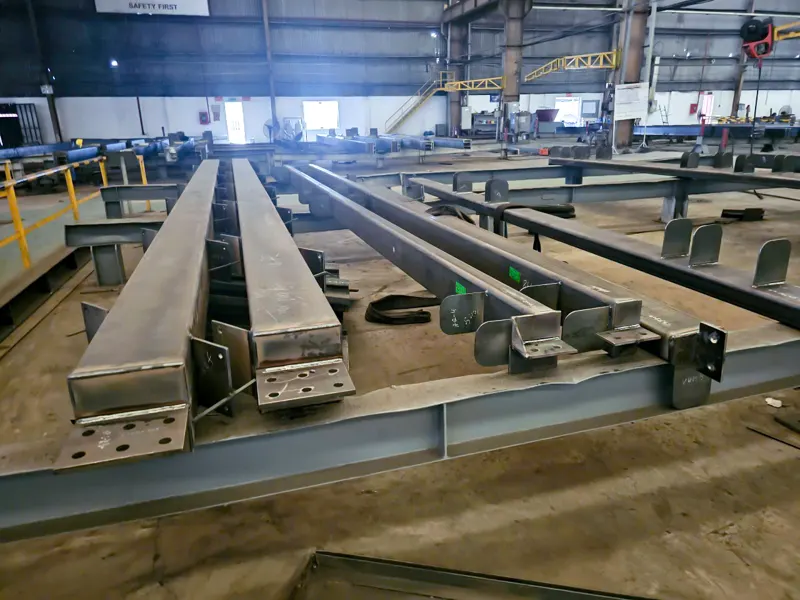
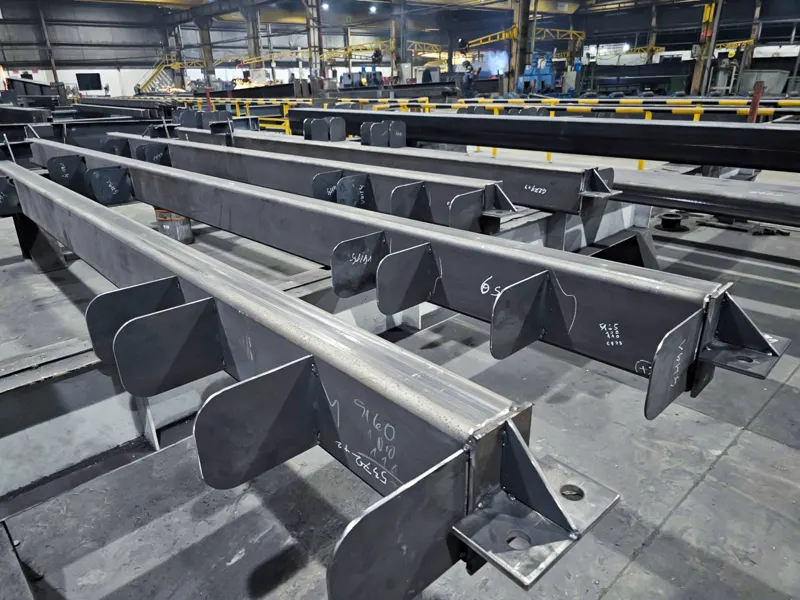
- Holes to the patternAnchor holes drilled on CNC machines to the pattern on the drawings, slotted where tolerance is needed.
- Cut to the panelEach length stops short of panel joints and is marked with its wall and gridline.
- Seats and stiffenersJoist seats, bearing plates or stiffeners welded on where heavy reactions land.
- Coated for the wallPrimed, painted or galvanized as the specification says; exterior and wet walls are often galvanized.
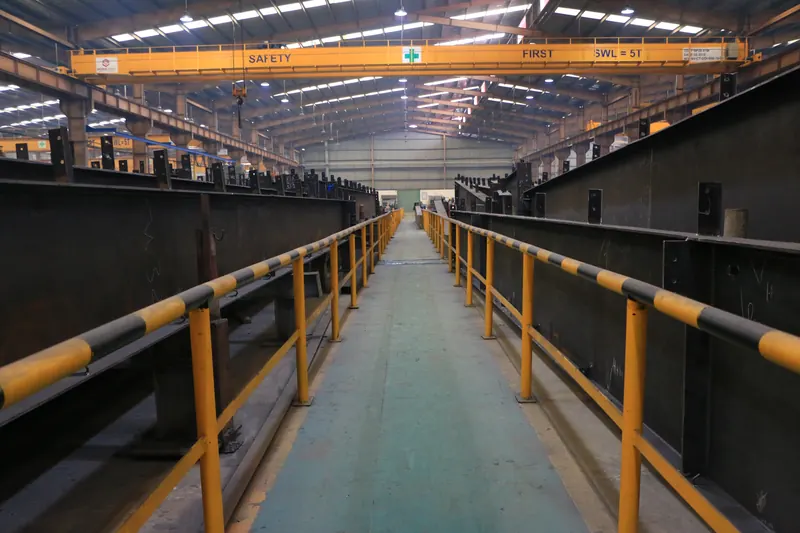
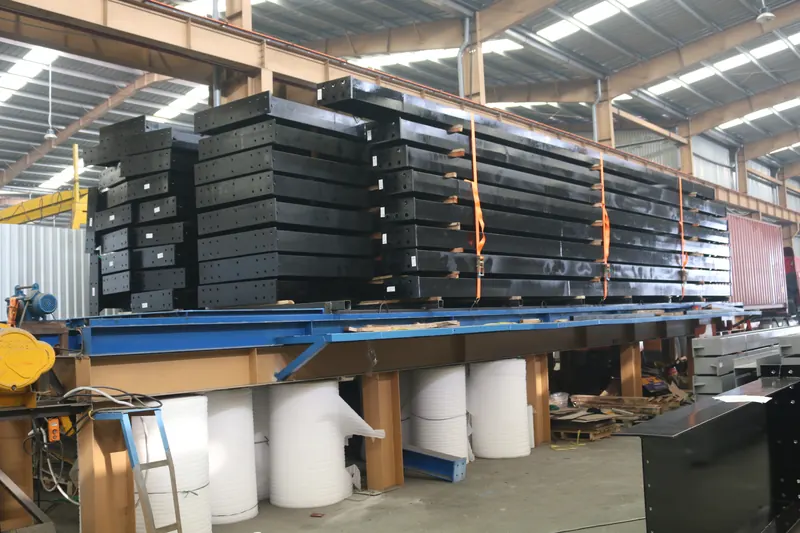
Drilled members and packing in our work
Who does what
Ledger angles: our part and the US contractor's part
World Steel details, fabricates and ships. The US contractor, our customer, and its crews set, anchor and connect.
World Steel
- Details every ledger run with the joists, deck and embeds that meet it
- Cuts, drills, slots and welds seats or stiffeners in our plant
- Marks each length with wall and gridline and packs by elevation
- Supplies the embed plates when they are in our order
The US contractor, our customer
- Engineer of Record designs the anchorage under ACI 318 Chapter 17 and the ledger size
- Concrete or masonry crew sets embeds and inserts
- Erector sets the ledger, drills and installs post-installed anchors, and welds
- Joist and deck installers make their bearing connections
Questions
Ledger angle questions from US contractors
What is a ledger angle in steel construction?
A continuous steel angle fixed along a wall that gives joists, deck or a slab something to bear on. It is common on tilt-up, concrete and masonry walls.
How much bearing do joists need on a ledger angle?
The Steel Joist Institute publishes minimums for bearing on steel: 64 mm (2 1/2 in) for K-series and 102 mm (4 in) for LH and DLH joists. Your engineer and joist supplier confirm them.
Who designs the anchors that hold the ledger to the wall?
Your Engineer of Record, under ACI 318 Chapter 17 for anchors in concrete. We drill the ledger to the anchor pattern on the approved drawings.
Is it better to weld ledgers to embeds or bolt them?
Both work. Welding to embeds is quick to adjust on site; bolting to inserts or post-installed anchors avoids field welding. Your engineer chooses, and we fabricate to suit.
Can the ledger also be the deck pour stop?
Often, yes. A ledger at a wall can carry the deck and close the slab edge, when the floor design shows it that way.
Do you supply the embeds the ledger welds to?
Yes, when they are in our order. Embeds and ledgers come from the same model, so the plates line up with the ledger runs.
Brick on the outside of the same wall? See shelf and relieving angles.
Built for large jobs
Ledger angles for your next large package
Our own plant in Vietnam fabricates 2,500 metric tons of structural steel a month, is accredited under IAS AC472 since 2019 and is audited twice a year. Shop drawings are included on every project.
- 5,000 tSunpro Steel Factory
- 2,500 tCPV Food Processing Factory
- 2,000 tLong Son petrochemical complex
- 2,000 tM&D (MD Factory)
Request a quote
Send drawings, a model or a member schedule. Our engineers check the US code basis, size or verify the members and price the fabricated steel, delivered to your US port.
Become our partner in the US
You erect and own the customer; we design, fabricate and ship. Engineering support on your bids and supply under your brand.
Who approves the design. We prepare calculations and drawings ready for your Engineer of Record’s review and approval. The PE seal and the permit stay with the US contractor, our customer.
Shop drawings, included