
Embed schedule
Six kinds of steel embed plates we fabricate
Every embed on your drawings fits one of these lines: what it is, where it goes, how it holds in the concrete and how we build it.
- EmbedWhere it goesAnchored byHow we make it
- Headed stud embeds Where it goesBeam seats and clip angles on concrete walls, cores and tilt-up panels. Anchored byHeaded studs end-welded to the back of the plate How we make itPlate laser or plasma cut and drilled, studs welded with a stud gun to the stud welding clause of AWS D1.1.
- Bar anchor embeds Where it goesPlates that need deeper anchorage or to lap with wall reinforcing. Anchored byDeformed bar anchors welded to the plate How we make itBar anchors arc-stud welded or fillet welded, as the approved drawings show.
- Embeds with shop-welded tabs Where it goesShear tabs, seats or brackets that the steel bolts to on site. Anchored byStuds or bars behind, connection piece in front How we make itTab fitted square to the plate face and welded in the shop, so the field crew only bolts.
- Embedded angles Where it goesSlab edges, openings, pits and dock edges. Anchored byStuds or bent bars on the angle legs How we make itAngles cut to length with studs at the spacing drawn; see slab edge angles.
- Equipment embeds Where it goesPads and plinths for pumps, fans, generators and racking. Anchored byStuds, bars or anchor sleeves How we make itPlates sized to the equipment footprint, holes or tapped bosses where the vendor drawing calls for them.
- Column embed assemblies Where it goesSteel columns or posts that start in a concrete wall or pier. Anchored byPlate with anchor bars, rods or a stub section How we make itBuilt-up assemblies welded and checked as structural steel, with a setting template where needed.
Anatomy
What makes up an embed plate
- Face plateThe exposed plate the steel connects to. Thickness and size come from the connection design.
- Headed studsAnchor the plate in the concrete. Commonly 13, 16, 19 or 22 mm (1/2, 5/8, 3/4 or 7/8 in) diameter.
- Bar anchorsDeformed bars welded to the plate where the design needs more anchorage or a lap with the rebar.
- Vent holesSmall holes in large plates let air out so concrete fills solid behind the plate, where the drawings show them.
- Piece markStamped or painted on the face, matched to the embed plan by grid line and elevation.
- Connection pieceShear tab, seat or clip, shop-welded when the drawings put it on the embed.
Stud welding
Every stud checked before the plate leaves the plant
A stud that pops off in the pour cannot be fixed later. Studs are welded to AWS D1.1 in an IAS AC472 accredited plant, by the same quality team that inspects the frame.
- Pre-production bend testThe first studs of each run, setting or operator are bend-tested before production, as the stud welding clause of AWS D1.1 requires.
- Full flash, every studEach stud is checked for a full weld collar around its base; a stud that fails visual is tested or replaced.
- Hammer and bend checksStuds that look doubtful are bent and must not crack, or they are removed and rewelded.
- Records by piece markStud lots, welding settings and inspection results are filed with the piece mark in PEB Studio.
Setting the embeds
Our plate, your pour
We fabricate and plan the embeds. Setting them in the forms is site work for the US contractor, our customer.
Who sets them
AISC 303 Section 7.5 puts the setting of anchor rods and other embedded items with the owner’s designated representative for construction, not with the steel fabricator. In practice that is the US contractor’s concrete crew.
What we give them
An embed plan from the steel model: every plate by grid line, elevation and face, with its piece mark and the steel that will land on it.
Tolerances
Location and plumb tolerances for embeds come from your contract documents and the concrete specification. Connection pieces on our steel are detailed with the adjustment those tolerances need.
When one is off
If a set embed is out of tolerance, your Engineer of Record decides the fix. We can detail and fabricate the slotted clips, extension plates or new pieces that fix calls for.
More on scope splits in the AISC 303 Code of Standard Practice guide.
Packed by pour
From the embed plan to the first pour
Embeds are the one steel item your concrete schedule waits on, so they move first through the plant and the port.
- Embed plan issuedReleased with or ahead of the steel approval drawings, so the concrete trade can lay out the first pours.
- Fabricated firstEmbeds go to the front of the shop schedule because the concrete schedule needs them first.
- Bagged or crated by pourOne labeled crate per pour or wall lift, with a copy of that pour’s embed plan inside.
- Early containerCast-in items can ship in their own container ahead of the frame.
- Set and surveyedThe concrete crew sets, ties and surveys the embeds before the pour.
- The frame landsMonths later the beams, seats and brackets bolt or weld to plates that were planned with them.
Who does what
World Steel's part and the US contractor's part
World Steel
- Models every embed with the frame and issues the embed plan
- Cuts, drills and welds plates, studs, bar anchors and connection pieces
- Inspects stud welds and records them by piece mark
- Coats or leaves bare the faces the specification calls for
- Packs by pour and ships cast-in items ahead of the steel when asked
The US contractor, our customer
- Engineer of Record designs the anchorage into concrete under ACI 318 Chapter 17
- Reviews and approves the embed plan and drawings
- Concrete crew sets, ties, surveys and pours
- Reports any embed out of tolerance before the steel arrives
- Field welding to embeds, by your erector, to the approved details
Finish
- Bare where it meets concreteThe back face, studs and bars are usually left unpainted so the concrete bonds to clean steel.
- Primed or painted faceThe exposed face can be primed or painted with a system from Jotun, PPG, Carboline, Hempel, Nippon or International Paint.
- Galvanized for weatherExterior and wet-area embeds can be hot-dip galvanized to ASTM A123 by an outside galvanizer arranged for the project.
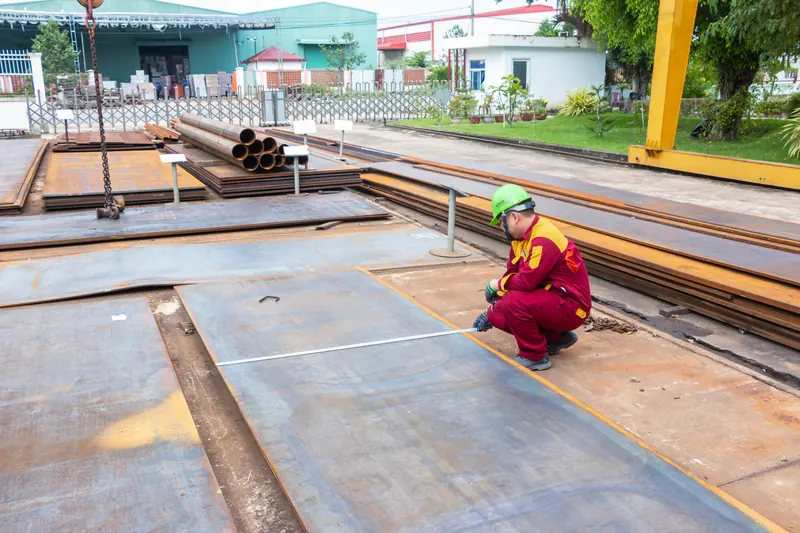
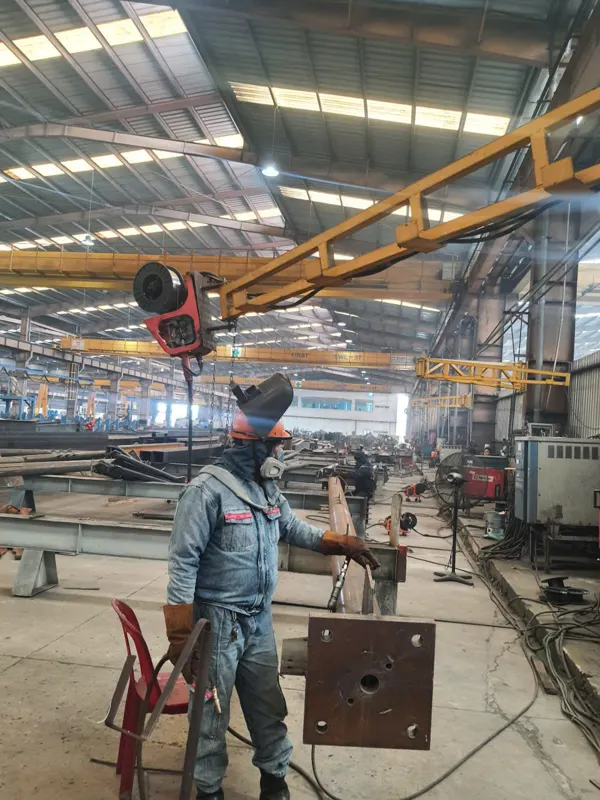
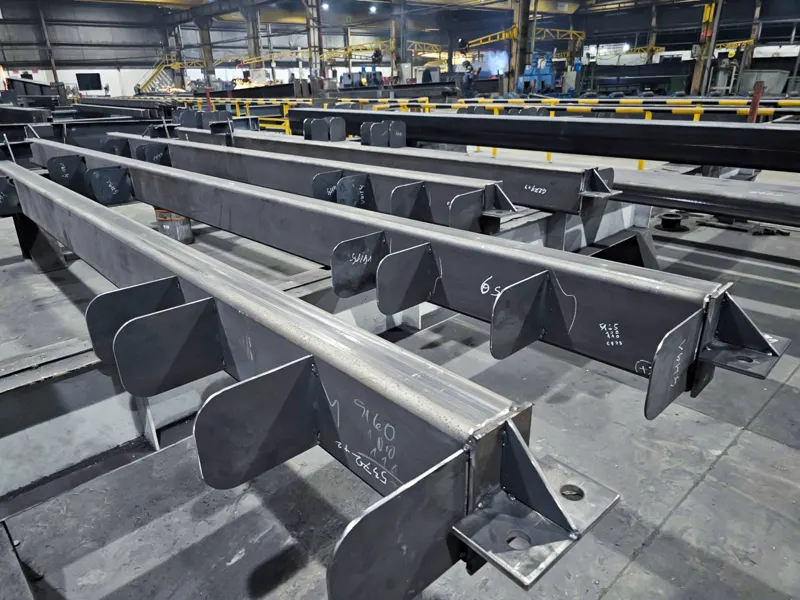
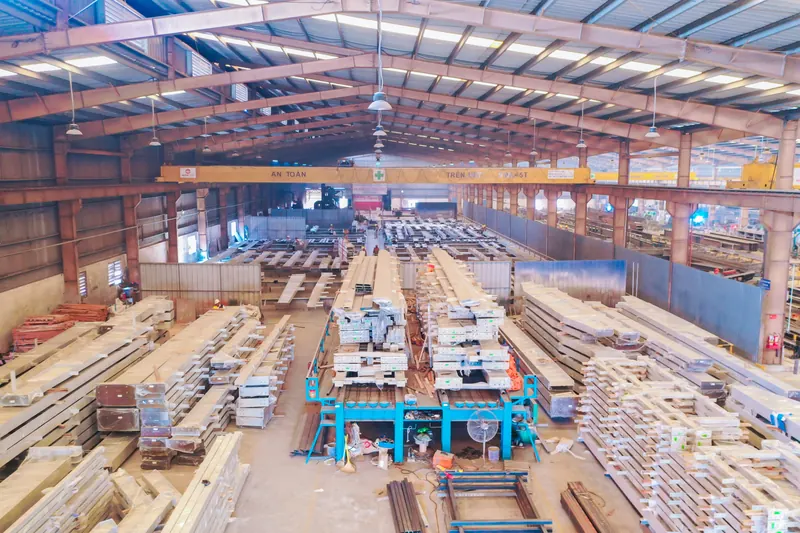
Plates and small assemblies in our plant
Questions
Embed plate questions from US contractors
Who designs the studs and anchors on an embed plate?
Your Engineer of Record designs the anchorage into concrete under ACI 318 Chapter 17. We detail and fabricate the plate, studs and bar anchors exactly as the approved drawings show.
Can embed plates ship before the structural steel?
Yes. Embeds can be fabricated first and shipped in an early container, packed by pour, so your concrete crew can set them while the frame is still in fabrication.
How do you make sure each embed ends up in the right place?
Every embed carries a piece mark that matches an embed plan drawn from the same model as the steel, by grid line, elevation and wall face. The plan travels in each pour’s crate.
Which stud sizes do you weld?
The sizes on your drawings. Headed studs of 13, 16, 19 and 22 mm (1/2, 5/8, 3/4 and 7/8 in) diameter are the most common on building embeds.
What happens if an embed is set out of tolerance?
Your Engineer of Record decides the fix. We can detail and fabricate slotted clips, extension plates or replacement pieces to suit it.
Are embed plates painted?
Usually the concrete side stays bare and the exposed face is primed or left as the specification says. Exterior embeds can be hot-dip galvanized.
Built for large jobs
Embed plates for your next large package
Our own plant in Vietnam fabricates 2,500 metric tons of structural steel a month, is accredited under IAS AC472 since 2019 and is audited twice a year. Shop drawings are included on every project.
- 5,000 tSunpro Steel Factory
- 2,500 tCPV Food Processing Factory
- 2,000 tLong Son petrochemical complex
- 2,000 tM&D (MD Factory)
Request a quote
Send drawings, a model or a member schedule. Our engineers check the US code basis, size or verify the members and price the fabricated steel, delivered to your US port.
Become our partner in the US
You erect and own the customer; we design, fabricate and ship. Engineering support on your bids and supply under your brand.
Who approves the design. We prepare calculations and drawings ready for your Engineer of Record’s review and approval. The PE seal and the permit stay with the US contractor, our customer.
Shop drawings, included