
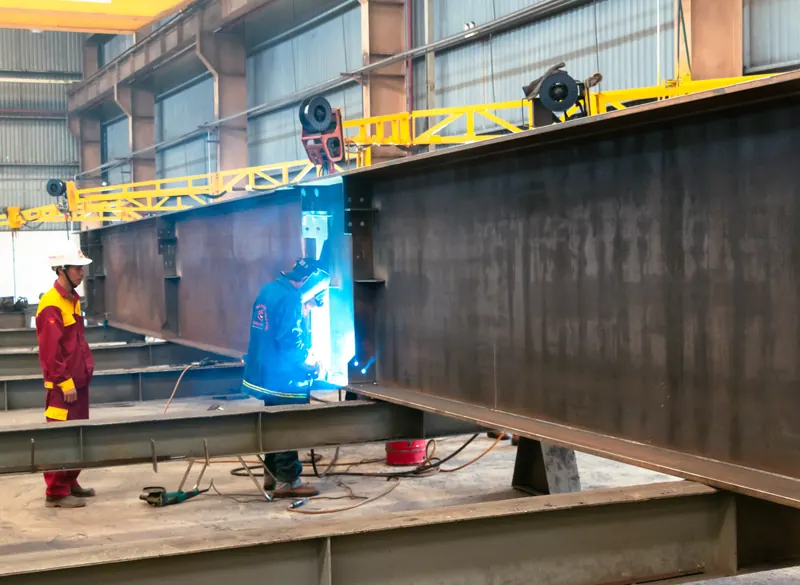
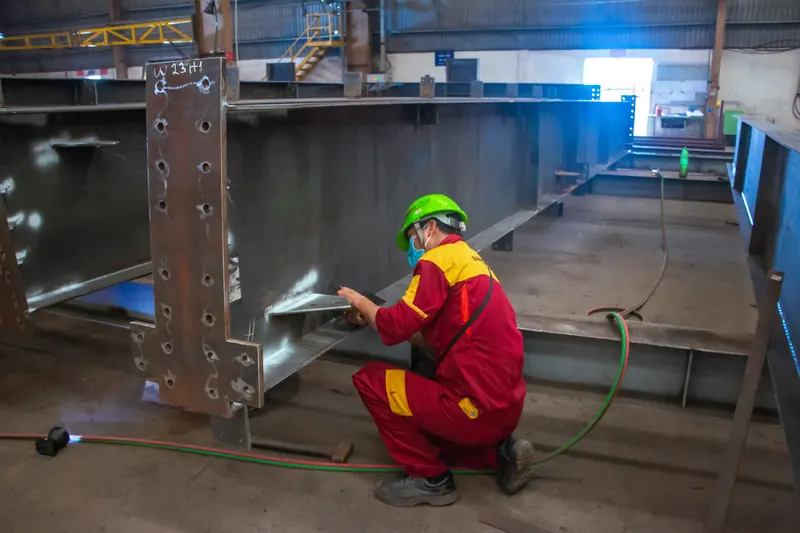
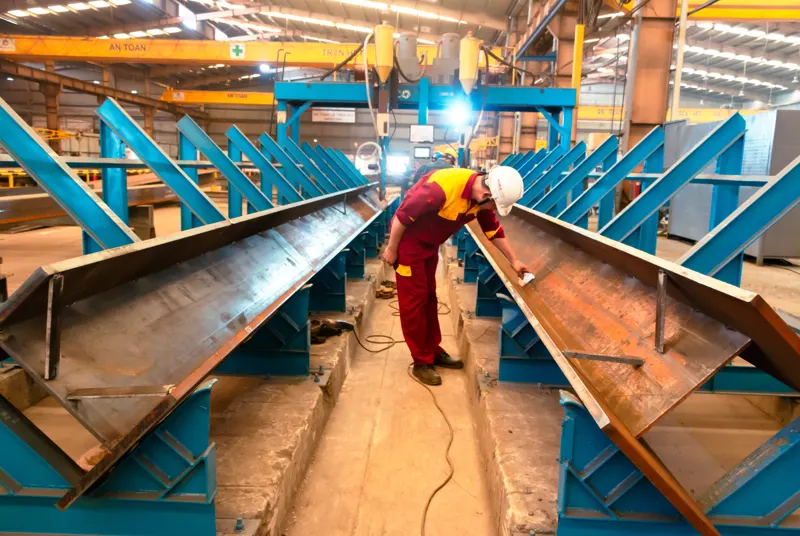
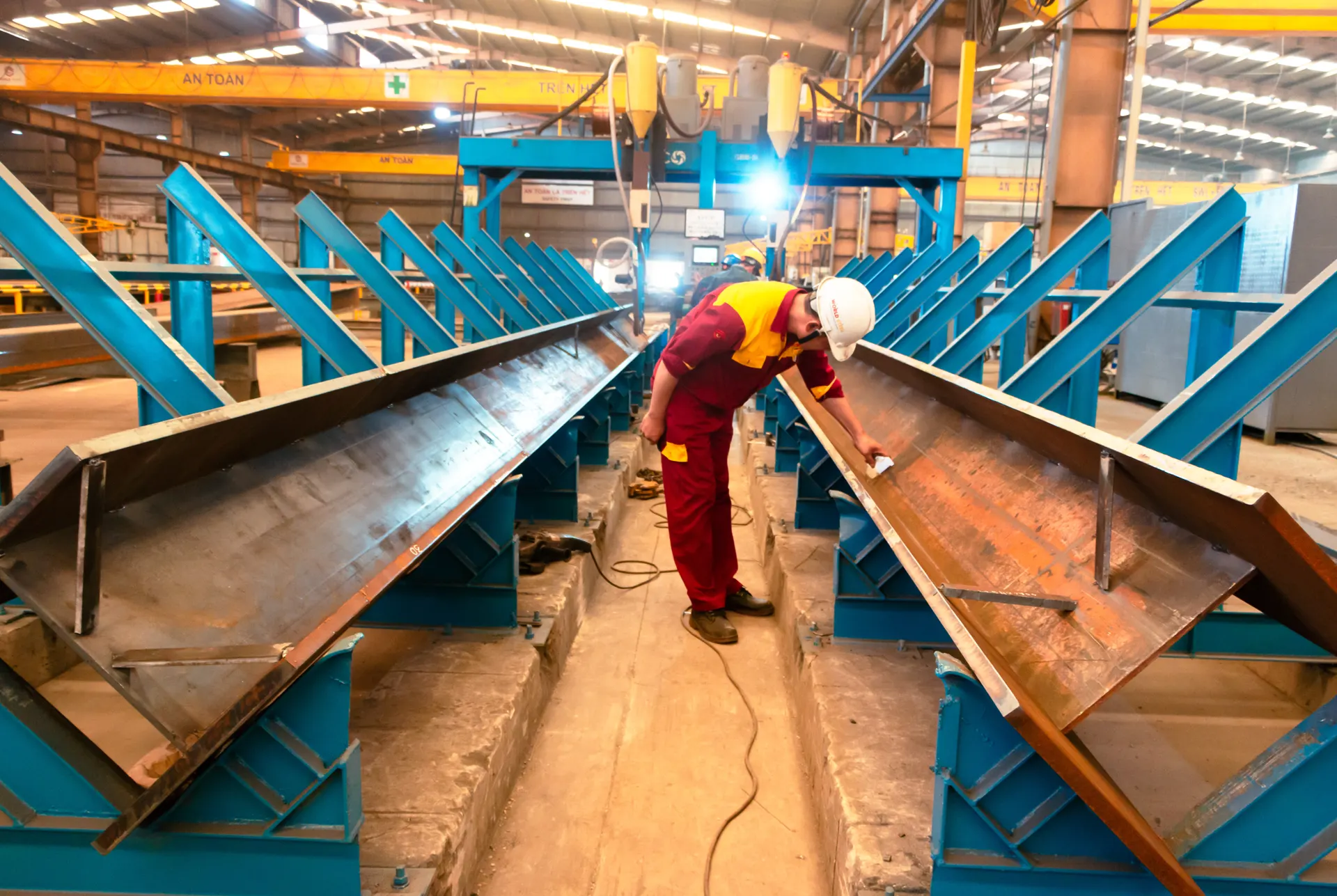
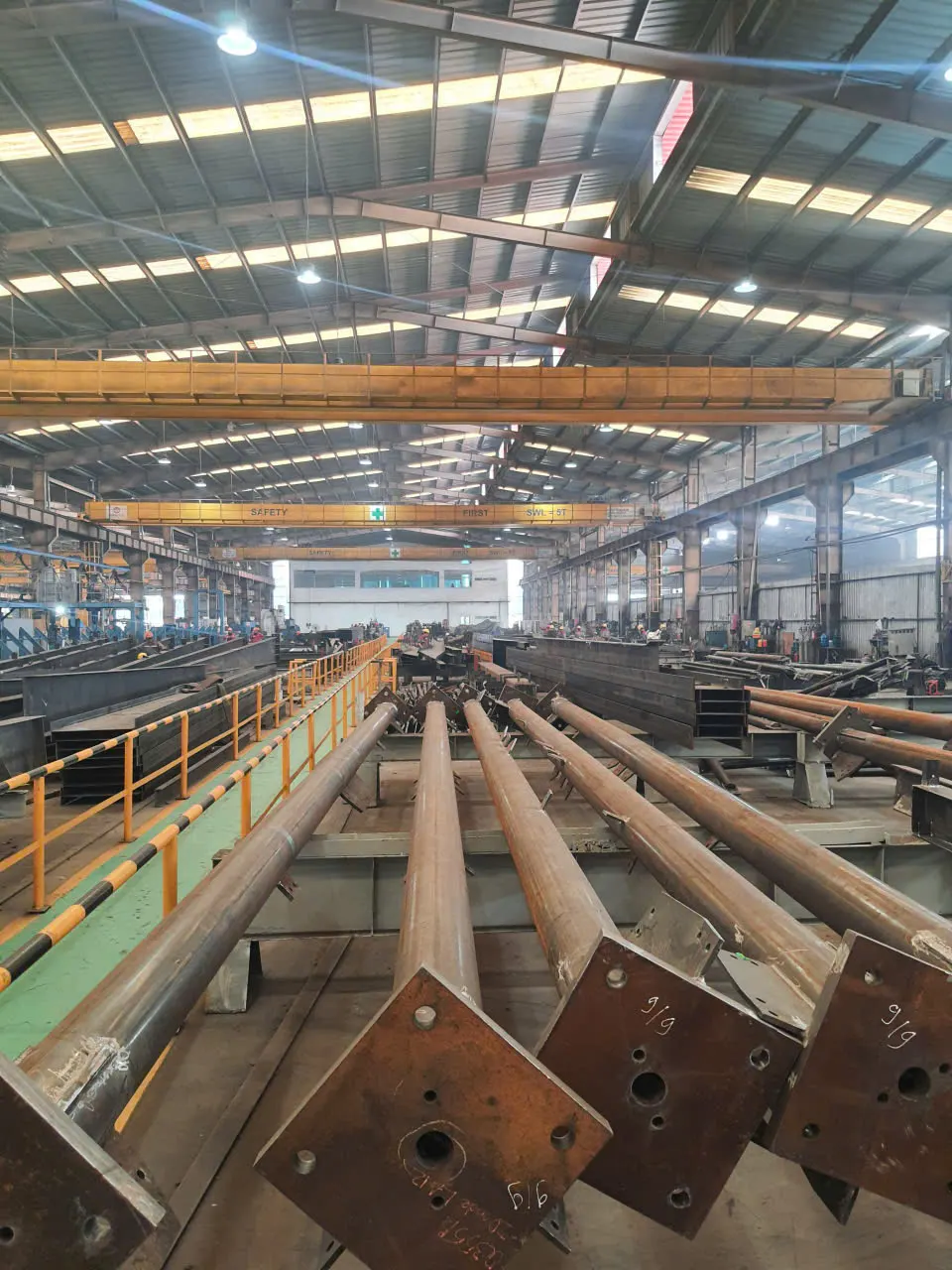
A deep plate girder going through automatic welding at World Steel, Vietnam.
Partial joint penetration
PJP groove welds made to the effective throat your engineer designed
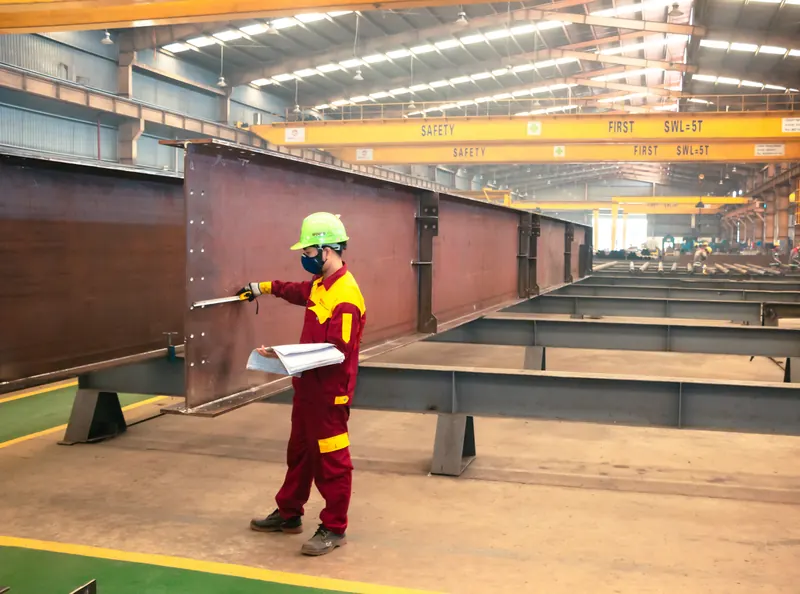
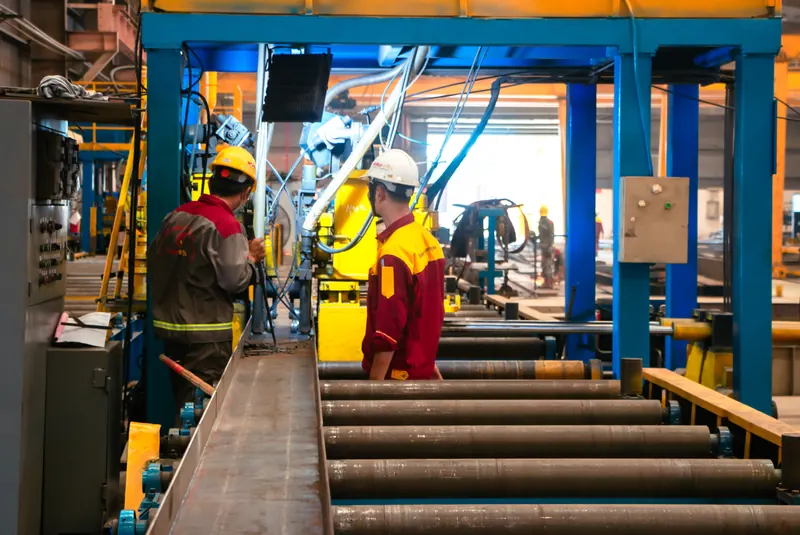
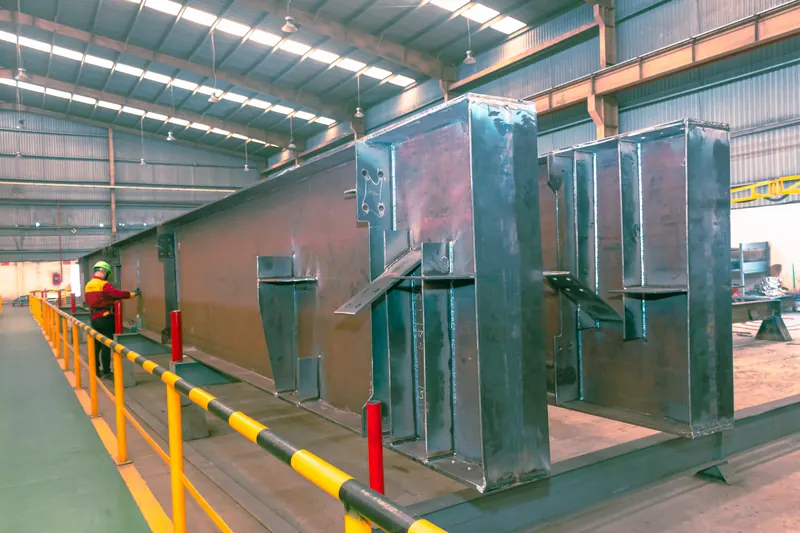
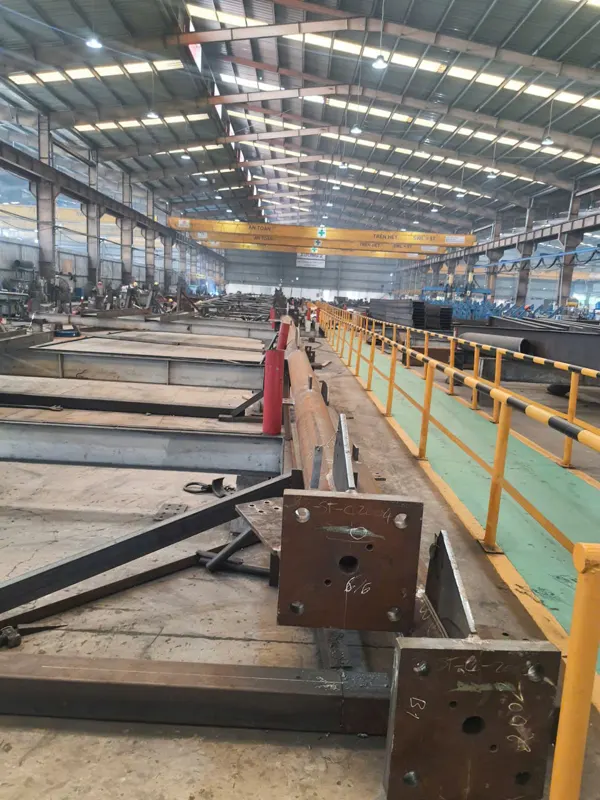
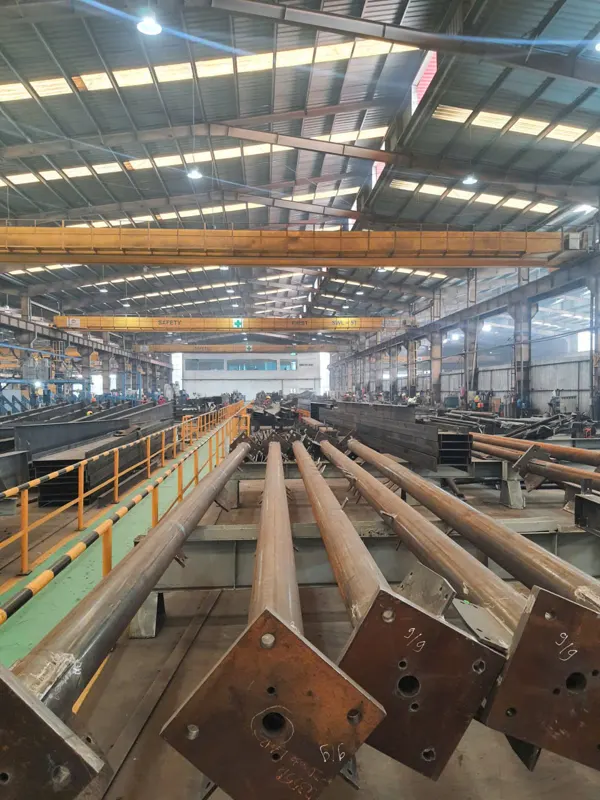
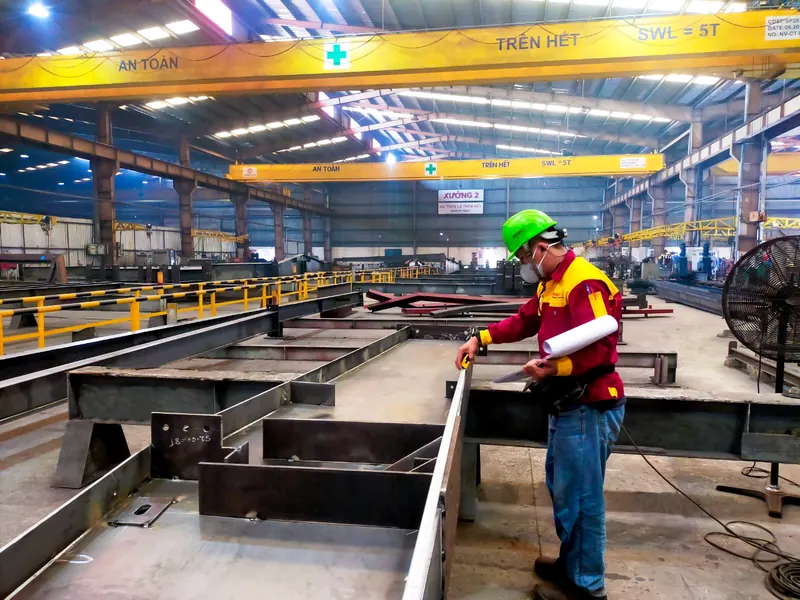
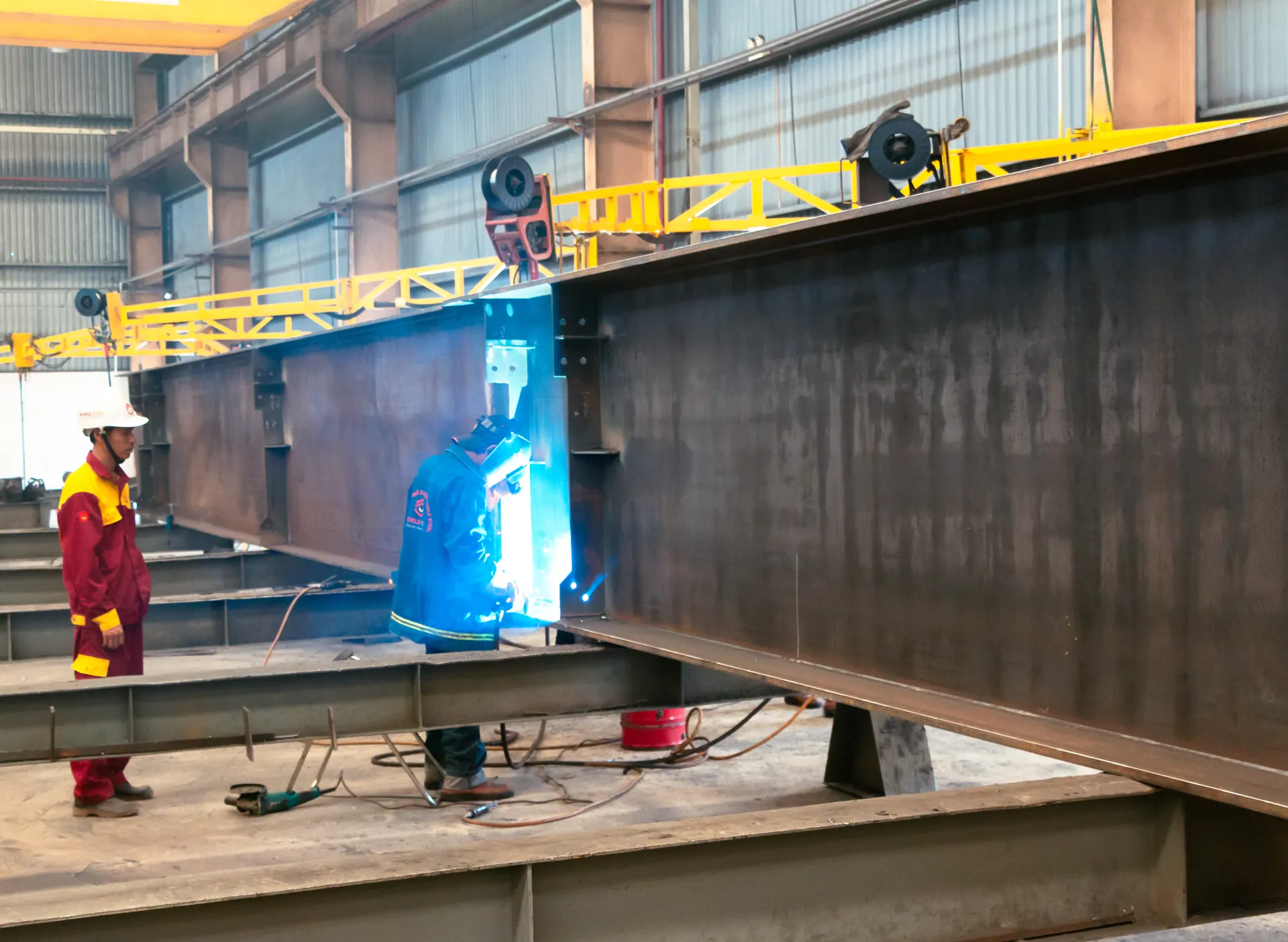
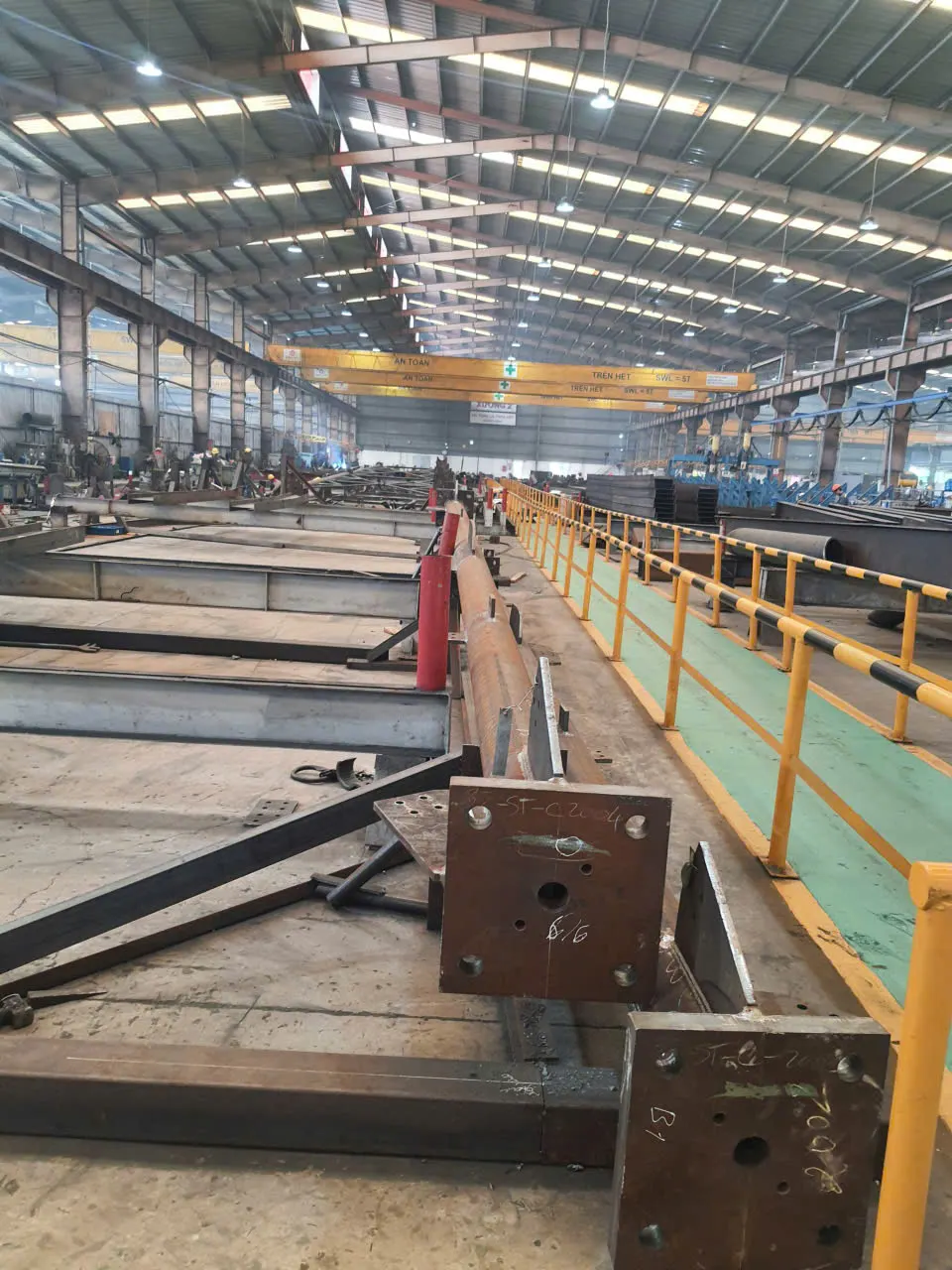
Column splices, box column corners and heavy plate joints, welded to a set throat with qualified procedures, in a plant that fabricates 2,500 metric tons of structural steel a month.
A designed throat, not a full joint
A PJP groove weld stops short of the full thickness, on purpose
A partial-joint-penetration groove weld fills a groove that goes only part of the way through the joint. Its strength comes from a designed effective throat, set by the depth of the groove, the groove angle and the welding process. Where a joint does not need the full strength of the part, a PJP weld saves weld metal, heat input, distortion and the back-gouging a CJP weld needs.
On a PJP weld the number in brackets matters most. It is the effective throat the Engineer of Record designed for, and we prepare the groove deep enough to reach it with the process we use.
Reading the symbol
S (E): the two numbers on every PJP weld
Groove depth
The depth of the preparation, written to the left of the symbol.
Effective throat
The throat the design counts on, in brackets after the depth.
Groove angle
The included angle of the groove, written inside the symbol where needed.
Tail note
Sometimes written in the tail; the S(E) dimensions carry the real instruction.
The throat ledger
Effective throat by groove, process and position
A narrower groove is harder to fuse to the bottom, so the code takes 3 mm (1/8 in) off where the process may not reach it. Paraphrased from AISC 360 Table J2.1; your edition and the qualified WPS govern.
Minimum effective throat
Seven steps, from thin plate to 152 mm (6 in) and over
Paraphrased from AISC 360 Table J2.3. The thinner part joined sets the minimum; the design may need more.
The decision board
Where PJP fits, and where CJP is needed
The Engineer of Record makes the call. These are the usual answers we see on US drawings.
- Column splices in compression, with milled bearing ends carrying most of the load.
- Corners of built-up box columns outside the panel zone.
- Heavy plates where the design force is far below the plate strength.
- Web-to-flange welds on deep girders where fillets would be too large.
- Joints where back-gouging access from the far side is not practical.
- Tension across the weld that must develop the full strength of the part.
- Demand-critical welds and most welds in seismic moment connections.
- Cyclically loaded joints with tension normal to the weld, such as crane runway details.
- Column splices in special seismic systems where the design calls for full strength.
- Box column corners inside the panel zone of moment frames.
How it is counted
A PJP weld’s strength depends on the direction of the load
Paraphrased from AISC 360 Section J2.4. Weld design is the Engineer of Record’s.
Compression, bearing joint
Much of the load passes in bearing; the weld holds the parts in place and carries the rest.
Tension across the weld
Counted on the effective throat at 0.60 FEXX, and checked against the base metal.
Shear along the weld
Counted on the effective throat at 0.60 FEXX.
Tension along the weld
Need not be counted for the weld in most built-up members.
Inspection
How a PJP weld is checked when its throat cannot be seen
Visual testing
Every PJP weld: profile, size of groove filled, undercut, cracks.
Magnetic particle testing
Where the specification asks for a surface crack check of the face or root area.
Groove depth before welding
The preparation is measured before welding, because the throat cannot be measured once it is filled.
Why not UT
The unfused part of a PJP joint reflects sound, so UT is not normally used to accept PJP welds.
How it is tested
The NDT methods that check pjp groove welds
Every weld is visually inspected by our QC. The other methods run where your specification or the code calls for them, by our QC, by the third party you designate, or, for radiography, through our partner.
The other weld types
Six more welds that hold your building together
Questions
PJP groove welds: questions from US reviewers
What does 10 (8) mean on a groove weld symbol?
A groove 10 mm deep that gives an effective throat of 8 mm. The first number is the depth of preparation, the number in brackets is the throat the design counts on. With some processes and a 45° groove, AWS and AISC take 3 mm (1/8 in) off the depth.
Why use PJP instead of CJP?
Because the joint does not need the full strength of the part. PJP welds use less weld metal and heat, distort the member less and need no back-gouge, which saves time on heavy built-up members.
Can a PJP weld be tested by UT?
It is not normally accepted by UT, because the unfused root reflects sound like a flaw. PJP welds are visually inspected, the groove depth is checked before welding, and MT is used where specified.
Are PJP welds allowed in seismic frames?
In many places, yes, for example in column splices of some systems with the required strength. AISC 341 limits them in demand-critical locations; the Engineer of Record decides.
Do you weld box column corners with PJP?
Often, outside the panel zone, where the design allows it. Inside the panel zone of moment frames the corners are usually CJP welded. The shop drawings show each case for your approval.
What is the minimum PJP throat?
It rises with the thinner part joined, from 3 mm (1/8 in) on thin plate to 16 mm (5/8 in) on plate over 152 mm (6 in), so enough heat goes in to fuse thick steel.
Send us your splice and box column details
We will show the groove depth, throat and process for every PJP weld in our quote, from a plant that fabricates 2,500 metric tons a month.