
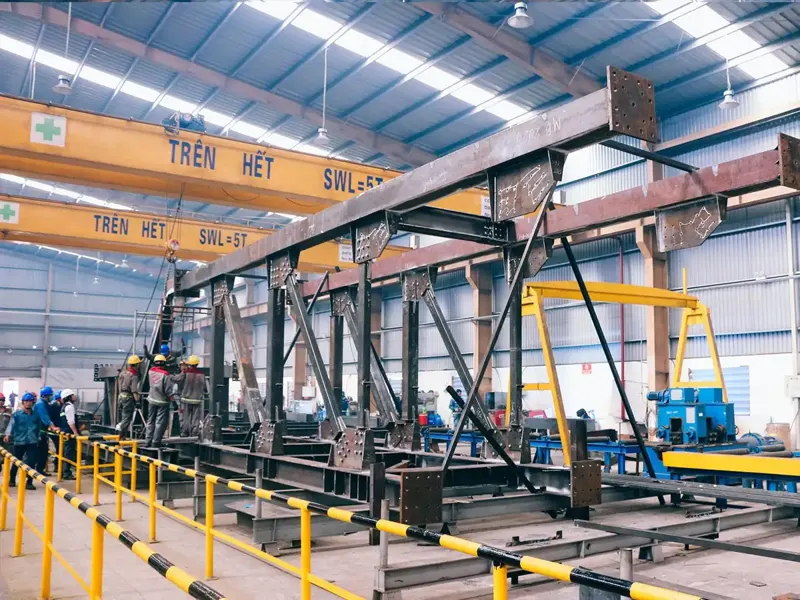
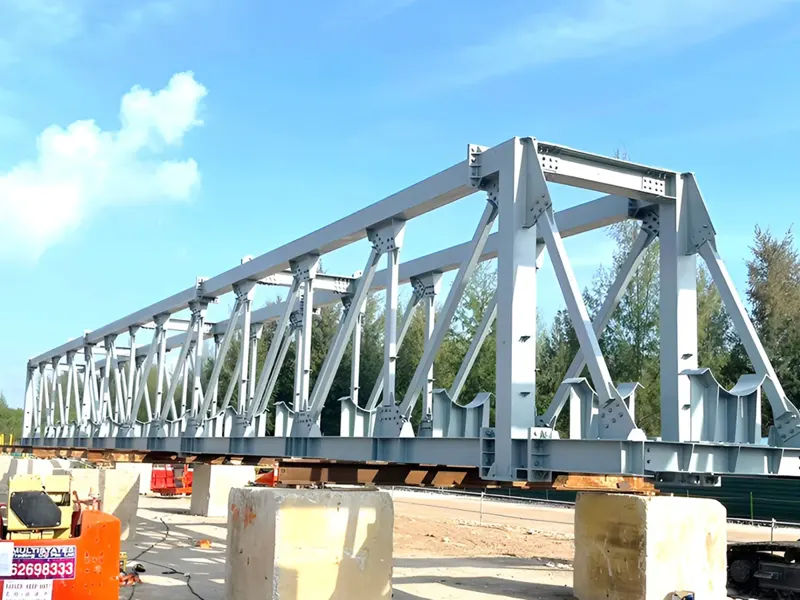
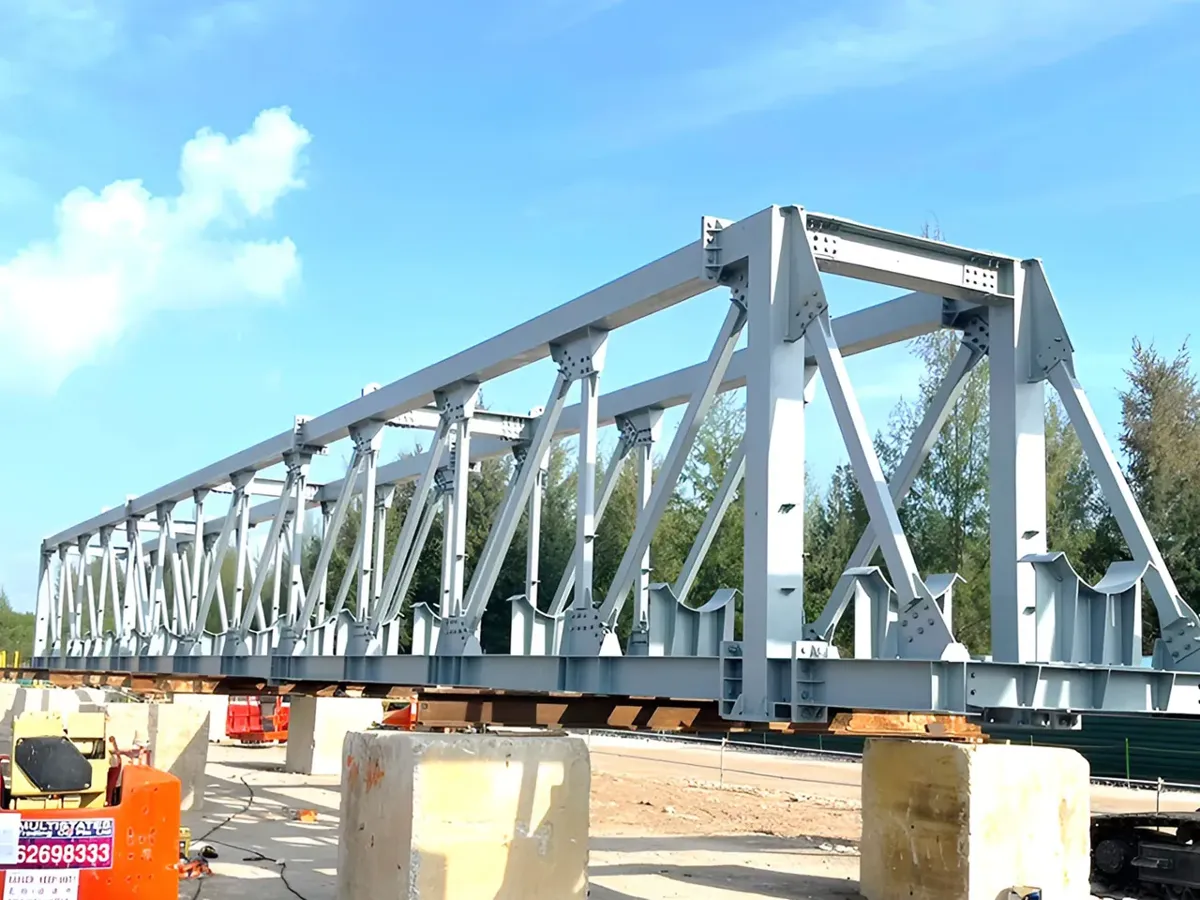
CP4 steel bridge, Singapore: truss spans trial-assembled in the World Steel plant, Vietnam.
RT through our partner
Radiographic testing of groove welds, carried out through a World Steel partner
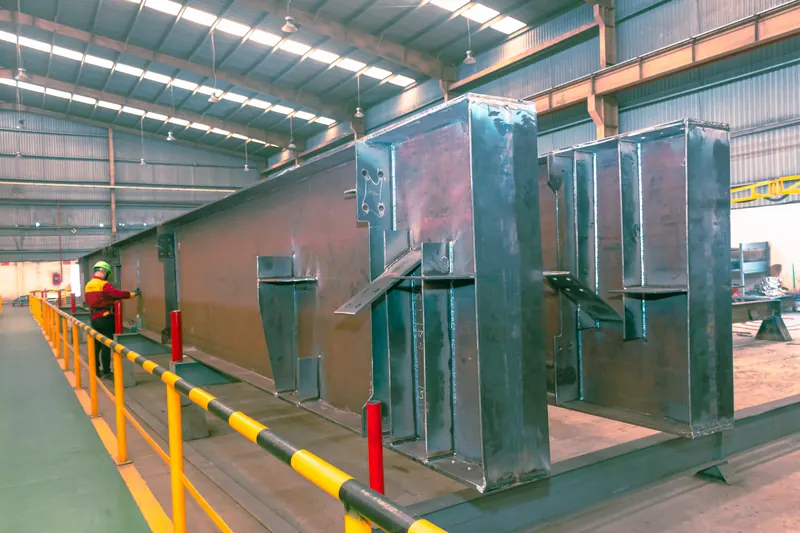
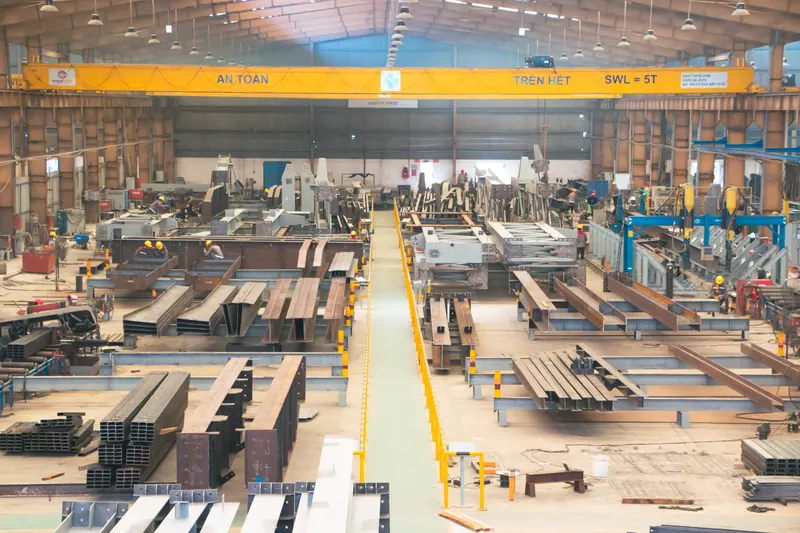
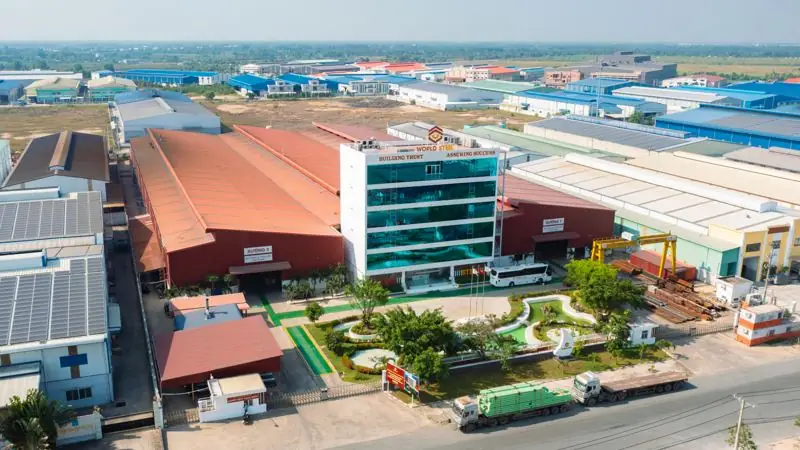
X-ray or gamma radiography of butt welds and splices by a specialist partner, scheduled inside the production plan of a plant that fabricates 2,500 metric tons of structural steel a month.
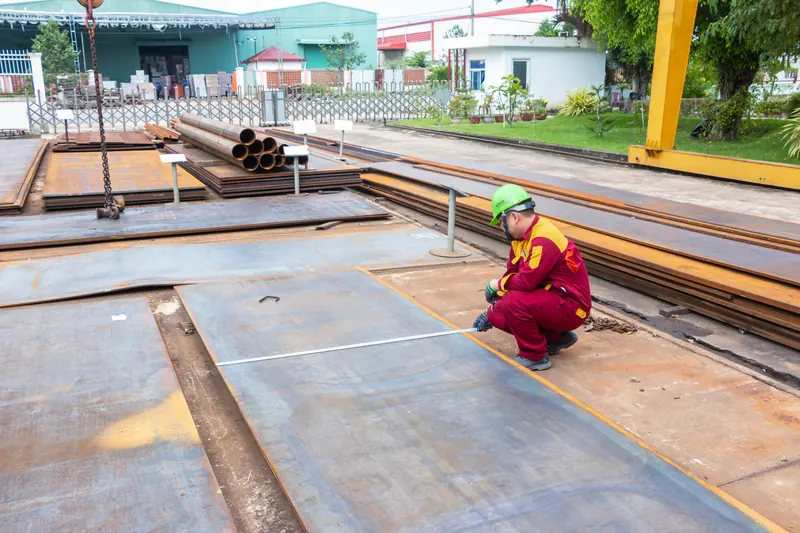
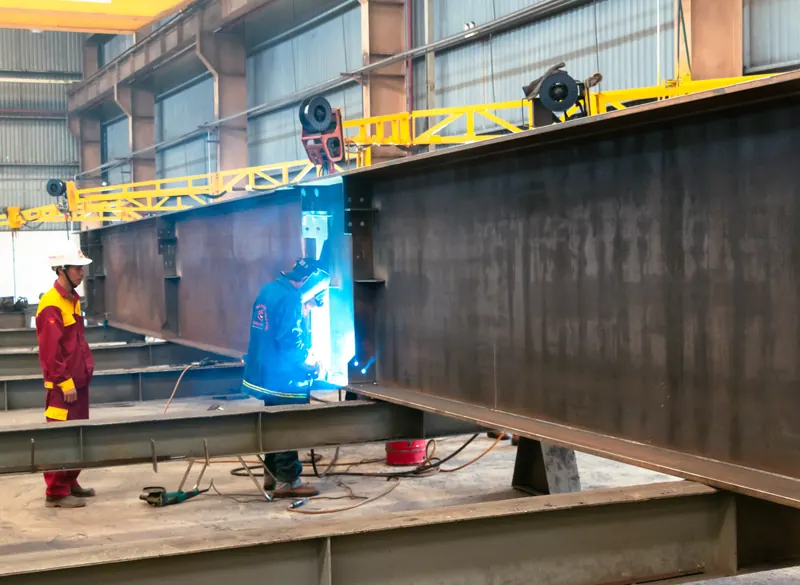
A picture through the weld
Radiation through the joint, an image on the other side, and every void shows as a shadow
Radiography passes X-rays or gamma rays through the weld onto film or a digital detector. Where the weld is sound, the steel absorbs the radiation evenly. Where there is a pore, a slag line or a lack of penetration, less steel is in the way and the image shows a darker mark, in the shape of the flaw. It gives a permanent image of the weld, which is why bridge and crane specifications still ask for it on butt-welded splices.
Radiographic testing on World Steel jobs is carried out through our partner, a specialist in industrial radiography.
Through a World Steel partner
Why radiography is our partner’s work, and how we run it together
Radiographic testing on World Steel jobs is carried out through our partner, a specialist in industrial radiography. We plan it, prepare the welds and file the results; the partner exposes, interprets and reports.
A specialist partner
RT is performed by a World Steel partner whose business is industrial radiography: sources, licences, safety officers and trained radiographers.
Licensed radiation work
In Vietnam, industrial radiography may only be done under a radiation licence from VARANS, with a safety plan and monitored personnel. That is why it is a partner’s work, not an open shop-floor task.
Scheduled with production
We book RT into the production plan, group the welds to be shot, and present the members in the order the partner needs.
Images in your data book
Films or digital images, with the partner’s report, are filed against each weld and piece mark in your records.
Radiation sources
X-ray, iridium-192 or selenium-75
The source is chosen for the steel thickness, the access around the joint and the image contrast the procedure needs.
An electrical X-ray set. Switched off, it emits nothing; good image contrast on thinner sections.
Used for: Thinner plate, controlled bays
A gamma source in a shielded container. Portable and needs no power; covers a wide thickness range.
Used for: Medium to thick welds
A lower-energy gamma source, giving better contrast than Ir-192 on thinner steel.
Used for: Thinner welds where X-ray access is hard
On the viewer
Four checks before a radiograph is read
Image quality indicator
A hole-type (ASTM E1025) or wire-type (ASTM E747) IQI on the weld proves the image shows detail fine enough.
Density in range
The image must be neither too light nor too dark across the area of interest, within the limits of the code.
Location markers
Lead letters and numbers on every exposure tie the image to the weld ID, the piece mark and the position along the joint.
Interpretation
A qualified interpreter reads each image on a viewer against the acceptance criteria and records the result.

Strengths and limits
What a radiograph shows well, and what it can miss
RT and UT complement each other. Knowing where each is strong is how a specification ends up with the right test on the right weld.
Porosity and slag
Rounded and elongated voids show clearly as dark shapes.
RT is strongIncomplete penetration
An unfused root in a butt weld shows as a straight dark line.
RT is strongVolumetric flaws in butt welds
The geometry RT handles best: radiation straight through two plates of equal thickness.
RT is strongPlanar flaws at an angle
A thin crack or lack of fusion lying across the beam may barely show. UT is better at these.
Better by UTT-joints and corner joints
Unequal thickness in the beam path makes images hard to read. These joints are normally tested by UT.
Better by UTFlaw depth
A single image shows length and shape, not how deep the flaw sits in the weld.
Better by UTRadiation safety
Four rings around every exposure
Radiography in a working plant is safe because nobody is inside the barrier while the source is out. Our partner sets and surveys the zone; we clear the area and schedule the window.
- SourceIn its shielded container until the exposure, then cranked out by remote control.
- Controlled areaOnly the licensed radiographers, with personal dosimeters and survey meters.
- Barrier lineRopes, signs and warning lights at the dose-rate limit, checked with a survey meter.
- Rest of the plantWork moved away or scheduled around the exposure window.
Where RT is called for
Four places radiography shows up on a steel job
Bridge butt welds
Where AWS D1.5 is invoked, groove welds in butt joints under tension or stress reversal are tested 100% by RT or UT.
Crane girder splices
AIST TR-13 asks for 100% RT or UT of flange and web splice welds in crane runway girders.
Plate splices in girders
Shop splices of flange and web plates in welded plate girders and transfer girders, where your specification chooses RT.
Procedure qualification
Test plates for a PQR or a welder test can be radiographed instead of bend tested, where the code allows it.
Who performs it
Radiography on your job is done through our partner
The Inspection and Test Plan both sides agree before production names who performs each test, where it happens and how the results come back to you.
Through a World Steel partner
Radiographic testing is carried out by a World Steel partner that specializes in industrial radiography, under its own radiation licence and safety rules. We schedule the exposures, prepare and present the welds, and file the images and reports.
Or the radiography firm you designate
If your specification names its own radiography firm, we plan the exposure windows with it the same way. Your agency can also review our partner’s images.
Results in your records
Every radiograph and report is tied to its weld and piece mark in PEB Studio and delivered with your data book.
Weld types
The welds RT checks on your steel
Each weld type has its own landing: how it is sized, how we weld it, and how it is inspected.
The other methods
Five more ways we test a weld
Questions
Radiographic testing questions from US reviewers
Does World Steel perform RT itself?
No. Radiographic testing on World Steel jobs is carried out through a World Steel partner that specializes in industrial radiography and works under its own radiation licence and safety rules. We schedule it, prepare the welds and file the results.
Can our own agency do the radiography instead?
Yes, if you prefer to designate a radiography firm, we plan the exposures with it in the same way. Your agency can also review the partner’s films or digital images.
When is RT chosen over UT?
Mostly on butt welds where a specification names it, such as bridge welds under AWS D1.5, crane girder splices under AIST TR-13, or where a permanent image is wanted. For T- and corner joints in building frames, UT is the usual method.
Is radiography safe in a working plant?
It is done only by licensed radiographers inside a marked exclusion zone, checked with survey meters, usually in a scheduled window when the area is cleared. Nobody else works inside the barrier during an exposure.
Do we get the films?
You receive the radiographic report for each weld, and the films or digital images can be delivered with your data book or kept for review by your agency.
Which acceptance criteria apply?
AWS D1.1 for statically or cyclically loaded connections, AWS D1.5 for bridges where invoked, or the criteria in your specification.
Tell us which welds your specification wants radiographed
We confirm the RT scope with our partner, plan the exposure windows in the production schedule and show how the images reach your records.