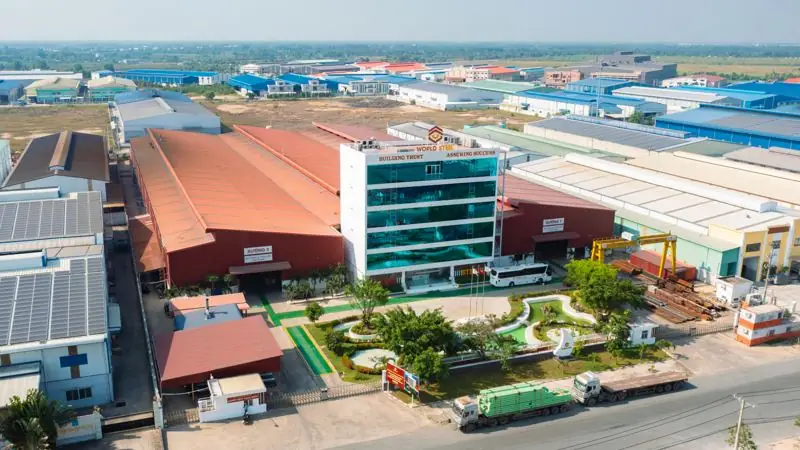
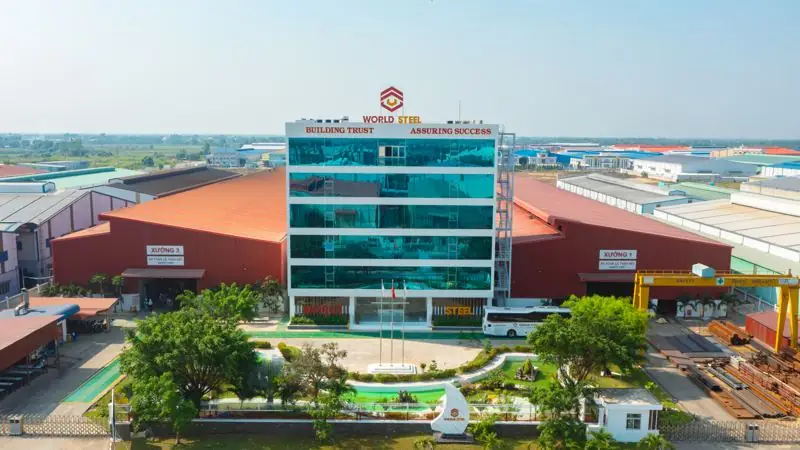
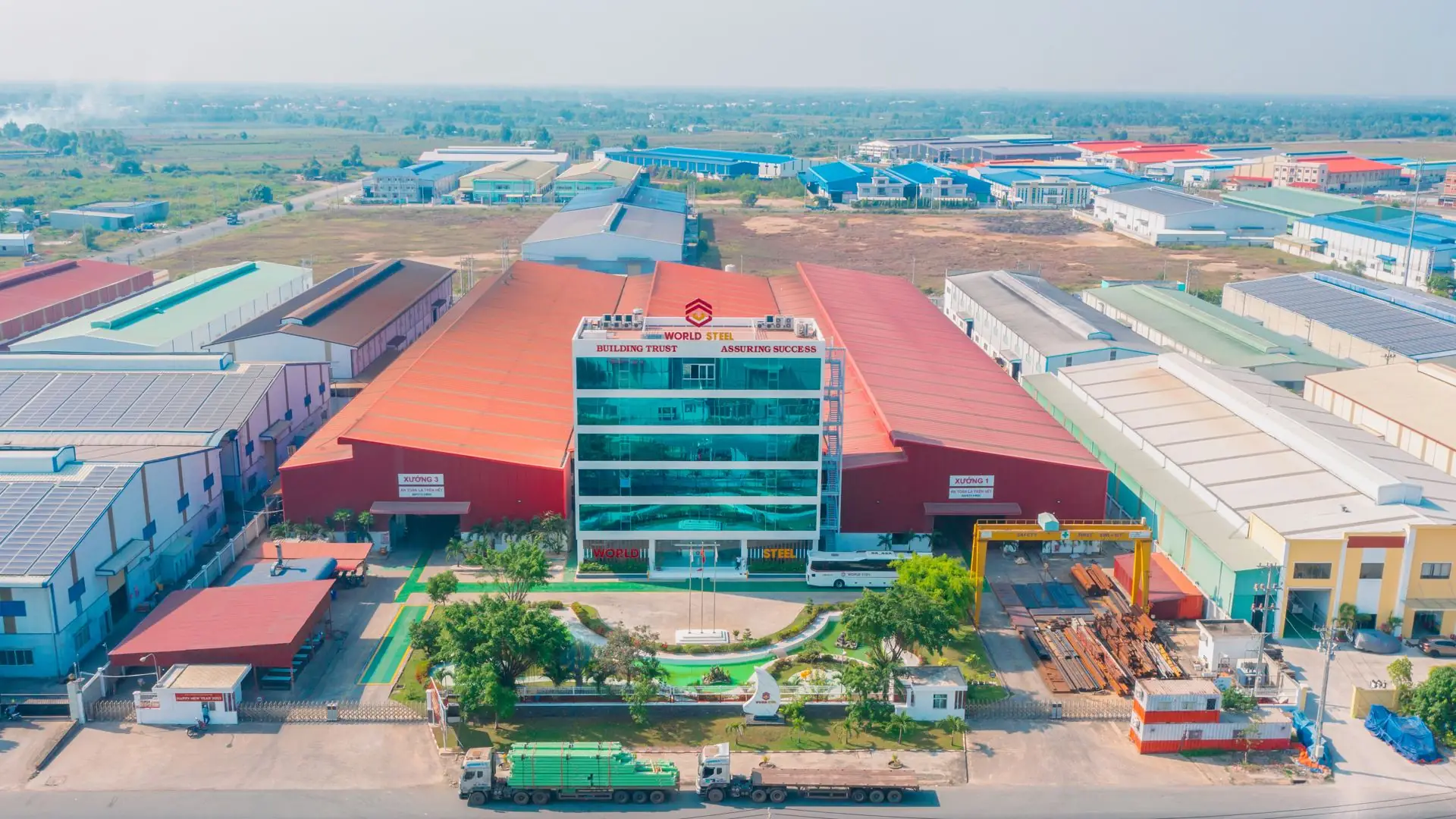
The plant that fabricates US orders: World Steel in Tay Ninh Province, Vietnam (Hai Son Industrial Park, formerly Long An).
How we work · Quote to warranty
From your first quote request to warranty: the whole World Steel process
Twenty stages in six phases, each explained with what you send, what you get back and who owns it, so your team knows what happens next on a structural steel package made in our own plant in Vietnam.
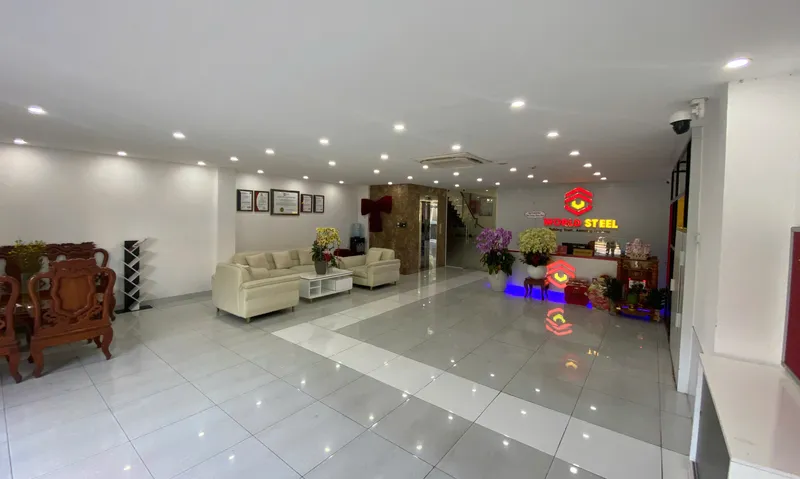
World Steel head office, 55 Le Thuc Hoach Street, Ho Chi Minh City: where visitors meet our engineers.
Quote · Document review
Five teams read your bid package before a single ton is quoted.
Estimating, engineering, quality, purchasing and logistics each check their part of the job: code basis, welding and coating requirements, steel grades, port and delivery terms. Questions come back to you in one written list.
The plant that fabricates US orders: World Steel in Tay Ninh Province, Vietnam (Hai Son Industrial Park, formerly Long An).
Quote · Takeoff or design
Quote to your drawings, or let our engineers design it lighter.
Our estimators take off every member and plate of your Engineer of Record’s design, or our engineers size the structure to the US codes for your site and quote the optimized design. You see the tonnage behind either offer.
The plant that fabricates US orders: World Steel in Tay Ninh Province, Vietnam (Hai Son Industrial Park, formerly Long An).
Contract · Terms and payment
Scope split, change rules and payment agreed in writing before you sign.
The contract fixes the drawings it is based on, what stays with your team, how changes are approved and how payment moves. With a Letter of Credit, funds are released against the shipping documents the credit calls for.
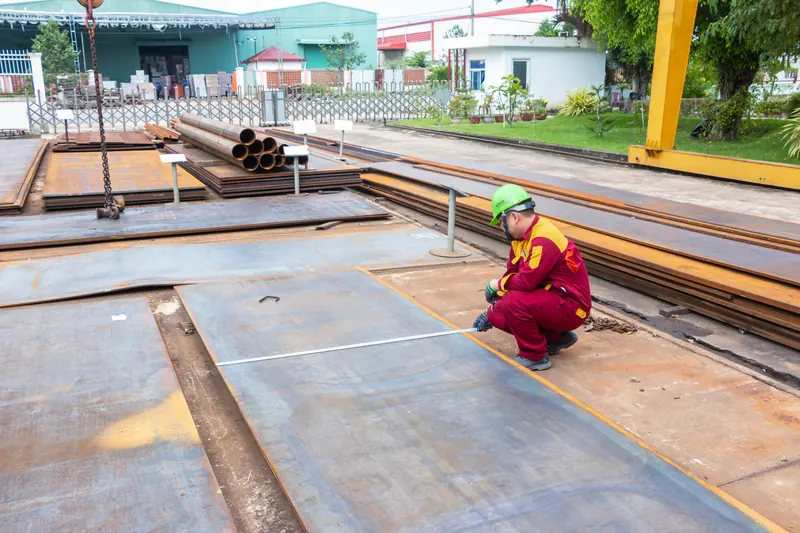
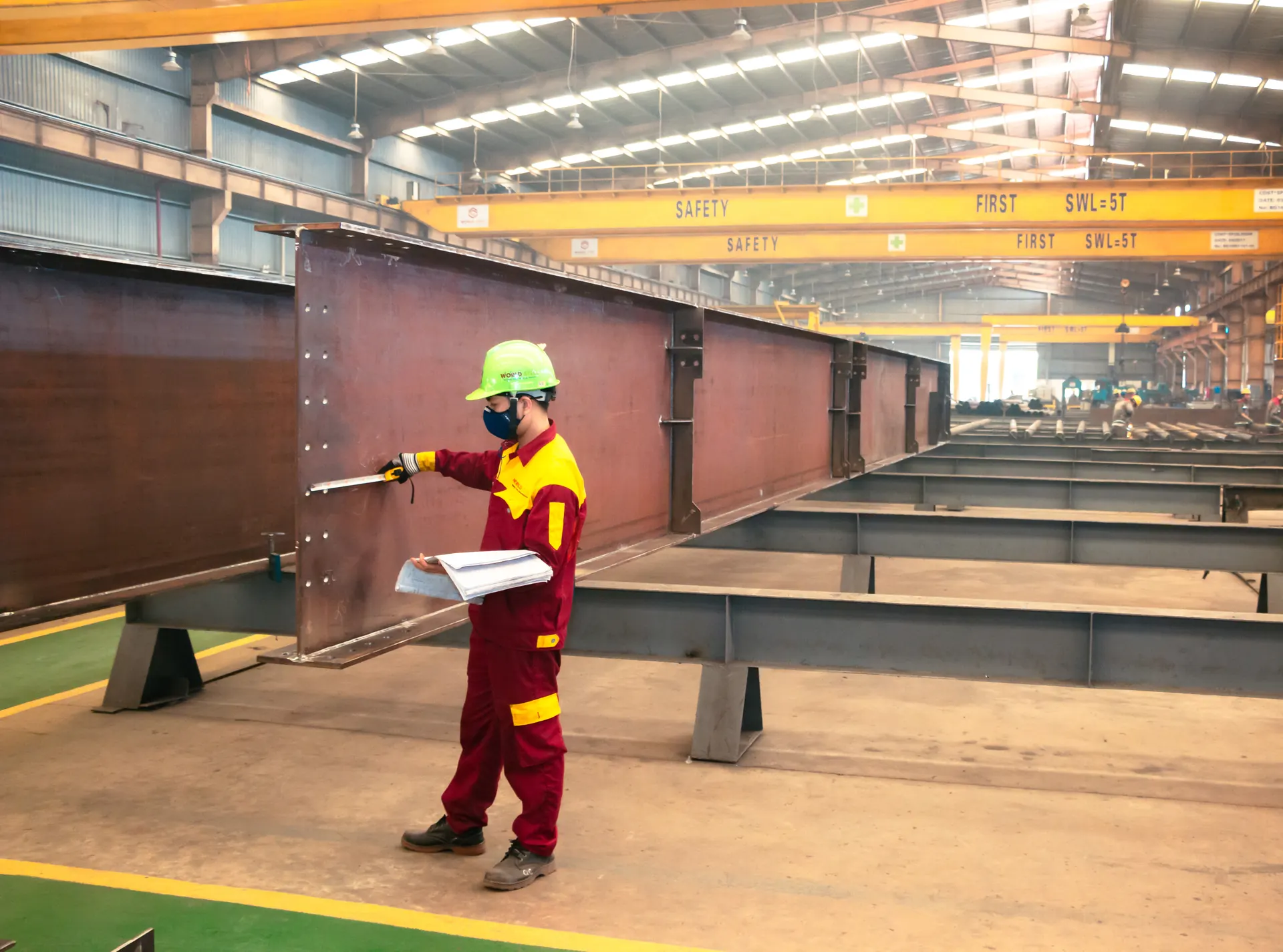
Incoming plate is measured at intake, before any cutting, in the Vietnam plant.
Engineering · Approval drawings
Your Engineer of Record approves the design before a plate is cut.
Approval drawings, the Design Report and the column reactions for your foundation design come first. Steel grades, coating systems and paint colors are submitted next, and steel is bought only after you approve them.
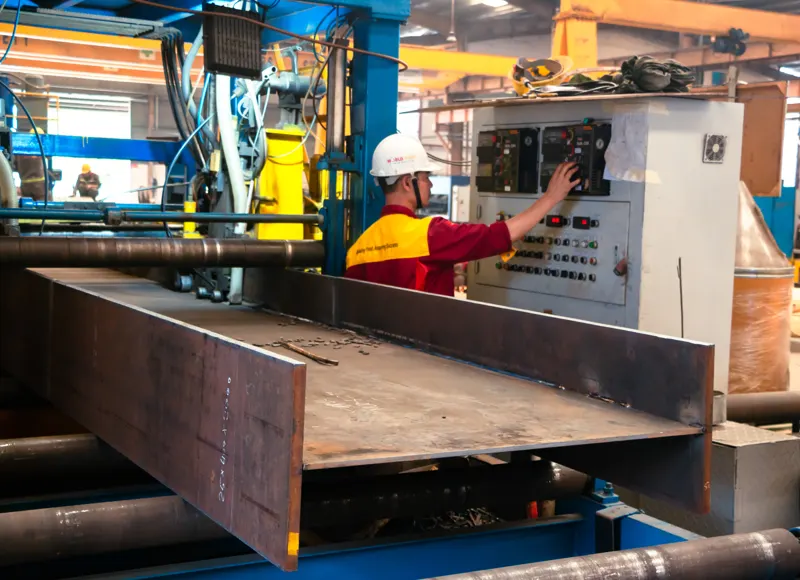
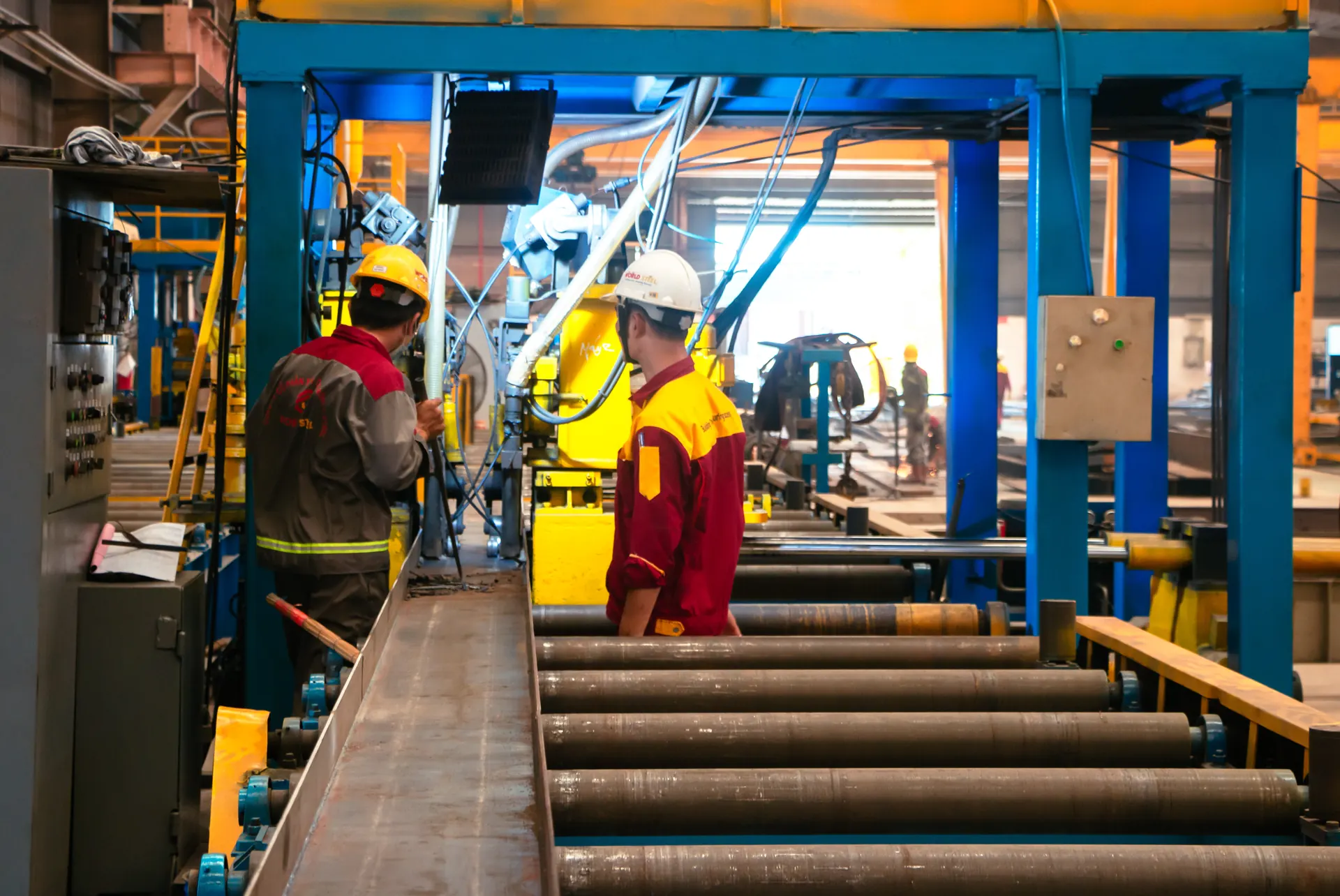
Running the automatic beam line from its control panel, World Steel in Vietnam.
Fabrication · PEB Studio
Watch each member move through our shop, live, in PEB Studio.
Cutting, drilling, welding, blasting and coating are logged station by station in our IAS AC472-accredited plant, with photos and records your team can open at any hour of the US day.
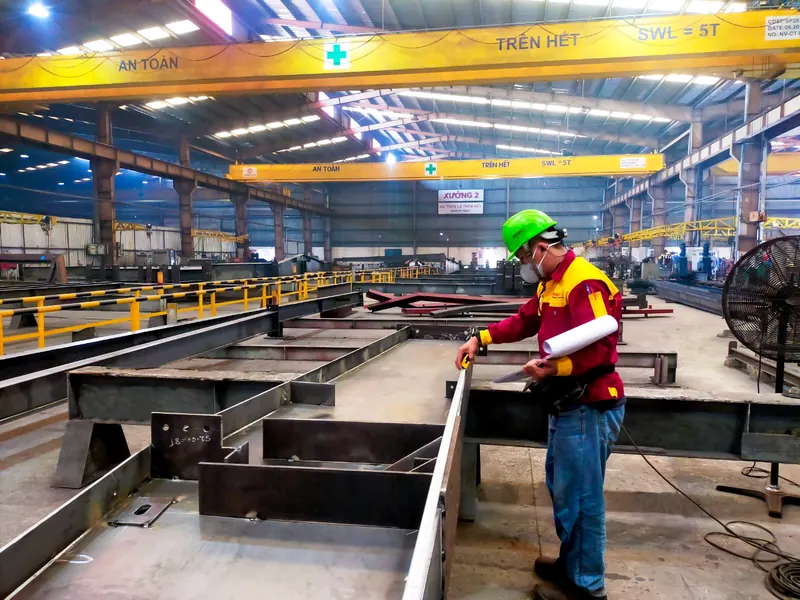
Dimensional check by QC in Vietnam before a member goes on to blasting and paint.
Fabrication · Inspection
Accepted against an inspection plan you agreed, with your inspector on video if you like.
The inspection and test plan for your job lists every check, its hold and witness points and its sampling rate. Nothing out of tolerance is packed: it is tagged, held and closed first.
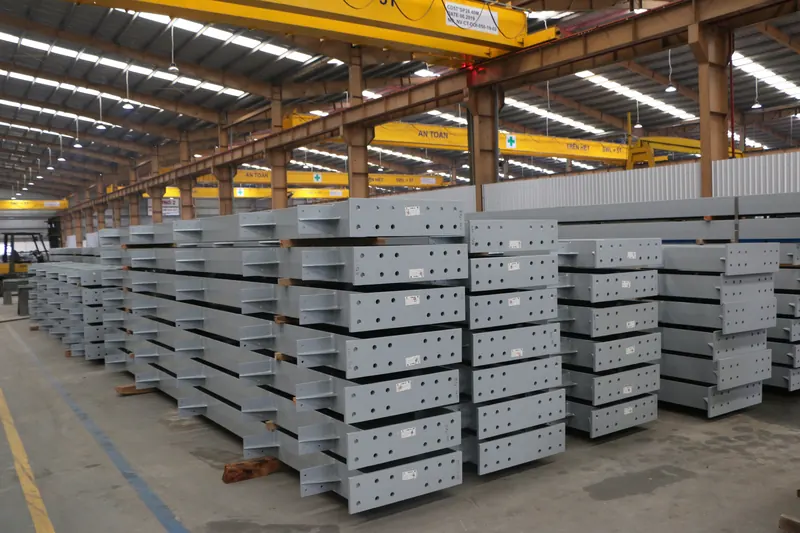
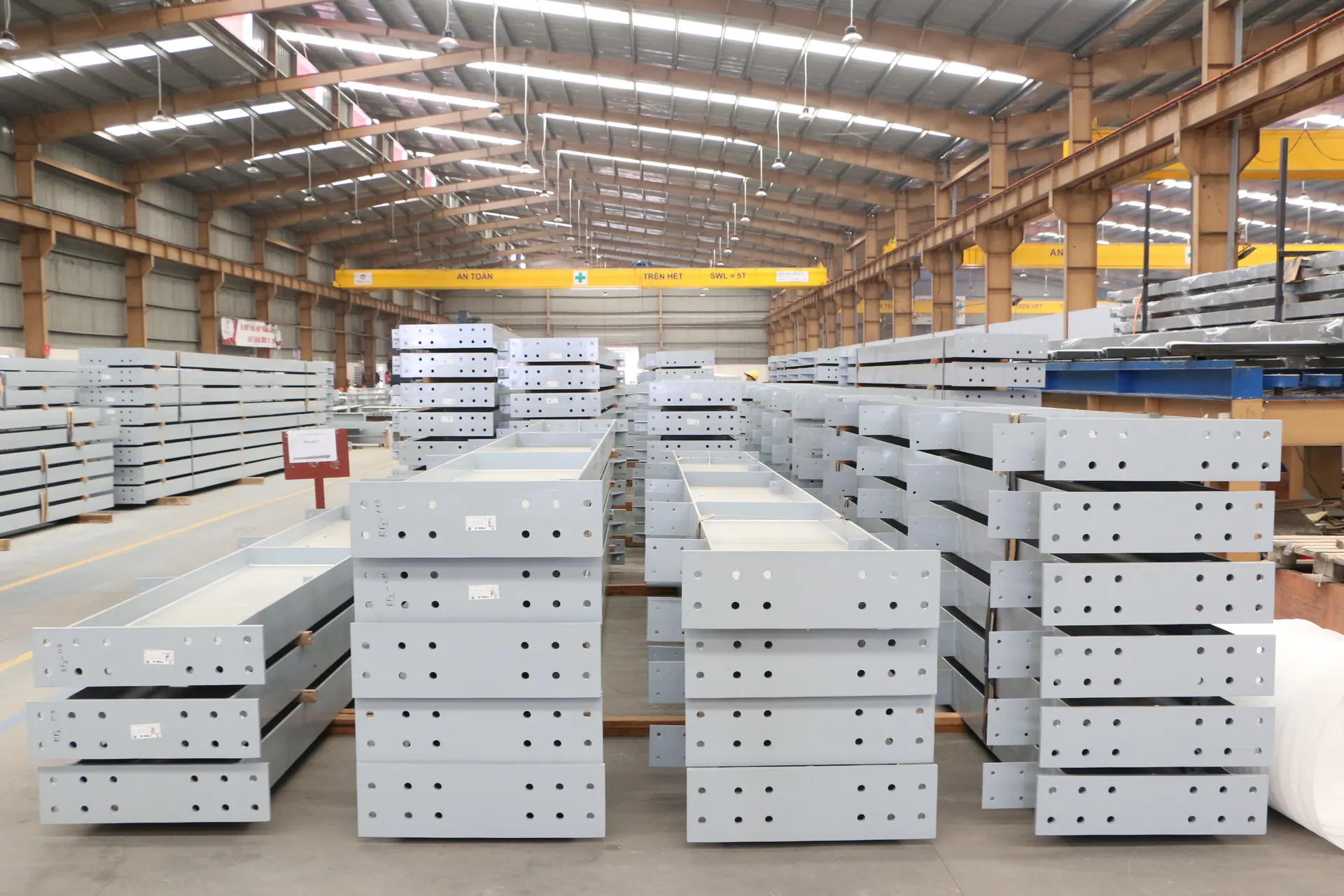
Labeled bundles lined up for dispatch from World Steel in Vietnam.
Delivery · Packing and customs
Packed in erection order, with customs documents at your broker before the vessel lands.
You get a delivery notice with the packing list and container plan, loading photos and seal numbers, then the invoice, bill of lading, certificate of origin, mill certificates and ISF data your importer needs.
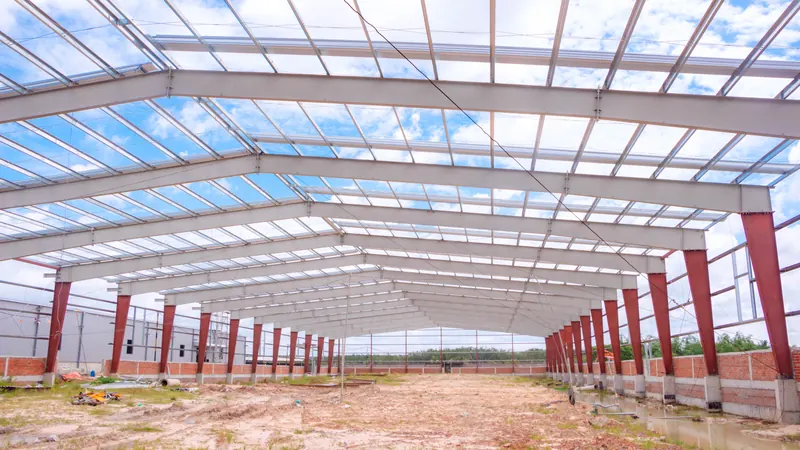
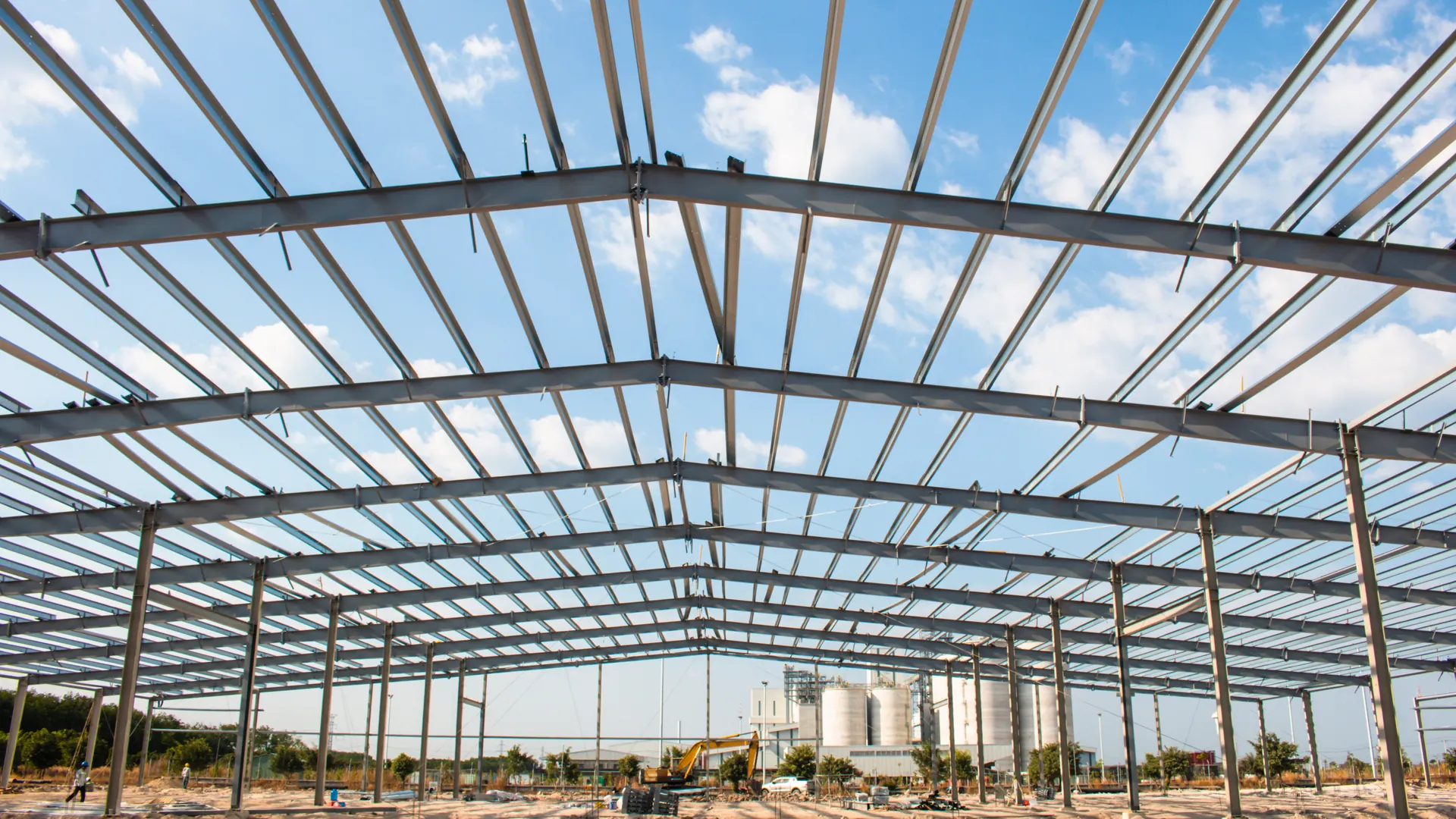
World Steel job in Vietnam (Tay Ninh Province): tapered portal frames.
Site and aftercare · Warranty
Engineers on call for your erector, and a warranty backed by the record of every member.
Your crew sets the steel from our erection drawings, with the engineers who detailed it a call away. After delivery, the warranty in your contract is answered in writing, traced to the heat, weld and coating record of each piece.
Every structural steel package we supply to the US runs on this route. Pick a phase or a stage to read what happens, what we need from you and what you get back.
One accountable contactA named sales engineer until signing, then a named project manager until the last container and through warranty.
Visible in real timeFrom the first drawing to the bill of lading, every stage is tracked in PEB Studio, where your team sees progress, photos and records.
In writingClarifications, comments, changes and nonconformances are logged with an owner and an answer, so nothing depends on memory.
Quote
From your inquiry to a quote you can bid with
The first six stages turn your drawings or idea into a priced, scoped offer. Most of the cost of a steel package is decided here, so this is where our engineers spend the most time.
Photo
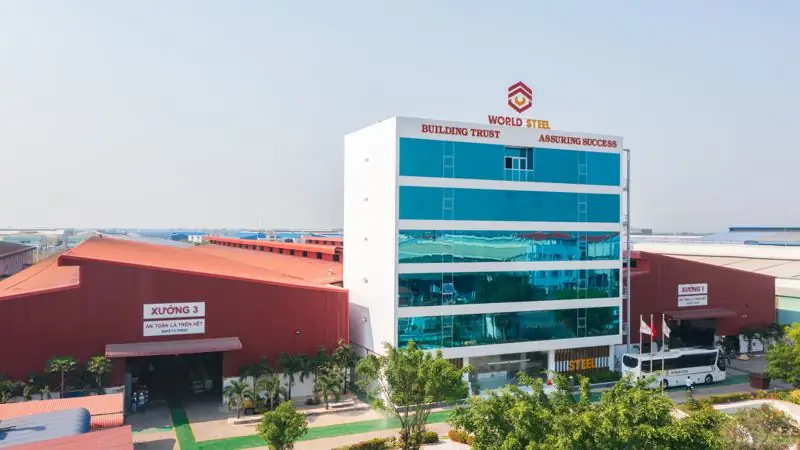
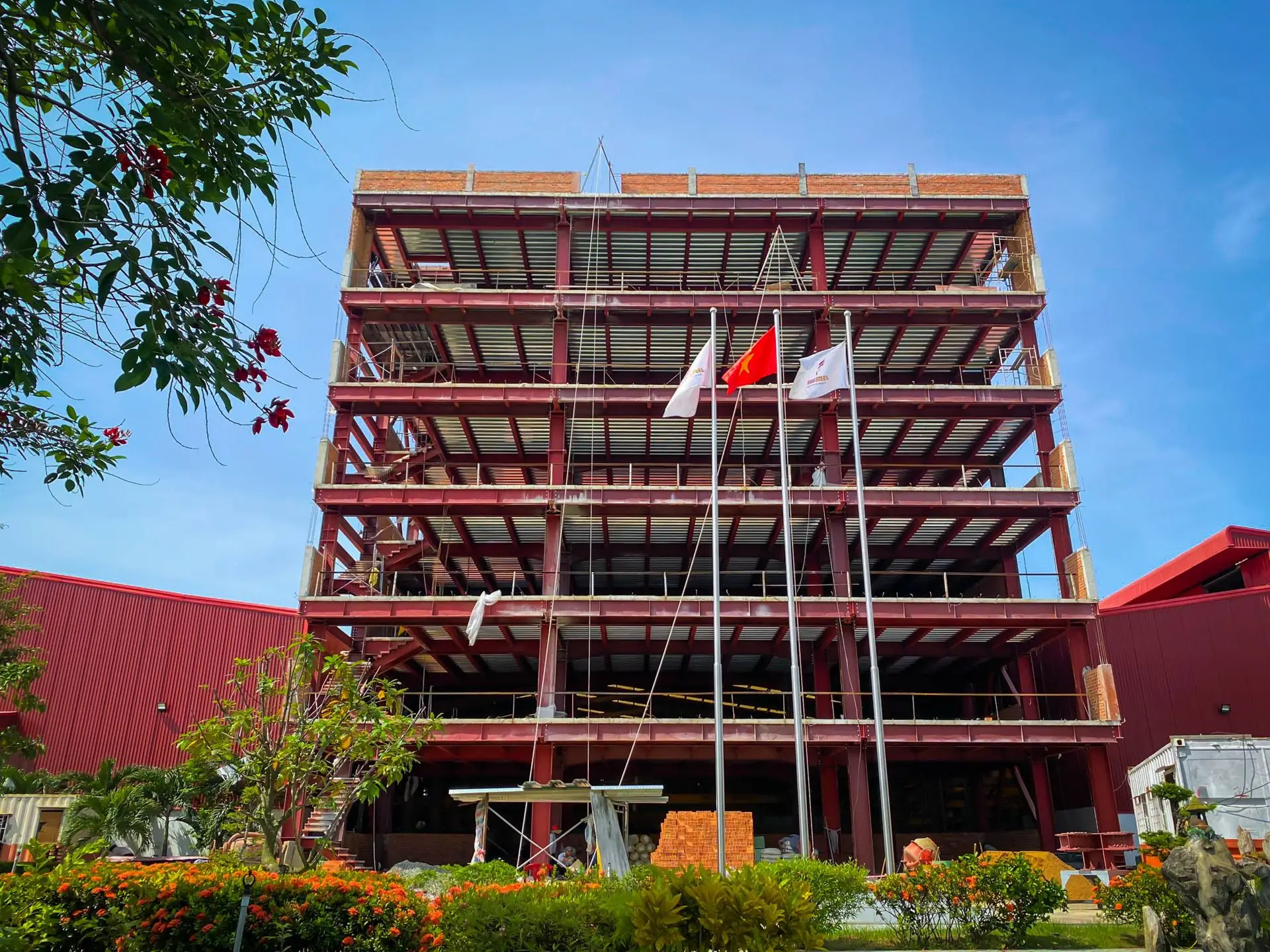
Going up beside the plant in Vietnam: World Steel framed its own office building.
Project inquiry to World Steel sales
You, the US contractor
You send the project information to a World Steel sales engineer: drawings or a sketch, the specification, the site and the date you need an answer.
Any format is fine: a full bid set, architectural drawings, a structural set from your Engineer of Record or a one-page sketch with dimensions. Tell us the site address, so the loads come from the right place, the tonnage if you know it, the bid date and the target date the steel must be on site. A sales engineer is named for your job from the first email and stays your contact until the contract is signed.
Our estimating, engineering, quality, purchasing and logistics teams each read the package for their own part of the job before anyone prices a ton.
Engineering checks the code basis (IBC, ASCE 7 loads, AISC 360 and, where seismic detailing applies, AISC 341), the structural system and the connections. Quality checks the welding, inspection and coating requirements. Purchasing checks the steel grades and origin the specification calls for. Logistics checks the port, the delivery terms and anything oversized. Questions go back to you in one written list, not in a stream of emails.
We propose the structural solution we think fits your job best, and you confirm it before we price it.
The proposal sets the framing system, the member types (rolled, built-up or a mix), the connection types, the coating system, how the steel will be split into shipping pieces and the Incoterm. Where a different frame or bracing layout would save tonnage or site time, we show it side by side with the original design. Nothing changes without your approval and, once the job is live, your Engineer of Record’s.
From you
Your choice between the options
Any owner or architect constraints
You receive
Proposal drawings and a written basis of design
Options that save tonnage or site time, if there are any
Once the solution is agreed, the quote is built in one of two ways: a takeoff of your drawings, or a design by our engineering team.
If you quote to your own drawings, our estimators take off every member, plate, bolt and coated surface piece by piece, so the tonnage in the quote is the tonnage on your sheets. If you asked for an optimized design, our engineers analyze the structure to the US codes for your site and size each frame, beam and connection, then price the design that results. Either way you see the tonnage and the main quantities behind the offer.
From you
Confirmation of the route: your drawings or our design
You receive a written quotation that states exactly what is in the package and what is not.
The quotation lists the scope, the exclusions, the tonnage, the coating system, the drawings included (shop and erection drawings are part of every job at no extra cost), the Incoterm and port, who acts as importer of record, the payment terms and the production slot we can hold. Imported steel can be subject to US duties, so the quotation says who carries them. We never publish prices on the website: every job is priced on its own documents.
From you
Your questions and any revision you need for the bid
You receive
A written quotation with scope, exclusions, Incoterm and importer of record
Between the quote and the award we stay with you: revised quantities, alternates, answers for your owner and proof that the plant can do the job.
Bids change. When the drawings are revised, the owner asks for an alternate or your schedule moves, we reissue the quotation. Our engineers join video calls with your team or your owner, and you can audit the plant in person or online, see projects of the same size and review the quality program before you commit. The quote is not finished until you have what you need to sign.
Terms agreed, contract signed, production slot locked
Three short stages, but they set the rules for everything after: who does what, how changes are handled and how payment moves.
Photo
The plant that fabricates US orders: World Steel in Tay Ninh Province, Vietnam (Hai Son Industrial Park, formerly Long An).
Contract discussion
Together
We go through the contract with you clause by clause, so the scope split, schedule, payment and change rules are agreed in writing before anything is signed.
The contract fixes the drawings and specification it is based on, the scope split between World Steel and your team, the submittal and delivery sequence, the packing and delivery terms, the inspection rights of you and your inspector, how changes are priced and approved, the payment method and the warranty terms. Anything we could not confirm in the quote is closed here, not discovered later.
Both sides sign, and your project moves from the sales team to a named World Steel project manager.
Right after signing we hold a kickoff call: contacts on both sides, the baseline schedule, the drawing submittal dates, the Incoterm and importer of record, and the reporting rhythm. Your team gets PEB Studio access, where the job is tracked from the first drawing to the last container.
The advance payment agreed in the contract is made, or the Letter of Credit is opened, and the job is committed in the plant.
The amount and method are set in each contract. With payment by Letter of Credit, your bank opens the credit and funds are released against the shipping documents it calls for, so neither side carries the whole payment risk. Once the advance or the L/C is in place, the production slot is locked and steel purchasing is planned around the approval dates.
From you
The advance payment or the Letter of Credit, as the contract says
Drawings, calculations and materials approved before a plate is cut
Your Engineer of Record approves the design, you approve the materials and colors, and only then does the shop start detailing for fabrication.
Photo
In the Vietnam shop, fit-up is compared with the shop drawing before final welding starts.
Approval drawings, calculations and column reactions
Together
We issue the approval drawings, the design calculations and the column base reactions for your review and approval.
The approval set holds the anchor rod plan, the column reactions your foundation designer needs, the framing plans, elevations and main connections, with the Design Report behind them. Your Engineer of Record reviews, approves and seals the drawings; World Steel does not seal. Every comment is logged, answered in writing, clouded on the sheet and reissued under a new revision until the set is approved.
Material and paint color submittals, then purchasing
Together
We submit the steel grades, sample mill certificates, coating system data and color samples. Steel and paint are bought only after you approve them.
The submittal lists each grade with its mill, the coating products and dry film thicknesses, and color chips or swatches for your owner. Most steel comes from large Vietnamese mills such as Hòa Phát, Formosa Hà Tĩnh and POSCO, with steel from Japan, Korea, Indonesia or Thailand when your specification calls for it. Coating products come from Jotun, PPG, Carboline, Hempel, Nippon or International Paint, brands sold in the US, so touch-up paint is easy to buy near the job.
With the design approved, our detailers model every member and produce the shop drawings the plant fabricates from.
Each member gets its own piece drawing with dimensions, holes, welds and its piece mark, all taken from one 3D model, together with the erection drawings your crew will use on site. Shop and erection drawings are included in every job at no extra cost, and they can be shared with your team for information. Revisions are controlled, so the shop, your erector and your inspector work from the same set.
Built in our own plant in Vietnam, checked before it is released
Your steel is fabricated in World Steel’s own IAS AC472-accredited plant, and you can follow it member by member in PEB Studio.
Photo
Submerged-arc welding of web-to-flange seams in the Vietnam plant.
Fabrication in our plant
World Steel
The shop drawings go to the floor: cutting, drilling, assembly, welding, blasting and coating, station by station.
Plate is checked and traced by heat number at intake, then cut and holed on laser machines that work steel up to 100 mm (4 in) thick. Built-up members run through automatic beam lines, fitters and welders work to qualified welding procedures (with AWS D1.8-qualified welders for seismic work), and every member is blasted and coated in the paint hall. Progress, photos and records appear in PEB Studio as they are created, so you see your job move in real time.
Before anything is packed, the members are inspected and accepted against the inspection and test plan agreed for your job.
The inspection and test plan lists every check, its hold and witness points and its sampling rate, agreed by both parties for each project: incoming material, fit-up, welds and NDT, dimensions, surface preparation and coating thickness. You or your third-party inspector can attend in person or by video, and remote access to hold points is available on request. Anything out of tolerance is tagged, held and closed before release.
From you
Witness the hold points, in person or by video, if you choose
Packed in erection order, shipped to your US port, documents ready
Four stages that decide how smoothly the steel crosses the Pacific and clears US customs.
Photo
Bundles made up for an export shipment at the Vietnam plant.
Notice of delivery
World Steel
When a sequence is released, we tell you what is shipping, when, in how many containers and to which port.
The notice comes with the packing list by bundle and piece mark, the container plan and the planned sailing, so your broker, trucker and site team can prepare. If your site is not ready, tell us now: the sequence can be re-planned while the steel is still in the plant.
From you
Confirm the site is ready and your broker is appointed
The steel is bundled in erection order, tagged by piece mark and loaded into containers or as breakbulk.
Bundles are strapped and protected so the coating arrives intact, every piece carries its mark, and wood packaging is heat-treated and ISPM 15-stamped by certified suppliers. Each container is photographed as it is loaded and sealed, and the photos are shared before departure.
The containers are trucked to the port in Vietnam and shipped to the US port named in your contract.
Containers leave from the deep-water port at Cai Mep or from Cat Lai, on mainline sailings to West, Gulf or East Coast ports. Who books the freight and where the risk passes depends on the Incoterm: on FOB you book the vessel, on CFR, CIF or DAP we do. You track the booking in PEB Studio.
We send the documents your customs broker needs to clear the shipment, before the vessel arrives.
The set includes the commercial invoice, packing list, bill of lading, certificate of origin, mill certificates and the data your importer needs for the Importer Security Filing, which must reach CBP no later than 24 hours before the containers are loaded in Vietnam. The importer of record named in the contract, usually through its broker, files the entry and pays any US duties.
You order the building. We take care of the shipping.
Our logistics team knows the US market: its gateway ports, customs entries, rail ramps and trucking rules. We plan backward from the date your site needs steel, pick the port and inland route that meet it fastest with the least risk, and show every container live in PEB Studio.
We start from the day your erector needs steel and work backward to the production slot, the packing order and the sailing.
The best-fit route to your site
West, Gulf or East Coast port, then truck or rail: we compare the options for your address and recommend the one that meets your schedule.
Customs paperwork ready early
The full document set reaches your customs broker before the vessel arrives, and the quote already names the importer of record and who carries any Section 232 duties.
Loaded in erection order
The first containers carry the first steel your crew sets. Large jobs can ship in lots that follow the erection sequence, so the site can start sooner.
One team that knows the US
A dedicated project manager and our Westminster, California office coordinate with your forwarder, broker, trucker and erector, at hours that suit your time zone.
Every container live in PEB Studio
Seal numbers, packing reports, documents and site readiness appear as they are released, so nobody chases a shipment by phone.
Site and aftercare
Support for your erector, then warranty
Your crew or the erector you hire sets the steel. The engineers who designed and detailed it stay on call, and the contract warranty covers what we supplied.
Photo
Frames and purlins going up on a World Steel job in southern Vietnam.
Erection support
Together
Your crew erects the structure; World Steel supports them by phone and video with the engineers who designed and detailed it.
Your erector works from our erection drawings and bolt lists. Questions on site are answered against the 3D model, at the start or end of your US day. If a piece arrives damaged or short, photograph it at unloading and send it to your project manager: every item is traced by piece mark, bundle and container, and the replacement is tracked to closure. World Steel does not erect and has no US erection crew.
After delivery, the warranty written in your contract covers the steel structure we supplied, backed by the records of every member.
The warranty terms are set in each contract. If you find a problem, send photos, the piece mark and a short description to your project manager. Because every member is traced to its heat, its welder, its inspection and its coating record, we can find the cause quickly and agree the remedy with you in writing. Coating warranties follow the paint manufacturer’s own terms, and because those brands are sold in the US, touch-up and warranty questions go to a manufacturer close to the job.
From you
Photos, piece mark and description of the issue
You receive
A written answer with the cause and the agreed remedy
World Steel, your team and your Engineer of Record, phase by phase
World Steel designs, details, fabricates, coats, packs and ships the steel structure. Approval, the seal, the permit, customs clearance and erection stay with you, the US contractor, and your Engineer of Record.
Phase
World Steel
You, the US contractor
Your Engineer of Record
Quote
Reviews the documents, proposes the solution, takes off or designs, quotes
Sends the package, chooses the solution, bids
Answers design questions if the job already has one
Contract
Drafts the scope split, names the project manager, opens PEB Studio
Agrees the terms, signs, makes the advance payment or opens the L/C
No role
Engineering
Issues approval drawings, calculations, reactions and submittals; details shop drawings
Approves materials and colors, designs the foundations
Reviews, approves and seals the drawings
Fabrication
Fabricates, coats and inspects to the agreed ITP
Witnesses hold points, in person or by video, if it chooses
May review records
Delivery
Packs, loads, ships per the Incoterm and sends the customs documents
Appoints the broker, clears customs, trucks to site
No role
Site and aftercare
Supports the erector remotely, answers warranty claims
Erects the structure, handles the permit and special inspections
Site observations under its own scope
The paper trail
Every stage leaves a document you keep
Quotation, approval drawings and Design Report, material and coating submittals, inspection records, packing lists, shipping and customs documents: the set your team, your inspector and the owner need at closeout.
How long does the whole process take from quote to delivery?+
It depends on the tonnage, how fast the approval drawings come back and the delivery sequence, so we do not publish lead times. The quotation states the production slot we can hold, and the baseline schedule agreed at kickoff sets every date after that.
Can I skip the design stage and quote to my own drawings?+
Yes. If your Engineer of Record has already designed the structure, our estimators take off your drawings and we quote and fabricate to them. If you want, we can also show where an optimized design would save tonnage, as an option.
Who approves and seals the drawings?+
Your Engineer of Record reviews, approves and seals the drawings. World Steel prepares the approval drawings, the calculations and the column reactions for that review, and does not seal drawings.
When is steel purchased?+
Only after you approve the material and coating submittal, which follows the approval drawings. That way the steel is ordered once, to the approved design.
How do I follow my job during fabrication?+
In PEB Studio, where progress, photos and inspection records appear as they are created, plus progress reports from your project manager and video calls at hours that suit your US team.
What payment terms do you work with?+
The advance payment and the payment method are agreed in each contract. We work with payment by Letter of Credit, where funds are released against the shipping documents the credit calls for.
Who clears customs and pays US duties?+
The importer of record named in the contract, usually through its customs broker. World Steel sends the commercial invoice, packing list, bill of lading, certificate of origin, mill certificates and ISF data before the vessel arrives.
Does World Steel erect the steel?+
No. World Steel designs, fabricates, coats, packs and ships the steel structure. Your crew or the erector you hire sets it, with support from our engineers by phone and video.
What does the warranty cover?+
The warranty terms are written in each contract for the steel structure we supply. Coating warranties follow the paint manufacturer’s own terms. A claim is answered in writing with the cause and the agreed remedy, using the records of the members involved.
Send the drawings or a sketch, the site address and your target site date. A sales engineer is named for your job and our teams start the document review.