
QC checkpoint: incoming material
Steel you can trace back to the heat it was poured from
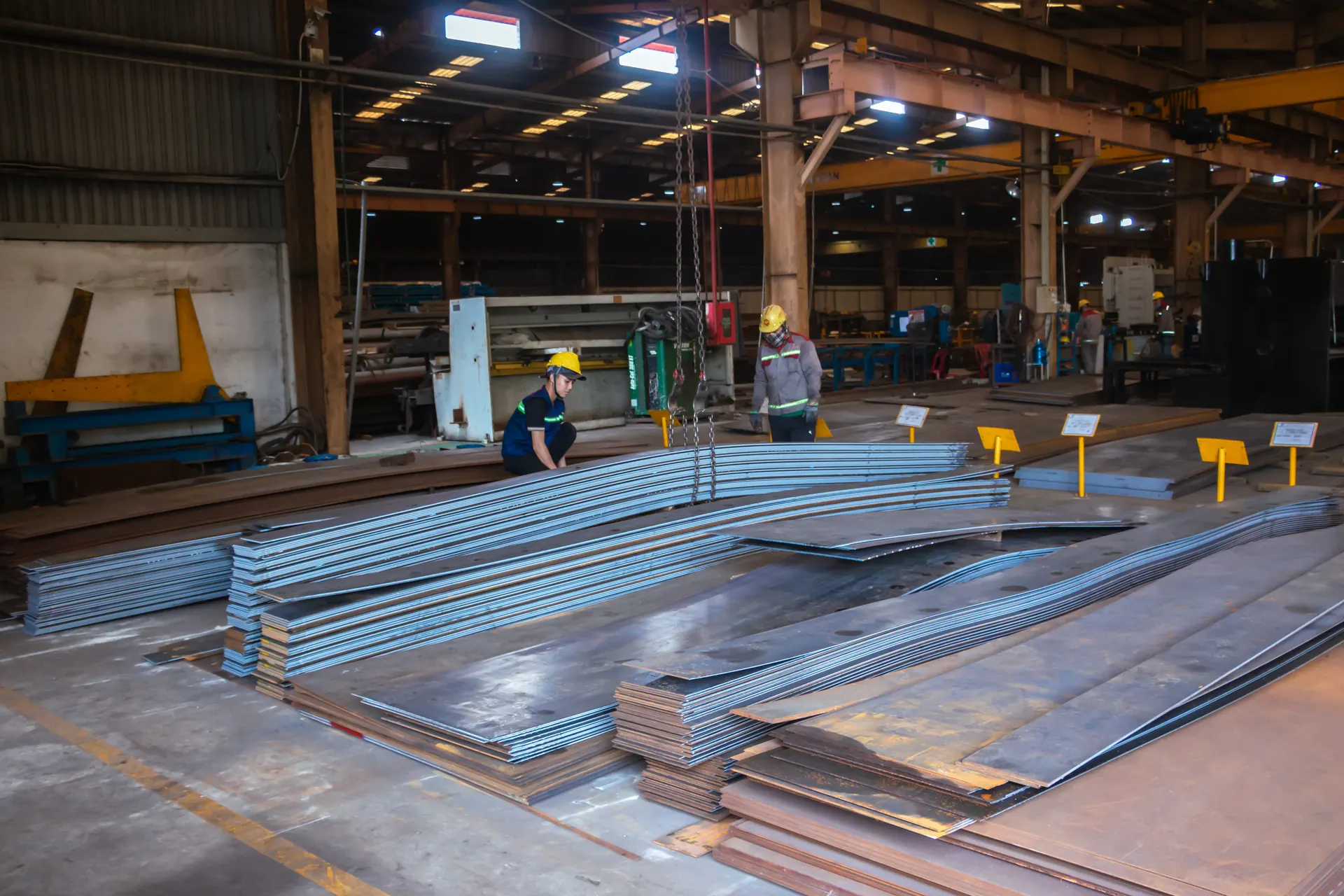
Every plate, coil and section that enters our plant is checked against its mill test report before it is accepted into stock. The heat number becomes its identity, and it follows the steel through cutting, welding and packing to the container that reaches your site.
Heat no.
Grade, heat and mill test report matched before the steel enters stock.
Traceability
One number, from the mill to your site
AISC 303 asks a fabricator to show, in writing and in practice, how it keeps track of material through fabrication. Ours runs on the heat number.
-
Mill heat
The steel mill in Vietnam casts the heat and issues a mill test report with its heat number, chemistry and mechanical tests.
-
Plate, coil or section
Each piece arrives stenciled or tagged with the heat number. We log it against the report and the purchase order.
-
Cut part
Parts are cut from the cutting plan and marked with their piece mark and ID code. Where your contract asks for piece-level traceability, the heat number is transferred onto each part too.
-
Assembled member
The member’s record lists the heats of its flanges, web and plates, so a single beam can be traced to every mill certificate behind it.
-
Bundle and container
Packing lists tie each member to its bundle and container, so a question on site leads straight back to the paperwork.
Reading a mill test report
Six fields we check before steel is accepted
The report is the mill’s promise about the heat. These are the lines our receiving inspector reads against the order and against the steel itself.
Mill test report
Issued by the mill · checked by World Steel QC on receipt
- Specification and grade
- The ASTM designation and grade, for example A572 Grade 50 for plate or A992 for wide-flange shapes, match the purchase order and the approved drawings.
- Heat number
- The number on the report is the number stenciled or tagged on the steel. If they do not match, the material does not enter stock.
- Chemical analysis
- Carbon, manganese, phosphorus, sulfur and the alloying elements fall within the limits of the grade. Chemistry also tells our welding engineers whether preheat or a different procedure is needed.
- Tensile test
- Yield strength, tensile strength and elongation meet the grade minimums. This is the number your Engineer of Record designed with.
- Charpy impact test
- Where your specification calls for notch toughness, for example on heavy seismic members, the CVN results at the required temperature are on the report. Available on request.
- Certificate type
- EN 10204 type 3.1 certificates, validated by the mill’s inspection department independent of production, are supplied on request.
At the gate
Receiving checks on every delivery
Paper against order
Grade, size, quantity and heat numbers on the report match the purchase order line by line.
Thickness and size
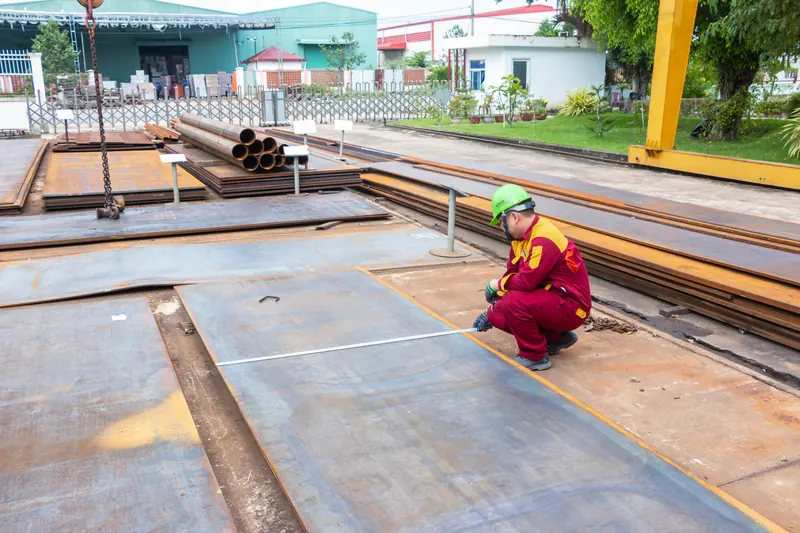
Thickness, width and section dimensions are measured and compared with the permitted variations of ASTM A6/A6M.
Surface condition
Plates and sections are looked over for laminations at the edges, deep pitting, seams and mill damage before they are accepted.
Identity on the steel
Heat numbers stenciled or tagged on the material are legible and match the report. Missing identification sends the piece to quarantine.
Stored by grade and heat
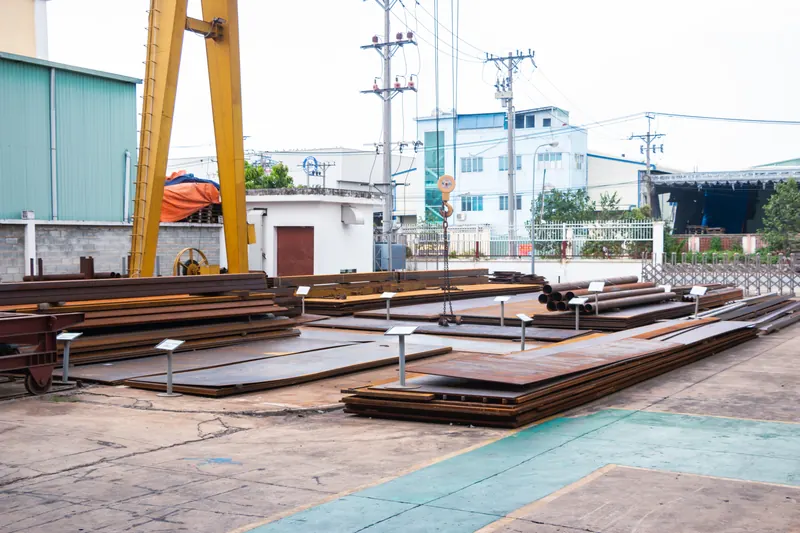
Accepted stock is racked by grade and heat number, so the wrong steel cannot reach the cutting tables by mistake.
Welding consumables
Electrodes, wire and flux are checked against the classification the WPS names and stored as their maker requires.
When steel does not match
Quarantined first, questioned second
Quarantined
Steel without a matching report, with results outside the grade or with damage beyond the standard is tagged and kept apart from production stock.
Recorded
A nonconformance report records what was found, with photos, and the supplier is notified.
Closed before use
The piece is returned, replaced, or accepted only with a valid corrected certificate. It never reaches a cutting plan while the report is open.
All plate, coil and sections for US orders come from mills in Vietnam. That keeps the supply chain short and the paperwork in one place, and it is how we can promise mill certificates with every heat.
QC and QA
Who checks what at this checkpoint
US practice separates the fabricator’s quality control from the quality assurance carried out for the owner. World Steel runs the QC; your side decides how much QA it adds, and the Engineer of Record sets what is acceptable.
World Steel QC
Quality control: the fabricator
Checks every delivery against its mill test report, measures it, logs the heat numbers, stores by grade and heat, and quarantines anything that does not match.
Your inspector
Quality assurance: owner, special or third-party inspector
Can review the mill certificates as a document review in the ITP, sample them against the material during a plant visit or by video, and audit the material log.
Your Engineer of Record
Sets the criteria, rules on what changes the design
Specifies the grades, any notch toughness requirement and the certificate type, and rules on any substitution before it is used.
Inspectors can attend in Vietnam, join hold points live on Zoom or Microsoft Teams, or be given remote access to the records on request. The plant itself is audited twice a year under IAS AC472, with periodic plant inspections by Smith-Emery Laboratories.
Questions from US contractors and inspectors
Questions about mill certificates and traceability
Ask us anything else about this checkpoint before you award, or during the job through your project manager.
Where does your steel come from?
All plate, coil and sections for US orders come from mills in Vietnam. Each delivery arrives with its mill test report, and the report travels with the steel into your project records.
Can you trace a single member back to its mill certificate?
Yes. The member record lists the heat numbers of the plates and sections it was built from. Where your contract requires it, heat numbers are also transferred onto each cut part.
Do you supply EN 10204 3.1 certificates?
Yes, on request. Type 3.1 certificates are validated by the mill’s own inspection department, independent of production, and carry the actual test results for the heat.
Can you provide Charpy V-notch results?
Yes, where your specification calls for notch toughness. The mill tests at the temperature required and the results appear on the certificate. This is common on heavy members in seismic force-resisting systems.
What happens if a heat number on the steel does not match the report?
The material is quarantined, a nonconformance report is raised and the supplier is notified. It is not used until the identity is proven or the material is replaced.
Are mill certificates included in the documents we receive?
Yes. They are part of the Manufacturing Data Record shipped with your steel, indexed by heat number so your inspector can find the one behind any member.
Keep reading
Where this checkpoint connects
Need traceable steel for a large job?
Tell us the grades, the certificate type and whether you need Charpy results. We will build them into the plan and price before you award.