
Export packing · ISPM 15
ISPM 15 wood packaging for steel shipped to the US
Your steel crosses the Pacific on timber: dunnage between the bundles, skids beneath them and crates for the small parts. US Customs checks every piece of that wood for the ISPM 15 mark. This page explains the rule and how World Steel packs your order so the wood never holds up the steel.
Last reviewed . Summary only, not legal or customs advice.
VN – 000
HT
Layout of the mark, drawn for illustration. The real stamp carries the IPPC logo and the facility’s own number.
- Symbol
- IPPC symbol. Shows the wood was treated under the international standard. It is the logo of the International Plant Protection Convention.
- VN
- Country code. The ISO two-letter code of the country where the wood was treated: VN for Vietnam.
- 000
- Facility number. A unique number the national plant protection organization gives the producer or treatment provider, so any piece traces back to it.
- HT
- Treatment code. The treatment applied. HT is heat treatment; MB marks methyl bromide fumigation.
The rule
Every piece of solid wood that travels with your steel
ISPM 15 is the international standard for wood packaging material, set under the International Plant Protection Convention. The US applies it through USDA APHIS, and CBP enforces it at the port. It exists to stop wood-boring insects and plant diseases riding into the country inside pallets and dunnage.
Dunnage
Timber laid between bundles and under them so straps can pass and coated faces never touch.
Skids
Runners under a bundle so a forklift or crane sling can get under it at the port and at your site.
Crates and boxes
Closed timber boxes for bolts, anchor rods, flashing, trim and other small parts.
Blocking and bracing
Chocks and braces that stop bundles shifting inside a container or on a flat rack.
Pallets
Platforms for sheeting packs, fastener cartons and accessories.
Spacers and load boards
Strips and boards that spread the weight of a stack across the container floor.
The treatment
HT: 56 °C (133 °F) at the core, for 30 minutes
Wood packaging must be made of debarked wood and treated by an approved method. For heat treatment, the core of the thickest piece must reach at least 56 °C (133 °F) and stay there for at least 30 continuous minutes, which kills the insects and larvae living in the timber. The treatment facility then stamps each piece with the HT mark.
The other method the US accepts is methyl bromide fumigation, marked MB. The wood for World Steel’s US shipments is heat treated.
Core temperature
Measured at the core of the wood, not in the air of the kiln.
The mark
What inspectors look for on each board
- In a visible place on each article, preferably on at least two opposite sides.
- Legible and permanent: stamped or branded, never hand-drawn or written on a label that can fall off.
- On every piece of wood packaging, dunnage included, because each article is inspected on its own.
At the US port the proof is the mark on the wood itself. Your customs broker confirms any other paperwork your entry needs.
Scope
Regulated, and not regulated
Must be treated and marked
- Solid sawn timber 6 mm (about 1/4 in) thick or more
- Dunnage, skids, pallets, crates, cases and blocking
- Reels, drums, bins and load boards made of solid wood
Outside ISPM 15
- Plywood, OSB, particleboard and other manufactured wood
- Wood pieces less than 6 mm thick in every dimension
- Loose packing such as wood wool or sawdust
- Steel, plastic, foam and inflatable dunnage
At the US port
What happens when the wood is wrong
The steel can be perfect and still be turned around at the port. Non-compliant wood packaging stops the whole shipment it travels with, not just the board.
CBP inspects
CBP agriculture specialists check wood packaging on arriving cargo for the mark and for signs of live pests.
Violation found
Unmarked, wrongly marked or infested wood is a violation, and the shipment holding it is not allowed to enter as it is.
Emergency Action Notification
An EAN sets out what must happen: safeguarding, destruction under APHIS supervision, or re-export of the shipment.
Re-export
If the wood cannot be brought into compliance, the shipment goes back out of the country, usually at the importer’s expense.
Possible penalty
CBP can also penalize the importer for a wood packaging violation, on top of the cost and the delay.
The importer of record answers to CBP for the shipment. Every World Steel quote states the Incoterm and who acts as importer of record, so that is settled before you sign. Incoterms and responsibilities · US import regulations
Our part
How World Steel packs your steel to clear ISPM 15
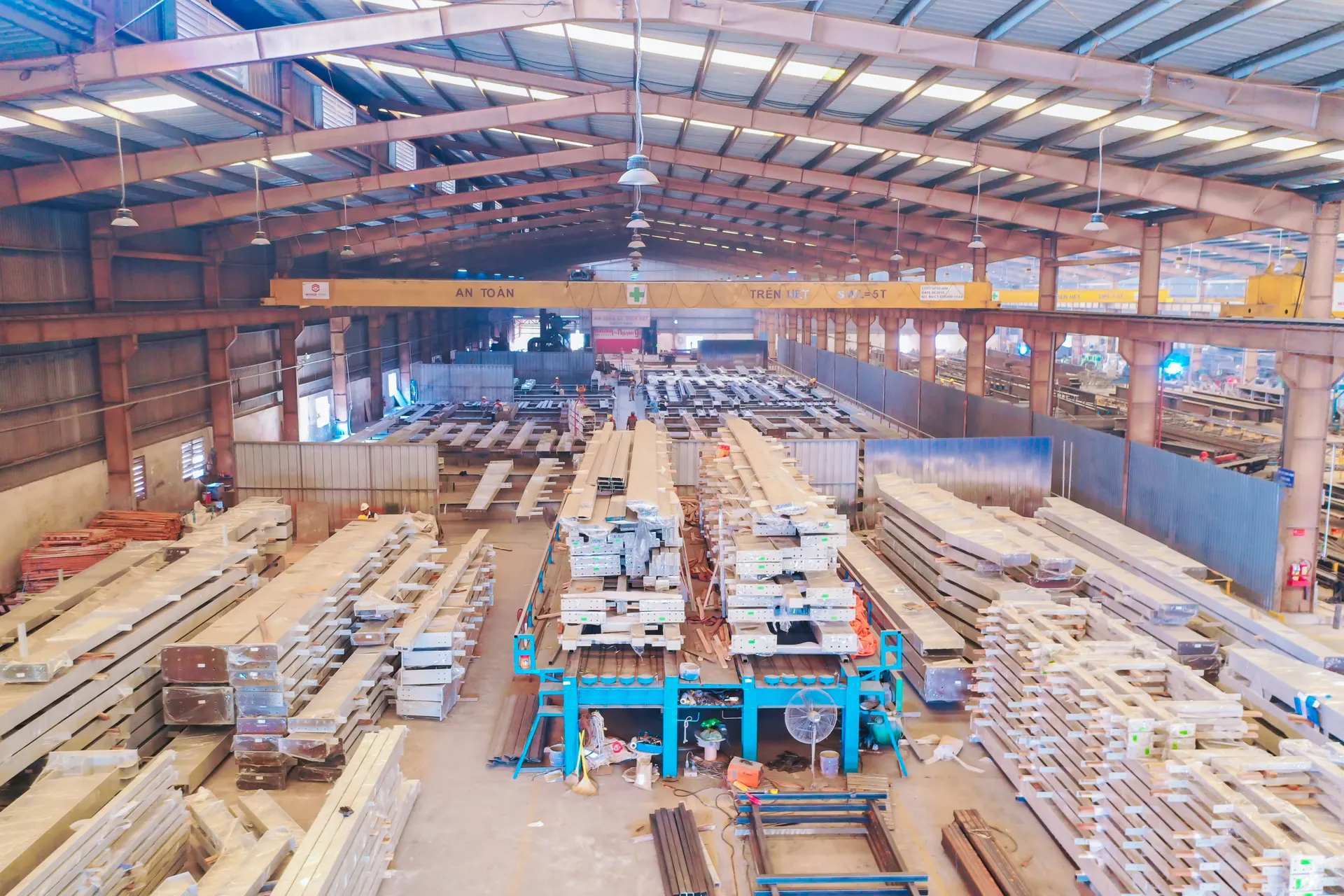
Every World Steel building is fabricated in our own plant in Vietnam and packed there for the voyage. The wood that goes into a US container is chosen for the border as much as for the load.
Stamped, heat-treated wood only
Dunnage, skids, blocking and crates for US shipments are ISPM 15-stamped heat-treated wood, sourced from certified suppliers.
Packed in erection order
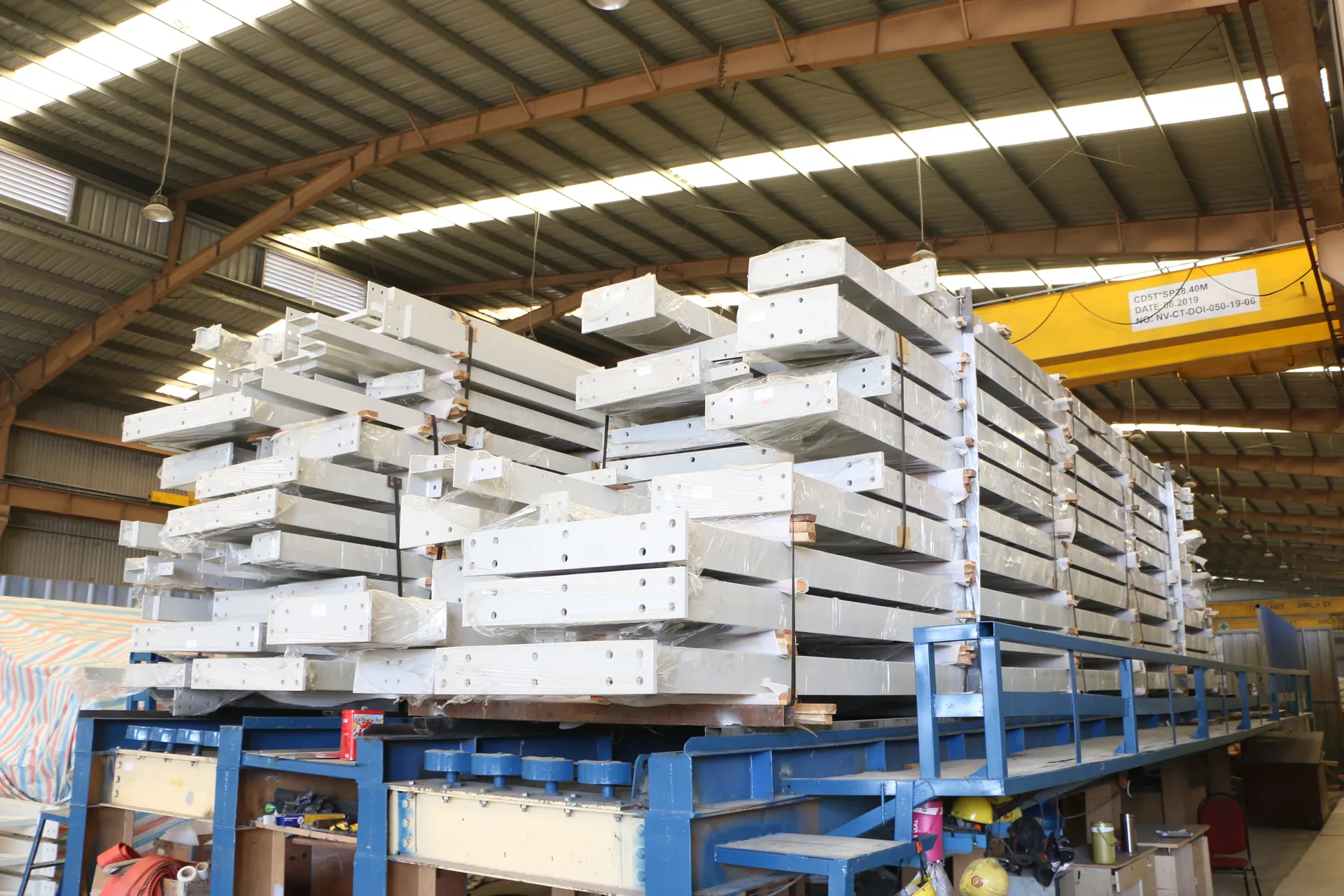
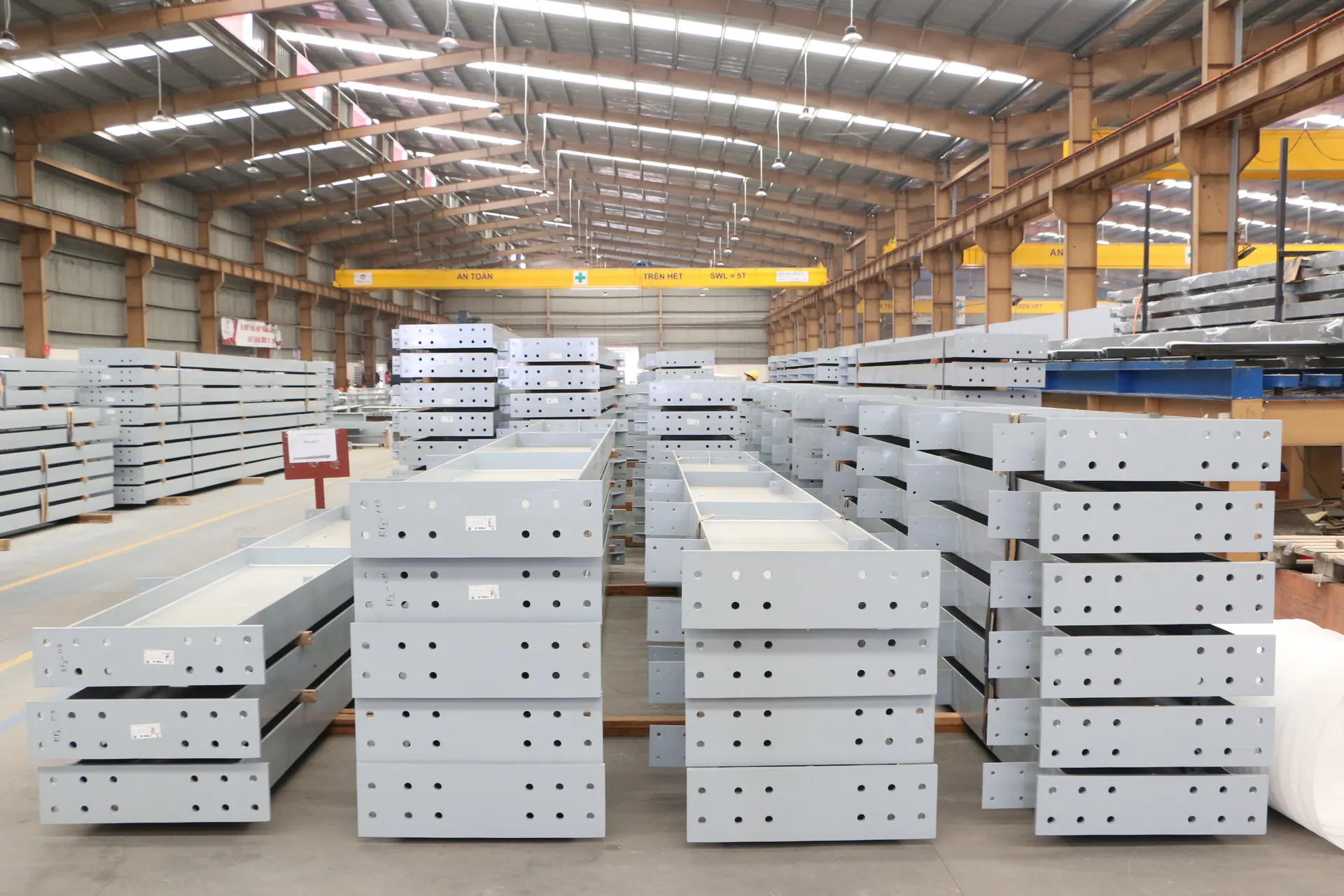
Bundles are strapped and separated on that dunnage in the order your crew sets steel, so the wood is part of a planned load, not loose filler.
Every container photographed
Loading is photographed and filmed before the ISO 17712 seal goes on, so the packing in each container is on record.
Records in PEB Studio
Bundle lists, packing lists, loading photos and video, seal and VGM records open from your login in the US.
One project manager
Questions about packaging, marks or the load plan go to the project manager who follows your job until the last container is loaded.
Locked packing list
The packing list freezes when the container is sealed, so your broker and receiving crew check against exactly what shipped.

Packing & shipping
ISPM 15 is one station in a seven-station process
The wood comes in at the strapping station, but it only works with the rest: members sized for the container, bundles in erection order, QC-released pieces scanned in, a filmed load and a locked packing list. Follow a bundle from the shop floor to the vessel on our packing and shipping page.
- Planned in detailing
- Packed by erection sequence
- Scanned into bundles
- Strapped and protected
- Load plan, photos and seal
- Locked packing list
- Departure from southern Vietnam
- Records in PEB Studio
Sources
Official pages behind this guide
Reviewed November 19, 2026. If APHIS or CBP has published newer guidance, it governs.
Questions from US buyers
ISPM 15 questions we hear most
Does ISPM 15 apply to a steel building shipment?
The steel itself is not wood packaging, but the dunnage, skids, blocking and crates shipped with it are. Any solid wood used to support, protect or carry the cargo must be treated and marked to ISPM 15 to enter the US.
What does World Steel use for dunnage and crating?
ISPM 15-stamped heat-treated wood, sourced from certified suppliers. The steel is bundled in erection order on that dunnage and every container is photographed and filmed before it is sealed.
Does dunnage need the mark too?
Yes. Dunnage is listed as wood packaging material, and CBP looks for the mark on each article. A single unmarked board in a container can stop the shipment.
What do US inspectors check on the wood?
The ISPM 15 mark on each piece, and signs of live pests. Your customs broker confirms any other paperwork your entry needs.
What happens if CBP finds non-compliant wood?
The shipment receives an Emergency Action Notification. Depending on the case it is safeguarded, the wood is destroyed under APHIS supervision, or the shipment is re-exported, usually at the importer’s expense, and a penalty may follow.
Who is responsible at the border?
The importer of record. Your quote names the Incoterm and who acts as importer of record, so it is clear before you sign who deals with CBP if anything is questioned.
Do you use plywood or steel instead of timber?
Manufactured wood such as plywood and OSB, and steel or plastic packaging, are outside ISPM 15. If your specification calls for a particular packaging, tell us with the RFQ and it is planned during detailing.
Is this page legal advice?
No. It summarizes the APHIS and CBP pages and the IPPC standard as of November 19, 2026. Confirm the treatment of your shipment with a licensed customs broker.
Plan the packing with your quote
Send drawings or a footprint and your site address. We plan the packing sequence, the US port and the inland route backward from the date your site needs steel, on ISPM 15-stamped heat-treated wood.