
Washers are counted for every slotted, oversized and pretensioned joint the plant fabricates.
The hole type in each ply decides the washers; the bolt list follows the drawings.
Supplied with the bolt assemblies when the installation method uses them, confirmed in the quote.
Washer and DTI reports travel with the bolt and nut reports.
When a washer
Six cases where the joint needs a washer
A hardened washer goes over an oversized or short-slotted hole in an outer ply.
A plate washer or continuous bar of at least 8 mm (5/16 in) covers the slot, with a hardened washer where the bolt is high-strength.
With calibrated wrench pretensioning, the hardened washer goes under the nut or head that is turned.
Where the steel surface slopes more than 1:20, such as on S-beam and channel flanges, a beveled washer brings the bolt square.
A490 and F2280 bolts on steel with a yield below 280 MPa (40 ksi) take hardened washers under head and nut.
A hardened washer goes under the nut of every TC assembly.
Paraphrased from RCSC Specification Section 6. The connection drawings show where washers go; our bolt lists count them. Plate washers over anchor rod holes in base plates: anchor rods.
Washer types
Four washers on a structural bolt list
Reading a DTI
How a direct tension indicator shows a tight bolt
The DTI sits under the head, or under a hardened washer at the nut, with its bumps against the part that does not turn.
Turning the nut clamps the joint; the bumps crush in step with the bolt tension.
The crew checks the gaps under the bumps with the feeler gauge that ASTM F959 names for that DTI and finish.
F959 sets how many gaps must refuse the feeler. Too few refusals means the bolt is not tight enough.
DTIs are one of the pretensioning methods in the RCSC Specification, beside turn-of-nut, calibrated wrench and tension-control bolts.
Who does what
Washers and DTIs: our part and the US contractor's part
World Steel
- Counts hardened, beveled and plate washers joint by joint from the drawings
- Confirms DTI supply, type and finish in the quote when the erector uses them
- Bags washers and DTIs with the bolts they go on
- Includes extra DTIs per lot for site verification
The US contractor, our customer
- Engineer of Record shows hole types and joint types on the drawings
- Erector chooses the pretensioning method and verifies it per lot
- Erector places washers and DTIs the right way round
- Owner’s inspector checks DTI gaps on the joints the project lists
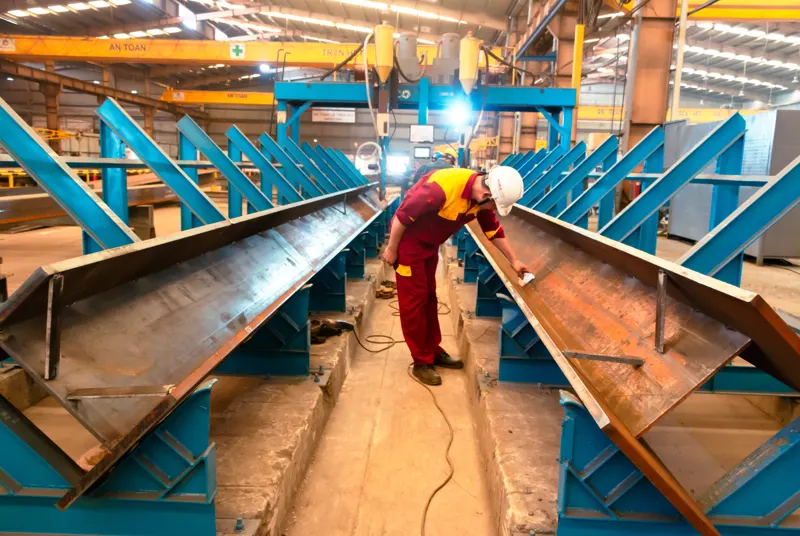
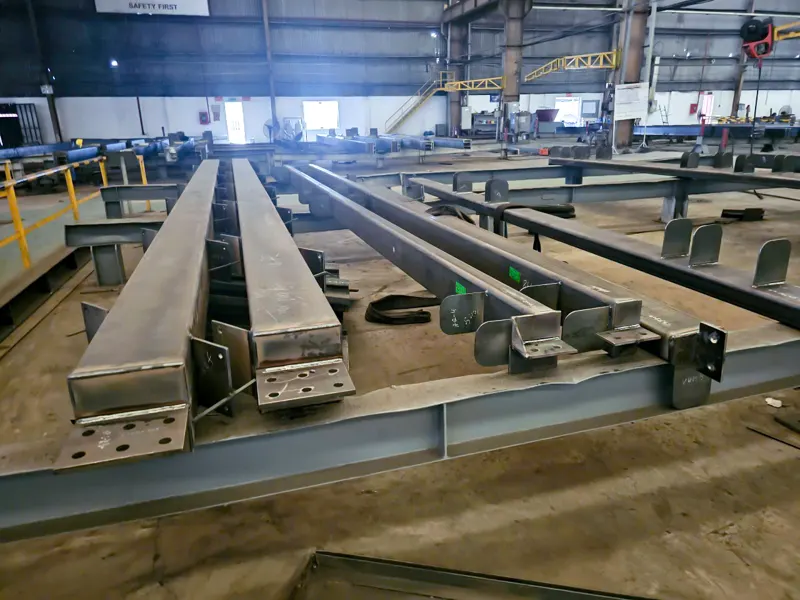
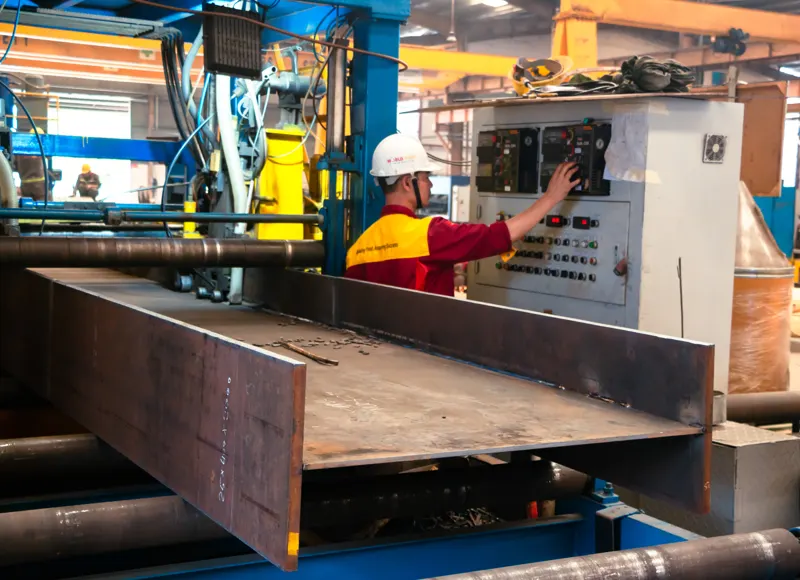
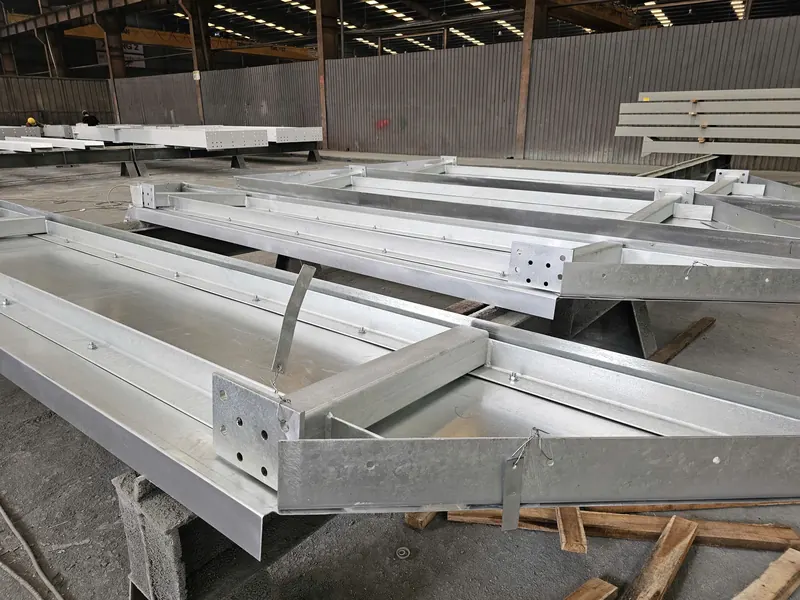
Fit-up and connection checks in our plant
Questions
Washer and DTI questions from US contractors
Does every structural bolt need a washer?
No. A snug-tight joint with standard holes often needs none. The RCSC Specification asks for hardened washers over oversized and slotted holes, under the turned part in some methods and in a few other cases.
What is an F436 washer?
An ASTM F436 washer is a through-hardened steel washer made for structural bolts. It does not dish or gall when a high-strength nut is turned against it.
What is a DTI washer?
A direct tension indicator, ASTM F959: a hardened washer with small bumps that flatten as the bolt is pretensioned. A feeler gauge in the gaps shows whether the bolt is tight.
Which way round does a DTI go?
With its bumps against the bolt head or a hardened washer on the part that does not turn. A DTI under the turned nut gives a false reading.
When is a beveled washer needed?
When the steel surface under the head or nut slopes more than 1:20, as on S-beam and channel flanges. It brings the bolt square to the surface.
Do you supply DTIs with the bolts?
When your erector pretensions with DTIs, we supply them with the assemblies, matched to the bolt grade, with type and finish confirmed in the quote.
Built for large jobs
Washers and DTIs for your next large package
Our own plant in Vietnam fabricates 2,500 metric tons of structural steel a month, is accredited under IAS AC472 since 2019 and is audited twice a year. Shop drawings are included on every project.
- 5,000 tSunpro Steel Factory
- 2,500 tCPV Food Processing Factory
- 2,000 tLong Son petrochemical complex
- 2,000 tM&D (MD Factory)
Request a quote
Send drawings, a model or a member schedule. Our engineers check the US code basis, size or verify the members and price the fabricated steel, delivered to your US port.
Become our partner in the US
You erect and own the customer; we design, fabricate and ship. Engineering support on your bids and supply under your brand.
Who approves the design. We prepare calculations and drawings ready for your Engineer of Record’s review and approval. The PE seal and the permit stay with the US contractor, our customer.
Shop drawings, included