
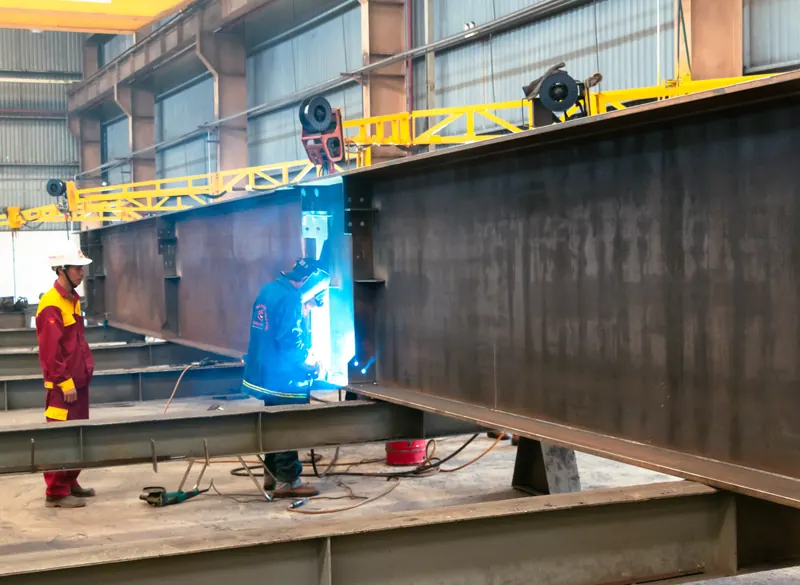
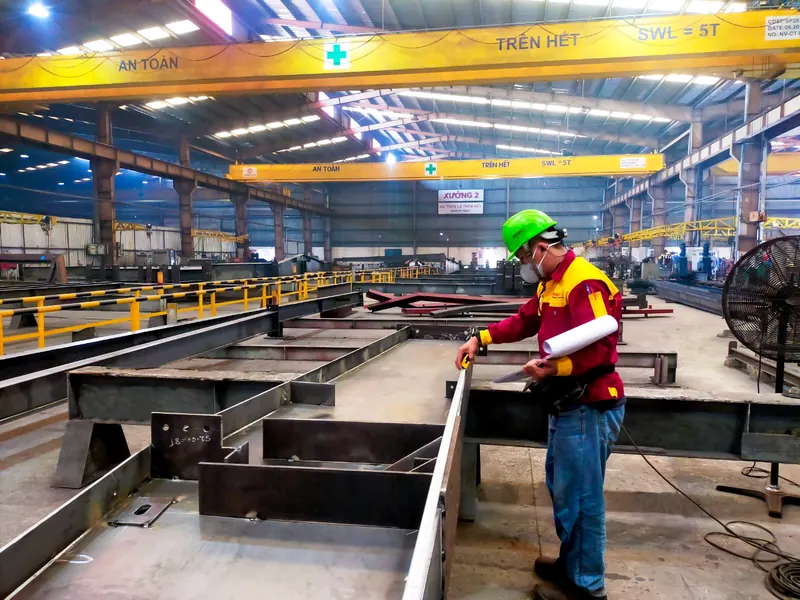
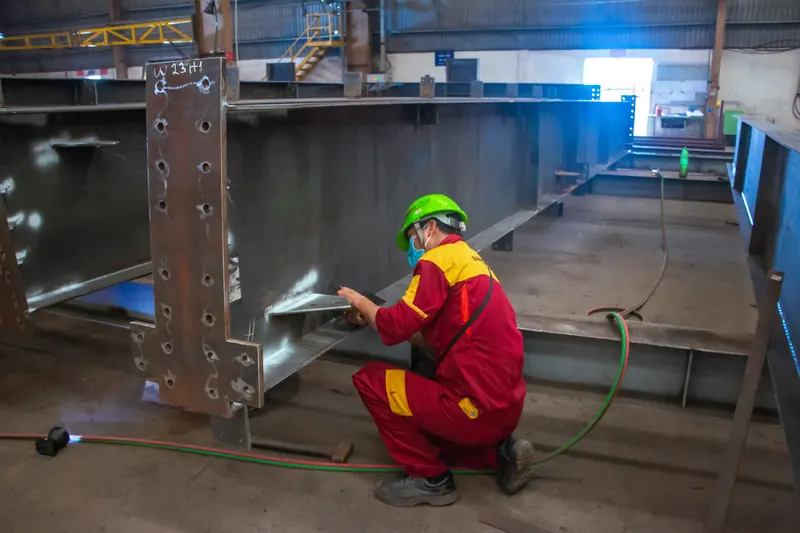
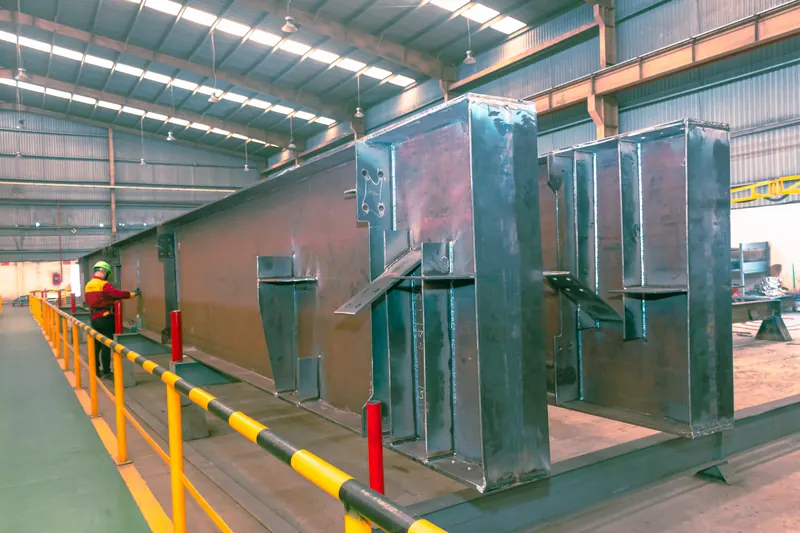
A deep plate girder going through automatic welding at World Steel, Vietnam.
HTS for columns, beams and girders
HTS 7308.90.30 and 7308.90.60: the two lines for fabricated columns and beams
What these lines cover, the alloy steel test that splits them and the Section 232 listing, explained by a plant that fabricates 2,500 metric tons of columns, beams and girders a month.
The two lines
One indent, two rate lines, split by a single word: alloy
Inside subheading 7308.90, an unnumbered indent groups "columns, pillars, posts, beams, girders and similar structural units". Under it sit two rate lines: .30 when the unit is not in part of alloy steel, and .60 for the rest.
| Line | Article description | General | Unit |
|---|---|---|---|
| 7308.90.30.00 | Columns, pillars, posts, beams, girders and similar structural units: Not in part of alloy steel | Free | kg |
| 7308.90.60.00 | Columns, pillars, posts, beams, girders and similar structural units: Other | Free | kg |
What they cover
Six kinds of member that usually travel on these lines
From a 300 mm (12 in) floor beam to a two-meter-deep crane girder, what matters is the job the member does in the frame, not how it was made.
Rolled and built-up columns
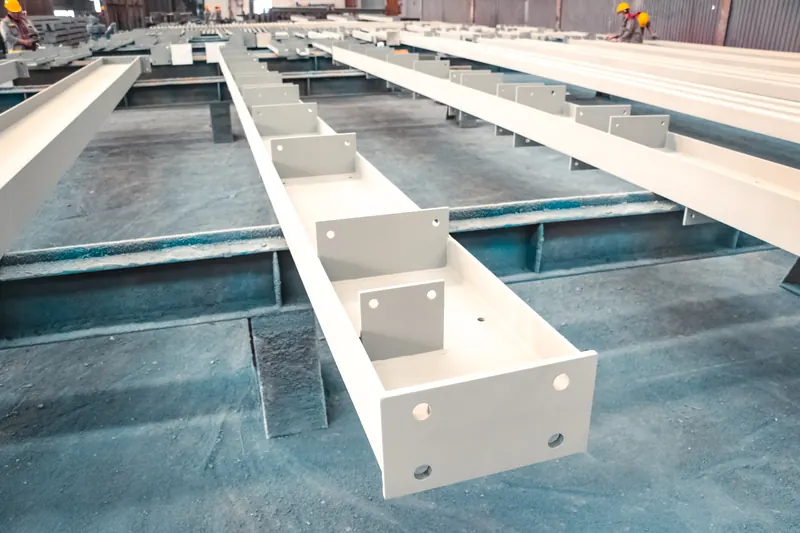
W-shape, box and cruciform columns, with base plates, cap plates and brackets welded on.
Beams and floor girders
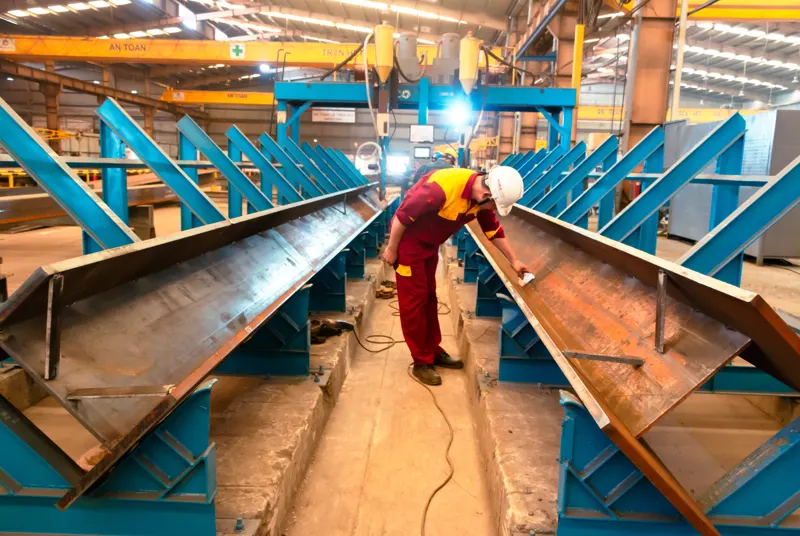
Rolled beams cut, coped and drilled, and welded plate girders for long spans and heavy floors.
Tapered portal rafters
Web-tapered rafter and column halves of rigid frames, the core of a pre-engineered building.
Crane runway beams
Runway girders with cap channels or stiffeners, and the stepped columns that carry them.
Posts and pillars
Canopy posts, wind posts, mezzanine posts and pipe-rack legs.
Similar structural units
Members that work like a column or beam in the frame, such as stub columns and transfer beams.
Alloy steel test
The chemistry that moves a member from .30 to .60
Chapter 72 Note 1(f) defines other alloy steel by the weight of each element. Type the values from a heat on a mill certificate to see whether it reaches a threshold. Nothing is sent anywhere.
| Element | Threshold | Your heat, % | Where it shows up |
|---|---|---|---|
| Chromium | ≥ 0.3% | Weathering grades add it on purpose. | |
| Copper | ≥ 0.4% | Weathering grades; some scrap-based heats. | |
| Nickel | ≥ 0.3% | Weathering and low-temperature grades. | |
| Manganese | ≥ 1.65% | High-strength plate sits close to it. | |
| Molybdenum | ≥ 0.08% | Quenched and tempered plate. | |
| Niobium | ≥ 0.06% | Microalloyed Grade 50 plate and shapes. | |
| Vanadium | ≥ 0.1% | Microalloyed Grade 50 plate and shapes. | |
| Silicon | ≥ 0.6% | Silicon-killed heats stay well below. | |
| Titanium | ≥ 0.05% | Some thermomechanically rolled plate. | |
| Boron | ≥ 0.0008% | Wear plate and some fasteners. | |
| Aluminum | ≥ 0.3% | Used as a deoxidizer in small amounts. |
The full list in Note 1(f) also names cobalt, lead, tungsten, zirconium and 0.1% of any other element except sulfur, phosphorus, carbon and nitrogen. Steels that meet the stainless steel definition are not "other alloy steel" but are alloy steel all the same.
No value typed reaches a threshold, so this heat is not other alloy steel.
The checker applies the published thresholds to the numbers you type. It is not a classification. A member is read as in part of alloy steel when any heat in it qualifies, and your broker makes the call.
Read a mill test certificateIn part of
One plate is enough: how “not in part of alloy steel” reads
Line .30 asks that no part of the unit is alloy steel. A column is welded from many plates and fittings, so each one counts.
Every plate and shape from non-alloy heats
No part is alloy steel: the member reads as 7308.90.30.
One stiffener cut from a weathering heat
A part is alloy steel: the member reads as 7308.90.60.
A microalloyed flange near the limit
The certificate value decides. 0.059% niobium is under, 0.06% is not.
Duty layers
What can sit on a 7308.90.30 / 7308.90.60 entry line
Published US law as of November 25, 2026, for goods of Vietnam. These are the layers an entry can carry, not a duty estimate for your order: the importer of record pays and its broker calculates.
General (column 1) duty
FreeThe rate printed against the HTSUS line, charged as usual on top of Section 232.
Section 232
Annex I-A, 50%Charged on the full customs value since April 6, 2026, at the rate of the annex that lists the line. Vietnam has no lower rate.
Section 301 (Vietnam)
Exempt when 232 appliesThe forced-labor action in force since July 24, 2026 exempts articles subject to Section 232, so a covered line does not stack it.
Antidumping / countervailing
None foundAs of the review date we found no order on fabricated structural steel from Vietnam. Your broker checks each line before entry.
Fees
Charged as usualThe merchandise processing fee and, at seaports, the harbor maintenance fee are charged on the entry.
Sources: 2026 HTS Revision 23 (USITC) for the general rate; the annexes to Proclamation 11021 for the Section 232 listing. Last reviewed . Rules change often; your broker checks them on the day of entry.
Our part
What we put in the file so your broker can classify
World Steel does not choose your HTS number or file your entry. We give the importer of record and its broker the facts, early and in order.
Commercial invoice
Each line described by what it is, how many and its weight in kg. Any HTS number shown is a reference for your broker, not our classification.
Packing list by piece mark
Every bundle and loose piece with its marks, dimensions in mm and weight in kg, so lines can be matched to the invoice.
Mill test certificates
EN 10204 3.1 certificates with mill, heat number and chemistry: the data behind the alloy steel test and the melt-and-pour report.
Drawings and member schedule
Approval and shop drawings that show what each member is and where it goes, for a broker or a ruling request.
Photos of packed bundles
Pictures of the cargo as loaded, which help a broker describe goods that arrive in many containers.
Country and plant of origin
Fabricated in our plant in Vietnam, with the mill country for every heat of steel on the certificates.
The other lines
Four more HTS lines in a steel package
Questions
7308.90.30 / 7308.90.60 questions from US importers
What is HTS 7308.90.30?
It is the US rate line for columns, pillars, posts, beams, girders and similar structural units of iron or steel, not in part of alloy steel. The general rate is free, the unit of quantity is kg, and the line is listed in Annex I-A of Proclamation 11021.
What is the difference between 7308.90.30 and 7308.90.60?
Only the steel. A unit with no part made of alloy steel goes to .30. If any part is alloy steel, as defined in Chapter 72 Note 1(f), it goes to .60. Both lines have a free general rate and both are in Annex I-A.
Is ASTM A572 Grade 50 alloy steel for tariff purposes?
Not as a grade. A572 is a high-strength low-alloy specification, but the tariff test is the actual chemistry of each heat. Where a heat reaches a threshold such as 0.06% niobium or 0.1% vanadium, it reads as alloy steel. The mill certificate shows the values.
Is weathering steel alloy steel under the HTSUS?
Usually. Weathering grades are made with chromium and copper, and a heat with 0.3% or more chromium meets the definition of other alloy steel. Members made from it read as in part of alloy steel.
Do welded base plates and brackets change the line?
Not by themselves. A column with its base plate, cap and brackets welded on is still a column. The plates do count for the alloy test, because they are part of the unit.
Does World Steel tell me whether to declare .30 or .60?
No. We supply EN 10204 3.1 certificates with the chemistry of every heat and say which heats went into which members on request. Your importer of record and its broker classify, and CBP can confirm it with a binding ruling.
Columns and beams by the thousand tons
Send the drawings. We quote the steel, name the Incoterm and the importer of record, and ship certificates your broker can classify from.