Estimators do not price structural steel by the ton, whatever the rule of thumb says. They price hours, materials, risk and logistics, and the ton is only the unit the total is divided by at the end. That is why two bids on the same drawings can be far apart, and why the same tonnage can cost very different amounts on two jobs. This guide lists the structural steel cost drivers our estimators work through on every package, from the largest to the smallest, and marks the ones a US general contractor can still move before the bid goes out.
There are no prices in this article, on purpose. Steel, freight and trade costs change month to month; the drivers do not.
Tonnage is the base, not the answer
Weight sets the material cost and part of the freight, so it matters. But weight alone misleads, for three reasons.
- Section mix. Rolled wide flange shapes, built-up plate girders and hollow structural sections cost different amounts to buy and to work. A frame of a few heavy built-up members can cost less to fabricate than one of many light rolled pieces.
- Material grade and testing. Higher-strength grades, Charpy V-notch toughness, or mill certificates of a particular type (such as EN 10204 3.1 with impact results) add cost at the mill and in paperwork.
- Buy-out quantities. Plate and sections are bought by heat and length. Odd sizes in small quantities carry more drop and waste than a design that repeats a few sizes.
What you control: ask the Engineer of Record to repeat sizes where it costs little in weight, and to state toughness or certificate requirements only where the structure needs them.
Connections carry most of the labor
On a typical frame the connections hold a small share of the weight and a large share of the shop hours. Every plate, stiffener, hole and weld is cut, fitted, welded, inspected and coated by someone.
What drives connection cost:
- Who designs them. Under the AISC Code of Standard Practice the connections are shown by the Engineer of Record, selected from tables, or delegated to the fabricator. When connection design is delegated, the fabricator can choose details that suit its own cutting, drilling and welding lines. See delegated connection design.
- Reactions on the drawings. "Design for full member capacity" makes every connection heavy. A reactions schedule lets connections be sized for the forces they actually carry.
- Field welding. Welded field joints cost far more on site than in the shop. Bolted field connections with shop welding are cheaper and easier to inspect.
- Seismic and demand critical welds. AISC 341 systems and AWS D1.8 demand critical welds add procedures, testing and inspection. They are needed where the code requires them, and only there.
What you control: settle the connection design option before bidding, put reactions on the drawings, and avoid field welding unless the design truly needs it.
Piece count and repetition
A shop is fastest when it makes the same piece many times. A building with 40 types of column costs more to fabricate than one with 6, even at the same total weight. Repetition cuts detailing time, programming of the cutting and drilling lines, fit-up checks and the risk of errors on site.
What you control: grid spacing and bay sizes. A small change in a grid, made early, can turn many unique pieces into a few repeated ones.
Coating and surface preparation
The coating system is often the second-largest driver after connections. Each step is time on the line and material:
| Coating choice | What moves the cost |
|---|---|
| Shop primer only | Blast grade, one coat, simple to touch up |
| Full shop paint system | Number of coats, drying time between coats, film thickness checks |
| Hot-dip galvanizing | Galvanizer handling, vent and drain holes, size of members against the kettle |
| Duplex (galvanizing plus paint) | Both of the above, plus surface preparation of the zinc |
| Intumescent fire protection | Film thickness set by fire rating and section factor, often several coats |
Paint brands matter less than the system specified: World Steel applies systems from Jotun, PPG, Carboline, Hempel, Nippon and International Paint, products that can be bought in any US region for touch-up.
What you control: specify the coating by exposure. Steel hidden inside a dry, heated building rarely needs the same system as steel on a coastal pipe rack. The ISO 12944 corrosivity ladder is a good way to match the system to the site.
Drawings, models and submittals
Detailing is real engineering time. The more complete the design documents, the less the detailer has to guess, and the fewer requests for information wait for answers. Costs rise when:
- the structural, architectural and MEP drawings disagree;
- approval rounds repeat because the reviewer sees the drawings piecemeal;
- the specification asks for extra submittals late in the job.
At World Steel, shop drawings are included for every project. Even so, a complete bid package lowers the bid because fewer allowances are needed for unknowns. The bid package checklist lists what to send.
Sequencing and schedule
How the job is released matters as much as what it is.
- Release by erection area. When drawings are approved and released area by area, fabrication starts earlier and the shop runs evenly.
- Late changes. A change after fabrication has started costs far more than the same change at the drawing stage, because work is redone.
- Compressed schedules. A short window can mean overtime, split shipments or air freight for a few items. The fast-track guide covers how to compress a schedule without paying for panic.
What you control: freeze the design area by area, and approve drawings in the order the steel is needed.
Quality requirements and inspection
Special inspection, nondestructive testing rates, third-party witness visits and documentation packages add cost in proportion to what they ask for. They are worth every hour on seismic frames, crane runways and fracture-critical members. They are not always needed at the same rate on secondary framing.
What you control: write inspection rates by member type, agreed in an inspection and test plan, instead of one rate for everything.
Freight, packing and delivery terms
For steel fabricated abroad, logistics is a real line in the bid:
- Container or breakbulk. Long or heavy members may need breakbulk shipping, which is priced differently from containers.
- Packing. Packing by erection sequence takes planning but saves days on site.
- Incoterms. Who books the vessel, who insures it and where risk passes change what the fabricator includes. Under FOB the buyer arranges the ocean freight; under CIF the seller does.
- Duties and tariffs. Section 232 and other trade measures can apply to imported steel. They are a line in the comparison and change often, so get a current answer from a licensed customs broker. See Section 232 steel imports.
Risk and allowances
Every gap in the bid documents becomes an allowance. Unclear scope (who supplies anchor rods, embeds, misc metals, erection aids), unclear codes, missing geotechnical or crane data, and open payment terms all carry a price. Payment security matters too: a Letter of Credit lowers the financing risk on a large package for both sides.
What you control: close the gaps in writing before the bid goes out. A clear scope is the cheapest cost reduction there is.
Scale and capacity
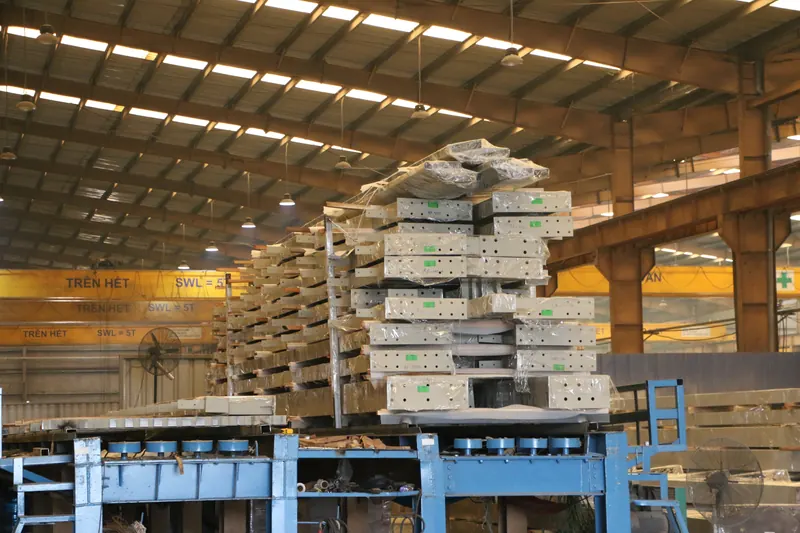
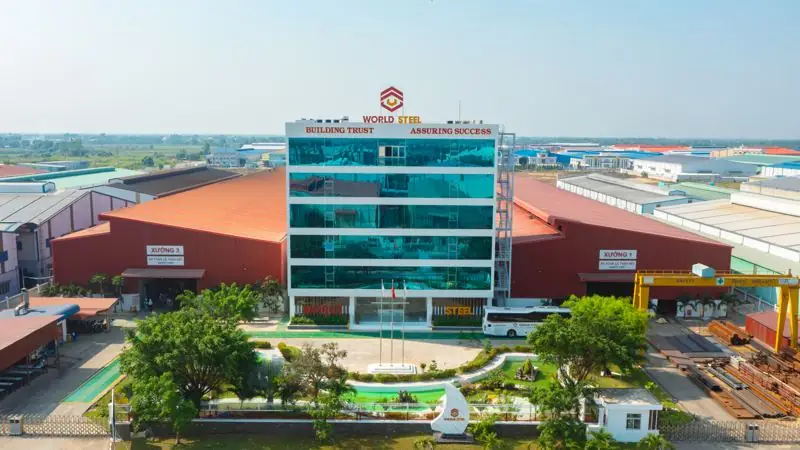
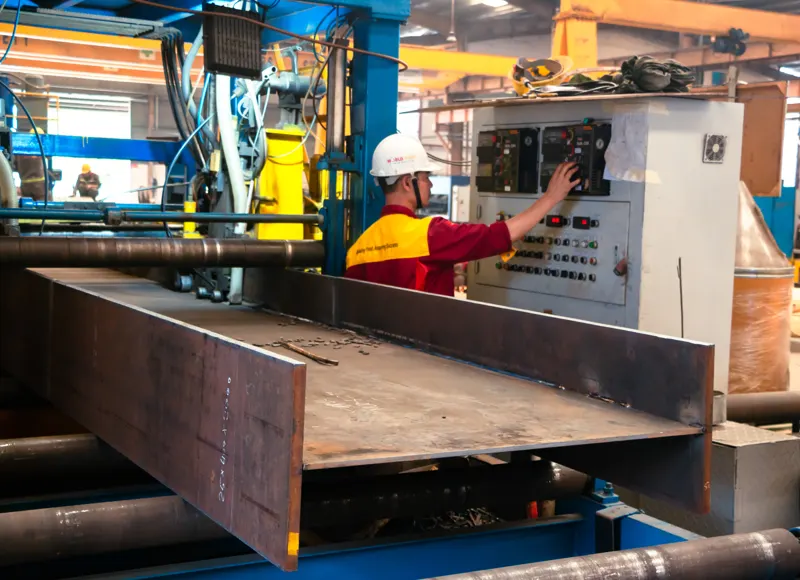
Large packages are cheaper to fabricate per piece when the plant can run them without stopping other work. World Steel's own plant fabricates 2,500 metric tons (about 2,750 short tons) of structural steel a month, with automated beam lines and laser machines that cut plate up to 100 mm (about 4 in) thick for cutting and hole-making. Jobs such as Sunpro Steel (5,000 t) and CPV Food (2,500 t) moved through the shop alongside other work.
A checklist before you ask for bids
- Is the connection design option written in the specification, with reactions on the drawings?
- Are member sizes repeated where it costs little weight?
- Is the coating system matched to the exposure of each area?
- Is the scope list complete: anchor rods, embeds, misc metals, erection aids, drawings, freight terms?
- Is the release sequence agreed with the erector?
- Are inspection rates set by member type?
Answer these, and the structural steel cost drivers that remain are the ones that belong to the structure itself. For the levers we use on large packages, see lower cost, lower risk.
Quick answers
What is the biggest structural steel cost driver?
Usually not the steel itself. On most packages the labor in connections, the coating system and the number of different pieces move the bid more than the raw tonnage, because each one sets hours in the shop.
Does a lighter design always cost less?
No. Saving weight with many stiffeners, complex welded connections or many different sizes can add more shop hours than the steel it saves. The cheapest frame balances weight against piece count and labor.
Why do two fabricators price the same drawings so differently?
They read the scope differently: connection design, coating, drawings, freight, inspection and allowances. Ask every bidder to price the same written scope and compare line by line.
Does World Steel publish a price per ton?
No. Every package is priced from its own drawings, tonnage, connections, coating and delivery terms. Send the bid documents and our estimators return a scoped quote.
Which cost drivers can the general contractor control?
The completeness of the bid package, when the connection design option is decided, how the job is sequenced, the coating specification, and how early drawings are approved. Each one removes risk the fabricator would otherwise price.
Keep building your steel plan
Go further on USPEB.com
On this topic
Across the US market
- US general contractorsHow we support GCs, steel erectors and developers
- Section 232 steel importsDuties and paperwork on imported steel
- Landed cost calculatorFreight, duty and fees to your US jobsite
- Contractor partnershipLong-term supply for US contractors
- Solutions by stateState-by-state steel solutions
- Send your drawingsGet a steel package quote from your drawings