When a US package is too large, too fast or too tight on budget for the domestic shops on the bid list, three origins come up most often for imported fabricated steel: Mexico, China and Vietnam. Each can be the right answer, and each can be the wrong one. This guide compares Vietnam vs China vs Mexico steel fabrication the way a general contractor's procurement team should: project rules first, then trade measures, then distance, and only then the plant itself.
World Steel is a fabricator in Vietnam, so we have a point of view. We have tried to keep this comparison fair. On the questions that decide most jobs, the plant matters more than the flag.
Start with the project rules
Before comparing countries, read the contract and the funding source.
- Domestic content rules. Federally funded transportation and infrastructure work, and many public projects, carry Buy American or Build America, Buy America requirements. If they apply, none of the three origins is an option for the covered steel.
- Owner policies. Some private owners exclude particular origins in their specifications, for supply chain or reputation reasons. Ask before you spend time on bids.
- Specification of materials. Some specifications name approved mills or require domestic melt. Those clauses decide more than any price comparison.
Private industrial, logistics, commercial and data center work usually has none of these limits, and that is where imported steel is common.
Trade measures differ by origin and change often
All three countries face US trade measures on steel, and the mix is different for each. We give no rates here, because they change; the dated record is on our Section 232 steel imports page and the US import regulations guide.
What to check for each origin, with a licensed customs broker:
- Section 232. Applies to steel and a growing list of steel derivative products. Country exemptions that once covered some trading partners ended in 2025. Check whether your fabricated items fall under the covered codes.
- Section 301 and other actions. Separate measures apply to goods of China and, since 2026, to goods of Vietnam. How they interact with Section 232 depends on the product.
- Antidumping and countervailing duty orders. These are set product by product and country by country. A fabricated item can sit inside or outside an order's scope depending on what it is.
- Melt and pour. US Customs asks for the country where the steel was melted and poured. A frame fabricated in one country from plate rolled in another reports both facts.
- Trade agreement origin rules. Agreements such as the USMCA can matter for goods from Mexico, but they do not settle every steel measure by themselves.
The practical rule: put duties and tariffs as their own line in the comparison, get the broker's current answer item by item, and do not reuse last year's number.
Side by side
| Question | Mexico | China | Vietnam |
|---|---|---|---|
| How the steel travels | Truck or rail across the land border | Ocean voyage across the Pacific | Ocean voyage across the Pacific |
| Transit to the jobsite | Days | Weeks | Weeks; ocean freight adds roughly four to six weeks door to door |
| Time zone | Same as the US or close | 12 to 16 hours ahead of US time zones | 11 to 15 hours ahead; a day of work can finish while the US team sleeps |
| Size of the steel industry | Large mills and many fabricators | The largest steel industry in the world | Fast-growing mills (Hòa Phát, Formosa Hà Tĩnh) and fabricators |
| Owner acceptance | Broad | Excluded by some owners | Broad on private work |
| What decides quality | The plant | The plant | The plant |
Two lessons come out of the table. Mexico's advantage is distance: for small, urgent or change-prone packages, days of transit beat weeks. China and Vietnam compete on capacity and cost for large packages, with similar ocean voyages, and differ mainly in trade measures and owner acceptance.
Transit is only one part of the schedule
Contractors often compare transit and stop there. The schedule of a steel package has more parts:
- Shop drawings and approvals. Usually the longest part of the lead time, and the same wherever the shop is.
- A free production slot. A shop that is booked for months is slower than a shop abroad that can start now, whatever the transit.
- Mill lead time. Plate and sections have to be bought before fabrication starts.
- Release by erection area. Sequenced releases let early areas ship while later ones are still in the shop.
When the drawings, the slot and the sequence are planned well, a few weeks at sea can be absorbed in the schedule. See the structural steel lead time guide for where the weeks go.
Qualify the plant, not the country
Whichever country you look at, ask every fabricator the same questions:
- Accreditation. Is the plant accredited or certified for the work, and can you verify it with the issuing body? World Steel holds IAS AC472 accreditation since 2019, the first and only fabricator in Vietnam with it, audited twice a year.
- Welding. Are the welding procedures and welders qualified to AWS D1.1, and to AWS D1.8 for seismic work?
- Materials. Which mills supply the plate and sections, and are mill certificates traceable to each member?
- Capacity. How many metric tons a month does the plant make, and how much is free for your job?
- Inspection access. Can your inspector witness hold points in person or by live video?
- Trader or fabricator. Does the company own the shop that makes your steel, or pass the order to someone else?
The overseas fabricator qualification guide has the full list.
Which origin fits which job
- Mexico fits packages that are small, urgent, change-prone or close to the southern border, and projects where the team wants to drive to the shop.
- China fits projects whose owner accepts the origin and where the trade measures still leave the numbers working, usually very large, simple packages.
- Vietnam fits large packages on private projects where capacity, accreditation and cost decide, and where the design can be frozen in time for an ocean voyage.
Distance also changes how a team works with the shop. With Mexico, a site visit is a short trip. With China or Vietnam, the visits are planned: a qualification audit before award, then hold points witnessed by a local third-party inspector or live on video, with records online. Ask each bidder how your team will see the work without flying out for every inspection.
Many large jobs split the package: a fabricator near the site for late and small items, and a large plant abroad for the main structure.
Where World Steel fits
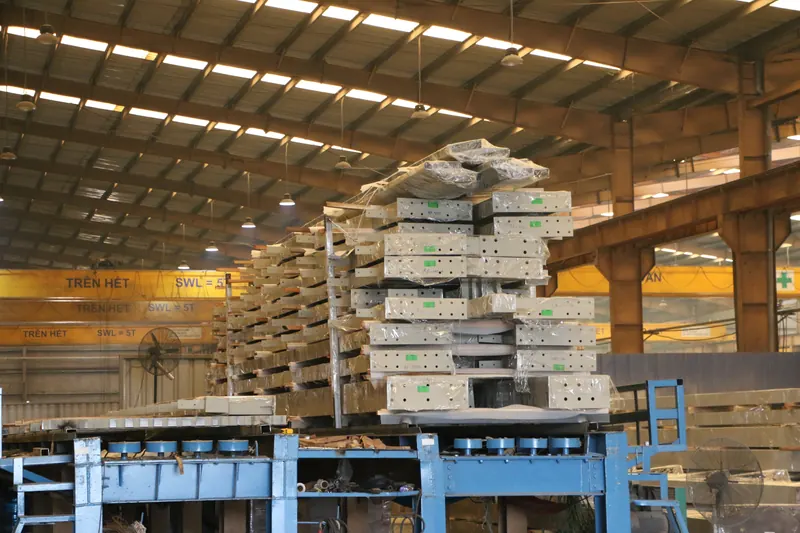
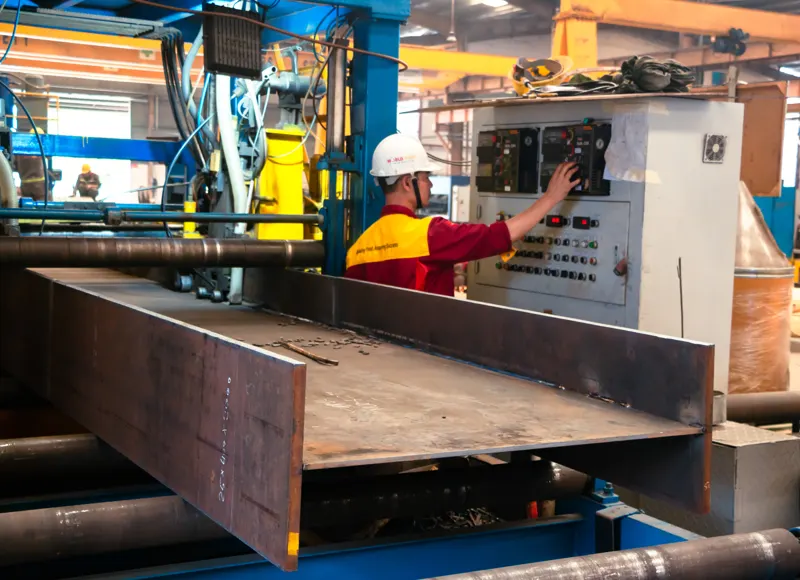
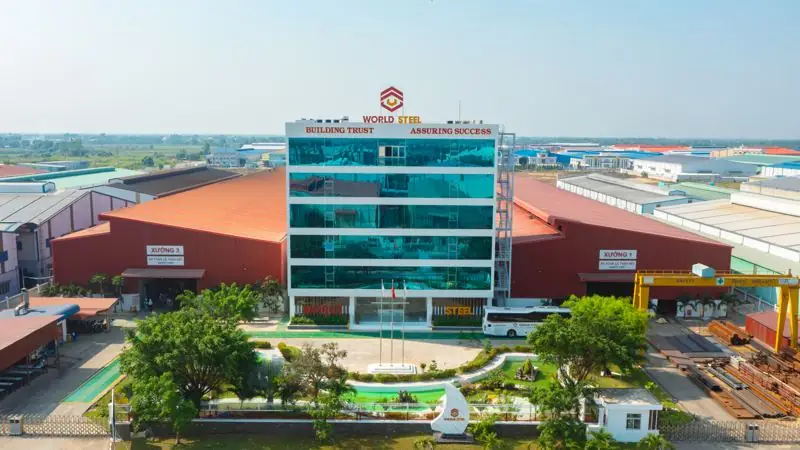
World Steel designs and fabricates structural steel in its own plant in Tay Ninh Province, Vietnam, and ships it to the US port or jobsite the contractor names. The plant fabricates 2,500 metric tons (about 2,750 short tons) a month. Single jobs have reached 5,000 t (Sunpro Steel) and 2,500 t (CPV Food). Steel comes mainly from mills in Vietnam, with mills in Japan, Korea, Indonesia or Thailand when the specification requires it, and every member is traceable to its mill certificate.
Our customers are US contractors. Erection, site work and the Engineer of Record's approval stay with the contractor; we design, fabricate, document and ship. If you are comparing Vietnam vs China vs Mexico steel fabrication on a live bid, send the documents and we return a scoped quote that you can lay beside the others line by line.
Quick answers
Is steel fabricated in Vietnam subject to US tariffs?
Imported steel and many steel derivative products can be subject to Section 232 and other trade measures whatever the origin, and the rules change. Ask a licensed customs broker for a current answer on your items before you bid.
Is Mexico always faster than Vietnam?
For delivery, usually yes: trucks and rail beat an ocean voyage. For the whole schedule, not always: shop drawings, approvals and a free production slot often decide the date more than the transit does.
Does the country of the mill matter as well as the fabricator?
Yes. US Customs asks for the country where the steel was melted and poured, which can differ from the country where it was fabricated. Ask every bidder which mills they buy from.
Is steel from one of these countries lower quality?
Quality depends on the plant, not the country. Ask for accreditation, welding procedures, mill certificates and inspection access from every shop, wherever it is.
Where does World Steel buy its steel?
Mainly from mills in Vietnam, such as Hòa Phát, Formosa Hà Tĩnh, POSCO, Hoa Sen and Nam Kim, plus mills in Japan, Korea, Indonesia or Thailand when the project specification requires it.
Keep building your steel plan
Go further on USPEB.com
On this topic
Across the US market
- US general contractorsHow we support GCs, steel erectors and developers
- Lower cost, lower riskWhere overseas fabrication saves on large jobs
- Landed cost calculatorFreight, duty and fees to your US jobsite
- Large projects, 2,500 t a monthCapacity for large US general contractors
- Contractor partnershipLong-term supply for US contractors
- Solutions by stateState-by-state steel solutions