A shop can only cut, fit, weld and coat steel so fast. What a fast-track structural steel schedule changes is not the speed of each step but the order of the steps. Work that usually runs in series, design then drawings then mill orders then fabrication then shipping, is split by erection area and overlapped. The first area is welded while the second is being detailed and the third is still in design.
Overlap saves weeks. It also moves risk forward: decisions that a normal schedule makes late have to be made early, and changes after release cost more. This guide covers what has to be true for fast-track structural steel to work on a large US job.
The overlap, area by area
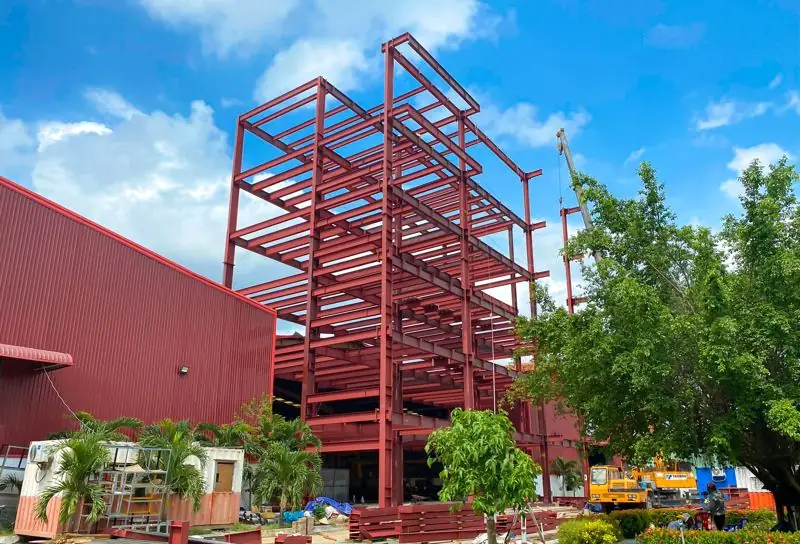
Divide the building into erection areas that a crew can complete in turn: a group of bays, a level, or a wing. Each area then has its own short chain.
| Stage | Area A | Area B | Area C |
|---|---|---|---|
| Design frozen | First | Next | Last |
| Shop drawings approved | While B is in design | While C is in design | After B ships |
| Fabrication | While B is detailed | While C is detailed | Last in the shop |
| Shipping and erection | First on site | Follows A | Completes the frame |
The chain for each area is about as long as on a normal job. The job finishes earlier because the chains overlap.
Release the long-lead items first
Some items are needed long before the first frame arrives, and they can be released before the shop drawings are done.
- Anchor rods and embeds. The foundation contractor needs them before concrete is poured. Release an anchor rod package, with setting drawings, as the very first submittal.
- Mill order for main sizes. Plate and sections take time to arrive from the mill. An early order for the main sizes and grades, based on the design model, takes that time out of the critical path.
- Built-up members. Plate girders, crane girders and heavy columns take more shop hours. Starting them early keeps them off the critical path.
Decide connections before the first drawing
Connections are where fast-track schedules most often stall. Under the AISC Code of Standard Practice, the contract can show every connection, let the fabricator select them from tables, or delegate their design to the fabricator. On a fast-track job, delegation usually saves the most time, because connections are designed to suit the shop as the model is built. It only works when the drawings give the reactions or design forces. See delegated connection design and our structural connections page.
Approve drawings in the order steel is needed
Drawing approval is often the longest single step in the lead time. On a fast-track job:
- Submit and review area by area, not the whole building at once.
- Agree a review turnaround with the Engineer of Record and the architect at the start.
- Review the first connections of each type early, so later submittals pass on the first round.
- Log every comment and its answer in one place so nothing is lost between rounds.
One model, kept in step with every approval, keeps drawings, calculations and the shop's cut lists in agreement. At World Steel, shop drawings are included on every project, produced from one Tekla Structures model.
Keep the shop loaded evenly
A shop is fastest when the work arrives at a steady rate. Releasing one huge sequence and then nothing for weeks wastes capacity; releasing many tiny ones adds handling. Agree a release plan that matches the shop's monthly output and the erector's pace on site.
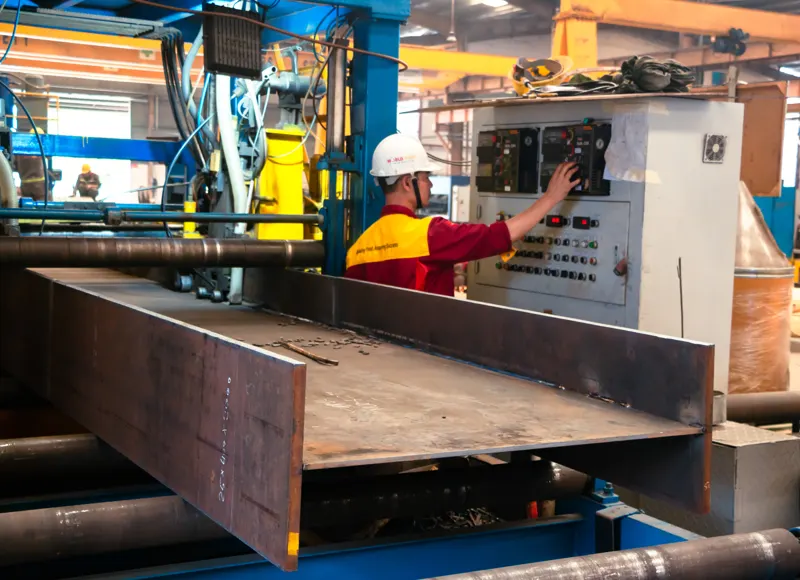
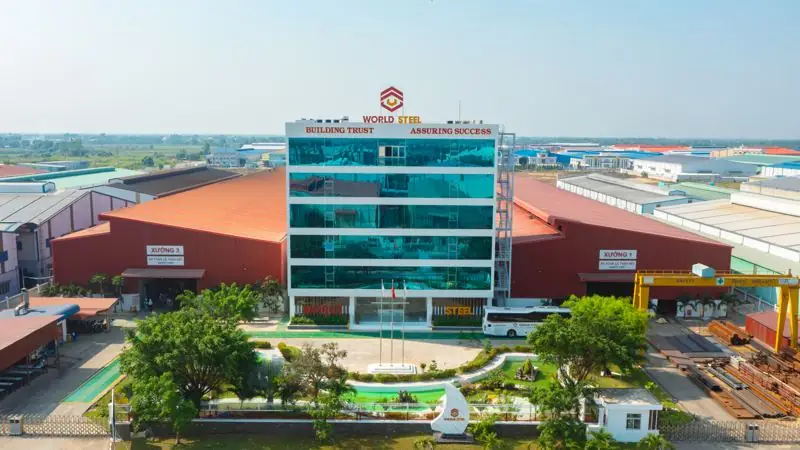
World Steel's own plant fabricates 2,500 metric tons (about 2,750 short tons) of structural steel a month, with several projects moving through the shop in parallel. When we quote a fast-track job, we confirm the production slot we can hold for its tonnage and a ship date for each sequence.
Ship in erection order
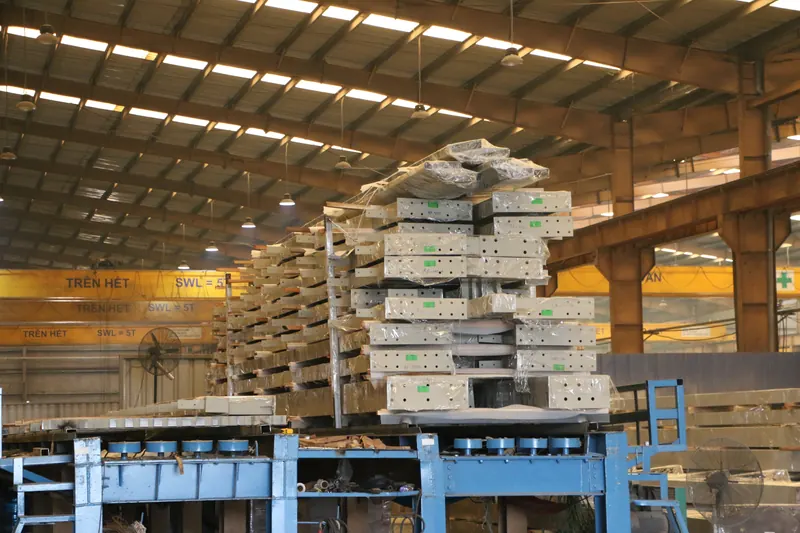
Fast-track gains are lost if the steel arrives in the wrong order. Pack and ship by erection area:
- Tag every member with its piece mark and sequence.
- Bundle members of one area together, with packing lists by sequence.
- Load containers and breakbulk so that the first area to be erected is the first unloaded at the US port.
- Track each piece online so the site team knows what is on the water.
Our project teams follow each piece from cutting to packing in PEB Studio, with weld and coating records attached.
Inspect without waiting
Inspection hold points can stop a fast-track job if the inspector has to travel for each one. Agree an inspection and test plan before fabrication starts, with hold points your inspector can witness live on video, by a third-party inspector, or in person at the plant.
Who owns what on site
A fast-track steel schedule depends on the site as much as the shop. The US contractor, our customer, owns the erection plan, the crane and crew, the foundations and the site safety program. World Steel designs, fabricates, packs and ships the steel and supports the erection crew by phone and video. When both sides plan the sequence together, the steel that arrives first is the steel the crew needs first.
Decisions that have to come early
A fast-track schedule moves decisions forward. On a normal job some of these can wait until the shop drawings; on a fast-track job each one has a date in the first weeks after award, and the owner, the architect and the Engineer of Record need to know it.
- Grids, levels and the finished floor elevation. They fix the length of every column and the position of every hole.
- Coating system by area. Paint, galvanizing, duplex or intumescent changes surface preparation, vent holes and handling.
- Connection design option and reactions. Without them the detailers cannot finish the first area.
- Material grades and testing. Charpy toughness, certificate types and any approved mill list set the mill order.
- Erection features. Lifting lugs, erection seats and safety cable holes on perimeter columns are drawn on the shop drawings, not added on site. See OSHA Subpart R from the fabricator's side.
- Shipping terms. The Incoterms rule, the port of discharge and who books the vessel decide how the shipments are planned.
A short decision log, with an owner and a date for each item, is the most useful document on a fast-track steel job. When a decision slips, everyone can see which area it holds up.
Where fast-track goes wrong
- Grid or level changes after release. A change in an area already in the shop means rework; keep changes to areas still in design.
- Missing reactions. Without design forces, delegated connections cannot be designed and the drawings stop.
- Approvals in one batch. Reviewing the whole building at once makes every area wait for the slowest.
- No early mill order. Fabrication cannot start until the steel arrives at the plant.
- Coating changes late. A change from paint to galvanizing, or to an intumescent system, changes holes, handling and schedule.
A short fast-track checklist
- Erection areas defined with the erector.
- Anchor rod package released first.
- Mill order for main sizes placed from the model.
- Connection design option written into the contract, with reactions.
- Review turnaround agreed with the Engineer of Record.
- Release plan matched to the shop's monthly output.
- Inspection and test plan agreed, with remote witness where possible.
- Packing and shipping by erection area.
With these in place, fast-track structural steel becomes a planned overlap rather than a scramble. For large packages, see how this runs on our large projects program.
Quick answers
What is fast-track structural steel?
A schedule where design, drawings, mill orders, fabrication and shipping overlap by erection area instead of following one after another. The first area can be in the shop while the last is still being detailed.
What is the first thing to release on a fast-track job?
Usually the anchor rods and embeds, followed by an early mill order for the main sizes. Both are needed long before the first frame ships, and both can be released before the shop drawings are complete.
Does fast-track cost more?
It can, when it means overtime, split shipments or rework. Planned well, with decisions made in time, most of the time saved comes from overlap rather than extra hours.
Can World Steel promise a delivery date for a fast-track job?
We quote a dated schedule for each job: the production slot we can hold and a ship date for each sequence, confirmed before you sign. We do not publish standard lead times.
What slows a fast-track steel job most?
Late decisions. An open connection design option, missing reactions, changing grids or slow drawing approvals stop the shop faster than any capacity limit.
Keep building your steel plan
Go further on USPEB.com
On this topic
Across the US market
- US general contractorsHow we support GCs, steel erectors and developers
- Lower cost, lower riskWhere overseas fabrication saves on large jobs
- Section 232 steel importsDuties and paperwork on imported steel
- Landed cost calculatorFreight, duty and fees to your US jobsite
- Contractor partnershipLong-term supply for US contractors
- Solutions by stateState-by-state steel solutions