
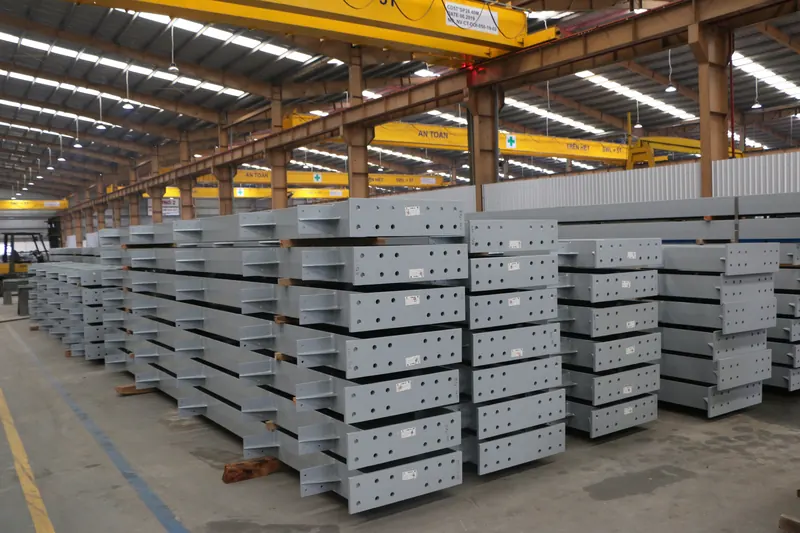
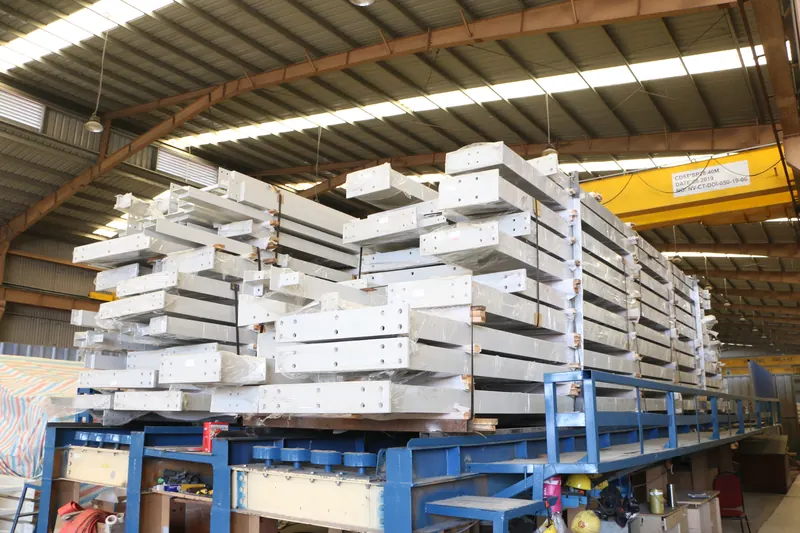
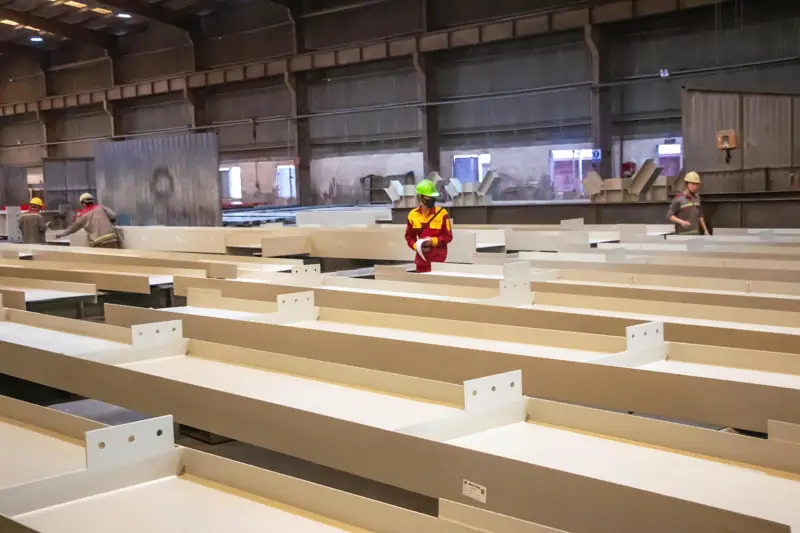
Labeled bundles lined up for dispatch from World Steel in Vietnam.
How we work · Lead time
Structural steel lead time you can plan, sequence by sequence
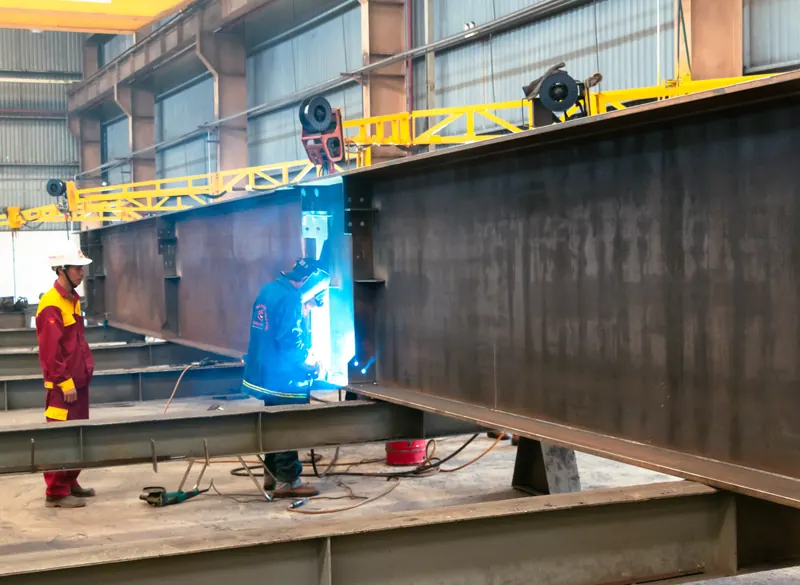
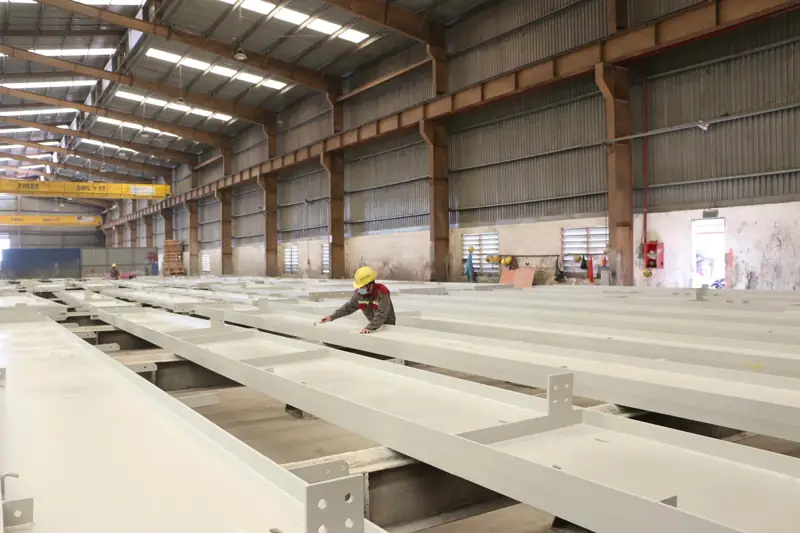
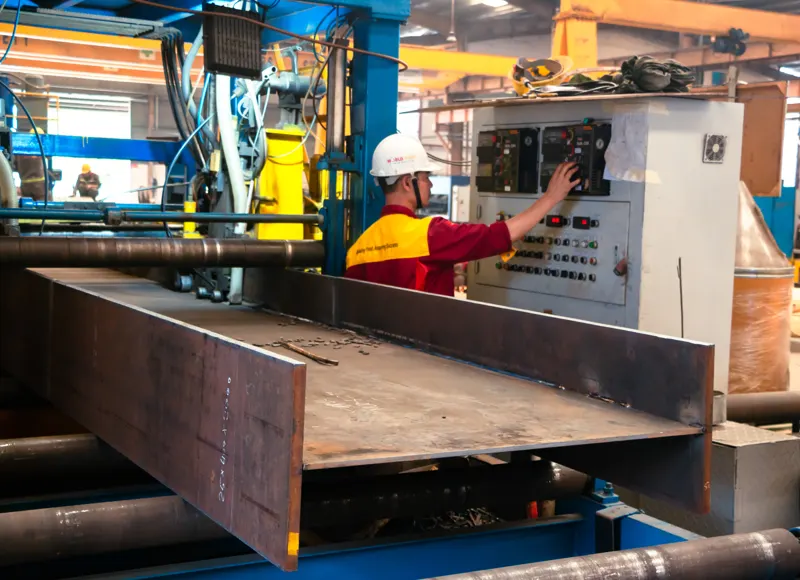
Ask us for a lead time and we send a dated schedule: the production slot in our plant, which fabricates 2,500 metric tons a month, and a ship date for every erection sequence of your job.
Lead time, in writing
We quote a dated schedule, not a lead time
“How many weeks?” has no honest single answer for a structural steel package: it depends on your tonnage, the approval cycle, special materials and the US port. So our quote names dates you can put in your master schedule.
Production slot
The months your tonnage occupies in our plant, booked against our 2,500 t a month.
Ship date per sequence
One ship date for each erection sequence, so your crane plan can start from the first loads.
Owner of every handover
Who sends, reviews and approves at each step, and the turnaround agreed for it.
Port and Incoterm
The US port of discharge and who carries the freight and customs legs.
Schedule board
Award to erection on one board, colored by who holds the work
A typical large package, drawn to show overlap and ownership rather than weeks. The outlined bars sit on the critical path: a day lost on any of them is a day lost at the site.
- World Steel
- You and your Engineer of Record
- Carrier and customs (per Incoterm)
- Your US contractor
- Critical path
Illustration only. The dates for your job are in your quote; the ocean legs for each US port are in the shipping simulator.
Overlap where it is safe
Release the job by erection area, not as one block
Split the package along grid lines. Each area moves through detailing, approval, fabrication and shipping on its own, one step behind the area before it, so the first steel reaches your crane early. Agree with your Engineer of Record what can be released ahead.
- Detail
- Approve
- Fabricate
- Ship
- Erect
Where the time goes
Six gaps that cost more weeks than the shop ever does
Steel packages rarely run late at the welding station. They run late in the handovers between teams. Here is each gap and how we close it on a World Steel job.
-
Drawings waiting for approval
Time lostThe shop cannot cut what has not been approved, and each extra review round pushes every sequence behind it.
Time won backDrawings released by sequence, a weekly drawing call and comments closed live, not by marked-up PDF.
-
RFIs waiting for answers
Time lostOne open question can hold a whole area of connections.
Time won backAn RFI log in PEB Studio with an owner and due date for each question, answered across both time zones.
-
Changes after fabrication starts
Time lostRevisions to cut or welded members cost the most time of all.
Time won backChange impact shown before you approve it, and the sequences not affected keep moving.
-
Special material ordered late
Time lostHeavy plate, impact-tested grades and large HSS have their own mill schedule.
Time won backSpecial materials flagged at award and ordered against the approved first sequence.
-
Inspection not booked
Time lostSteel ready on time can still wait for an inspector.
Time won backHold and witness points agreed in the ITP at award, with live video witness when travel is not possible.
-
Shipping documents not ready
Time lostA container that arrives before its paperwork waits at the port.
Time won backISF data, packing lists and certificates prepared before the vessel sails.
Shorten it
A shorter steel schedule is a job for both sides
Half of what decides your steel lead time is in your hands. These are the steps that move the dates most.
Your team
- Send a conformed set and a signed scope matrix with the award.
- Agree review turnaround times in the subcontract.
- Agree the erection sequence before detailing starts.
- Tell us about special grades and impact testing at bid stage.
- Name one person who answers RFIs on your side.
World Steel
- Shop drawings included and released by sequence.
- Material bought for the package once the main sizes are fixed.
- Every member’s status live in PEB Studio.
- First sequence packed and loaded first.
- One project manager from award to the last container.
Capacity in your delivery window
Book your slot in a 2,500 t a month shop
Lead time also depends on what else is in the shop. Our plant fabricates 2,500 metric tons (about 2,750 short tons) of structural steel a month and runs several large jobs side by side. Ask for a slot when you bid, and we confirm it in writing once the contract is signed.
Questions from US contractors
Lead time questions we answer before award
What is the typical lead time for structural steel from World Steel?
We do not publish a standard lead time, because the schedule depends on your tonnage, the drawing approval cycle, special materials and the US port. Your quote carries a dated schedule instead: the production slot in our plant and a ship date for each erection sequence.
What usually takes longest in a structural steel schedule?
On most jobs it is the shop drawing and approval cycle, not fabrication. A plant that fabricates 2,500 metric tons a month rarely makes the shop the bottleneck; review rounds, open RFIs and late changes do.
Can fabrication start before every drawing is approved?
Yes, by sequence. Once the first erection area is approved, the shop starts on it while later areas are still being detailed or reviewed.
How long is the ocean leg from Vietnam?
It depends on the US port and the sailing. The shipping simulator shows the legs from Vietnam to each US gateway, and the quote names the port of discharge for your site.
Does a large tonnage mean a longer lead time?
Not in proportion. A large package is split into sequences that move through detailing, fabrication and shipping in a stagger, so the first steel reaches your site long before the last is fabricated.
How do we follow the schedule after award?
In PEB Studio: every member shows its status from cutting to loading, with the shipping documents for each container, online at any hour.
What if our site schedule changes?
Tell your project manager as early as you can. We re-plan the remaining sequences and shipments with you; members already fabricated are stored and shipped in the new order.
Get a dated schedule for your steel
Send your drawings, the tonnage and your site dates. We return a quote with the production slot, a ship date for each erection sequence and the US port of discharge.