
C5 · High durability
For shore buildings where the owner plans first maintenance in 15 to 25 years.
- Zinc-rich epoxy primer60 µm
- High-build epoxy160 µm
- Polyurethane finish60 µm
About 280 µm in three coats
Distance from the sea
Corrosivity falls with distance from breaking waves, but not on a fixed scale: wind direction, height, shelter and rain washing all change it. These bands are a typical picture for an exposed Caribbean coast. A site survey or coupon test settles it.
CX
Seafront walls, piers, jetties, marine terminals
C5
Beachfront resorts, port warehouses, coastal plants
C4
Coastal towns and estates a little inland
C3
Sheltered inland sites and the inside of closed buildings
ISO 12944-2
ISO 12944-2 defines each category by the steel and zinc a standard sample loses in its first year of exposure.
| Category | Corrosivity | Carbon steel loss | Zinc loss |
|---|---|---|---|
| C3 | Medium | 200–400 g/m² · 25–50 µm | 0.7–2.1 µm |
| C4 | High | 400–650 g/m² · 50–80 µm | 2.1–4.2 µm |
| C5 | Very high | 650–1,500 g/m² · 80–200 µm | 4.2–8.4 µm |
| CX | Extreme | 1,500–5,500 g/m² · 200–700 µm | 8.4–25 µm |
Our ISO 12944 paint system ladder takes each category from C1 to CX in turn: the environment, loss rates, example systems, preparation grades and inspection.
Coating systems
Each stack is drawn to its film thickness, primer at the bottom on the blasted steel.
For shore buildings where the owner plans first maintenance in 15 to 25 years.
About 280 µm in three coats
For resorts, hospitals and port buildings meant to go past 25 years before first major maintenance.
About 320 µm in four coats
For steel in the surf spray. ISO 12944-9 systems are prequalified by cyclic ageing tests of 4,200 hours.
Usually 320 µm and up, or galvanizing plus paint
Typical builds for illustration. The exact products, coats and film thickness come from the specification and the coating maker's data sheet. Galvanizing plus paint is compared in the galvanizing and duplex guide.
Coating systems from
We apply coating systems from six international makers whose products are sold across the Caribbean, so touch-up and maintenance paint is the same product your steel left our plant in, and the maker's warranty terms can apply.
Weld spatter removed, edges ground and the surface checked free of oil and salt.
Abrasive blasting to ISO 8501-1 Sa 2½ with the profile the data sheet asks for.
Steel temperature, dew point and humidity recorded before every coat.
Dry film readings taken coat by coat and stored with the member in PEB Studio.
More on how we check coatings: coating quality.
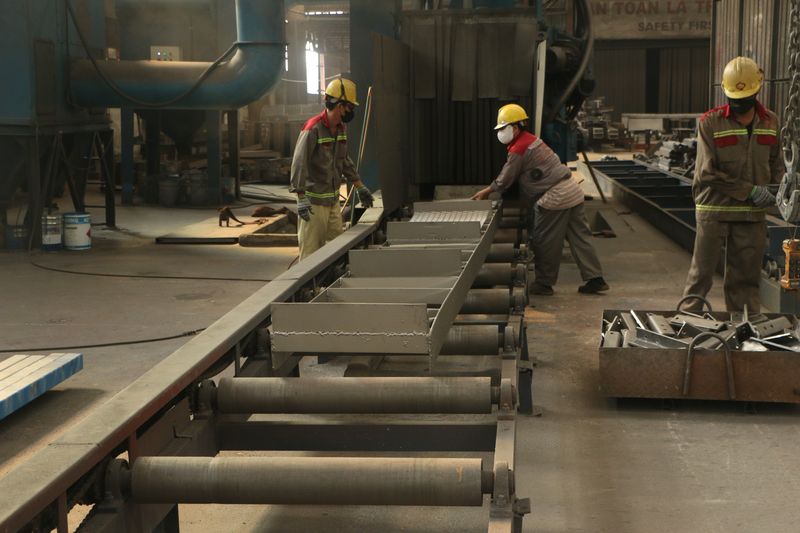
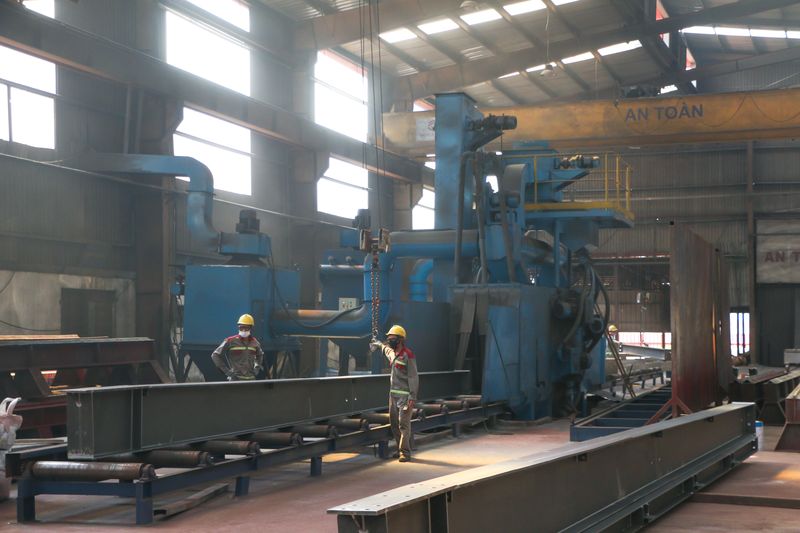
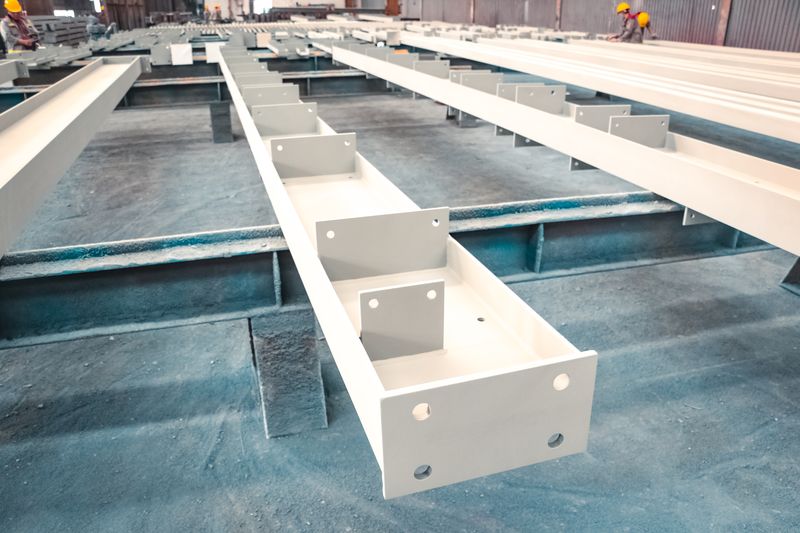
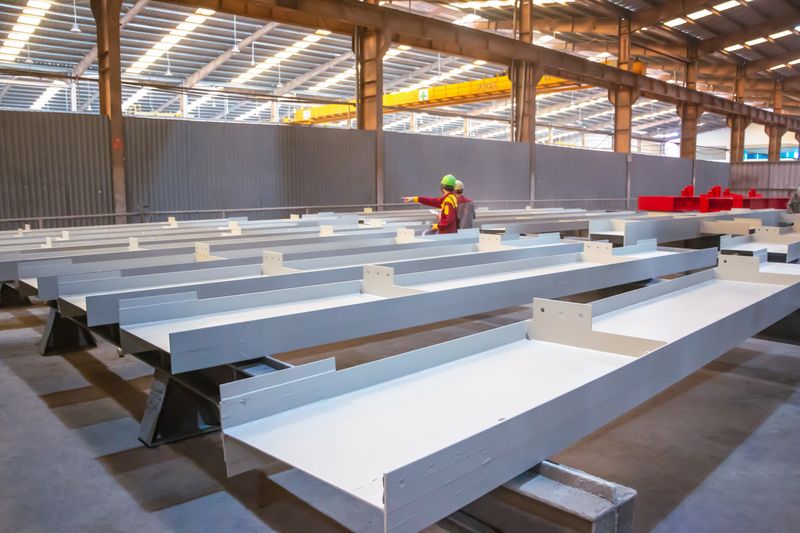
Our paint hall
Real World Steel photos of the blasting line and paint hall. None is shown as a Caribbean site.
Caribbean hurricane and marine guides
The code, port and parishes of each island are on its own page:
Questions
C5 is the very high category of ISO 12944-2: a standard carbon steel sample loses 80 to 200 µm in its first year. Most exposed Caribbean shorelines are C5, and steel within the surf spray is often CX.
CX is the extreme category, with first-year steel losses of 200 to 700 µm, found in the spray zone and offshore. CX systems are prequalified to ISO 12944-9 and are usually thicker or combined with galvanizing.
ISO 12944 durability is the time to first major maintenance: L up to 7 years, M 7 to 15, H 15 to 25 and VH more than 25. It is a planning figure, not a guarantee, and depends on correct application and care.
We apply coating systems from Jotun, PPG, Carboline, Hempel, Nippon Paint and International Paint. The specification names the system; we follow the maker's data sheet.
Usually not. Steel inside a closed building near the sea may be C3 or C4, while exposed canopies, eaves and outdoor frames are C5. We set the system for each part, which keeps the cost of coating in check.
Yes. The steel is checked before blasting and coating in our plant, and the specification can set a soluble salt limit that we measure and record.
Send the site, the distance from the sea and the life the owner expects. We set the corrosivity for each part of the steel, propose the system and apply it in our plant with every reading recorded.