
Zinc thickness
How much zinc a galvanized member carries
Minimum mean coating thickness rises with steel thickness, because thicker steel holds more heat in the kettle.
ISO 1461, minimum mean thickness
ASTM A123, structural shapes and plate
Scale 0 to 100 µm.
Zinc life
Years until the zinc runs thin
A rough planning check: zinc thickness divided by the zinc loss per year for the category. 85 µm of zinc in C5, losing 4.2 to 8.4 µm a year, lasts roughly 10 to 20 years before it needs attention.
Zinc loss 2.1–4.2 µm a year
Zinc loss 4.2–8.4 µm a year
Zinc loss 8.4–25 µm a year
Scale 0 to 40 years, 85 µm of zinc, no paint.
Duplex
Galvanizing plus paint
The paint shields the zinc from the salt; the zinc stops rust creeping under any damage in the paint. Published studies put the life of a duplex system at about 1.5 to 2.3 times the sum of the two coatings on their own.
- Galvanize the member to ISO 1461 or ASTM A123
- Sweep-blast the zinc lightly to give the paint a key
- Apply an epoxy tie coat made for galvanized steel
- Finish with polyurethane in the colour the owner wants
Designed for the kettle
Four things we draw in before the steel is galvanized
Vent and drain holes
Hollow sections and closed boxes need holes so zinc flows in and out and no air or acid is trapped. We place them in the shop drawings.
Sized for the kettle
Members are split at bolted splices to fit the galvanizer's kettle, agreed before detailing.
Fasteners galvanized too
Bolts, nuts and washers are hot-dip galvanized to match, so a bolt is not the first thing to rust.
Mixed metals kept apart
Stainless or aluminium parts are isolated from galvanized steel with washers and sleeves.
Which one where
Bare galvanized
Sheltered C4 sites, frames hidden in walls, steel that is easy to reach later
Paint system only
Most C5 building frames, where colour and a smooth finish matter
Duplex
CX spray zone, exposed canopies, marine terminals, hard-to-reach steel
The galvanizing process step by step: hot-dip galvanizing.
Galvanized steel
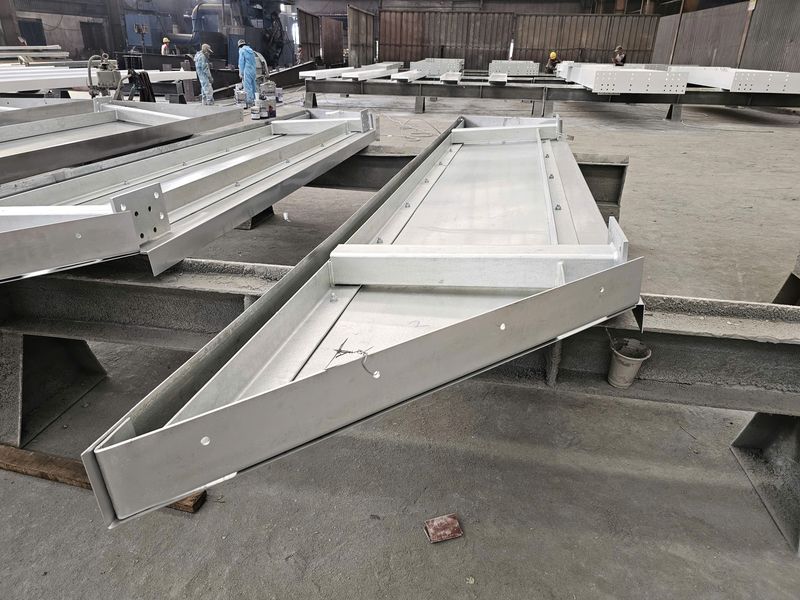
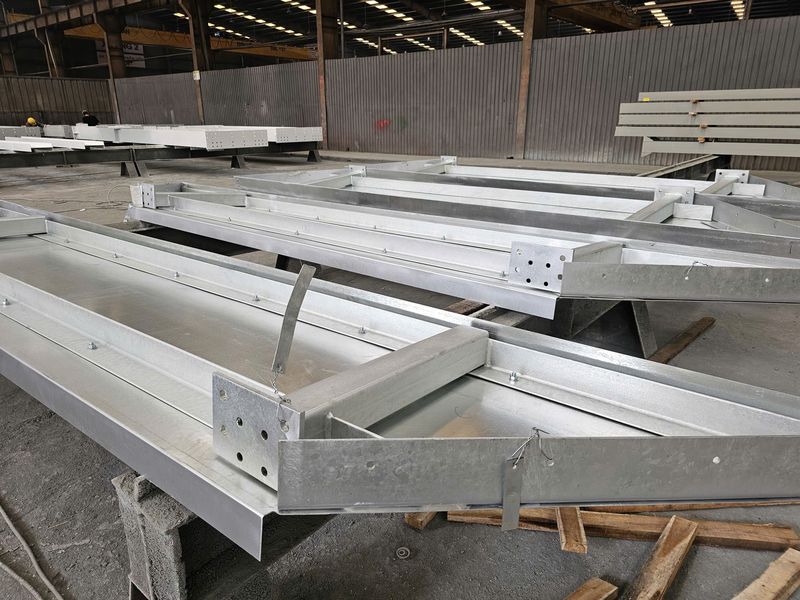
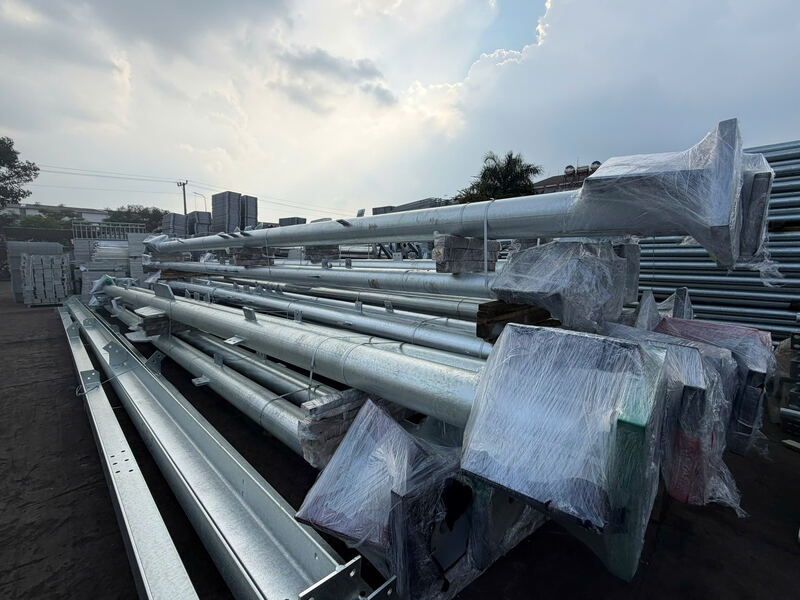
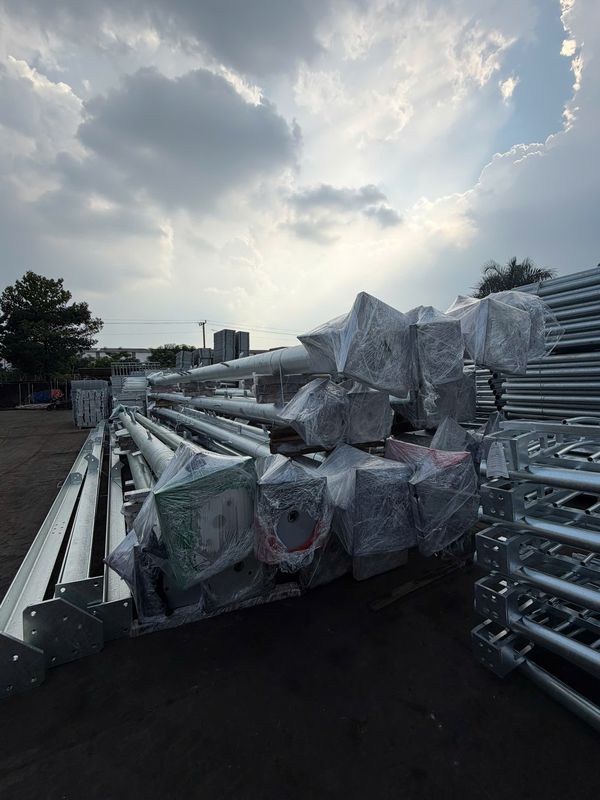
Galvanized frames and members from World Steel
Real photos of galvanized steel from a World Steel package. None is shown as a Caribbean site.
Caribbean hurricane and marine guides
The rest of the storm and salt-air story
The code, port and parishes of each island are on its own page:
Questions
Questions on galvanizing and duplex coatings
Is hot-dip galvanizing enough on the Caribbean coast?
In sheltered C4 sites often yes. On an exposed C5 shore 85 µm of zinc may last roughly 10 to 20 years before it needs attention, and in the CX spray zone much less, so a paint system on top is usually worth it.
What is a duplex coating?
Hot-dip galvanizing with a paint system over it. The paint protects the zinc and the zinc protects the steel, so together they last about 1.5 to 2.3 times longer than the two separately.
Who galvanizes the steel?
Galvanizing is arranged by World Steel with a galvanizer named for the project. We detail the members for the kettle, check the coating thickness and pack the galvanized steel with the rest of the package.
Can galvanized steel be painted?
Yes, after a light sweep blast and with a tie coat made for zinc. Paint applied straight onto fresh galvanizing often peels.
What happens if the galvanizing is damaged on site?
Small areas are repaired with zinc-rich paint to ASTM A780 within the limits the standard allows. We ship touch-up material with the steel.
Do you galvanize the bolts?
Yes. Bolts, nuts and washers for galvanized steel are hot-dip galvanized as well, so the fasteners last as long as the members.
Steel in the spray?
Tell us where the steel stands and how long it must last. We compare galvanizing, paint and duplex for each part, detail for the kettle and ship the package coated and ready to erect.