
Let the water out
A channel or angle laid toes up fills with rain and salt. We turn it over, add drain holes or close it off.
Poor and good
A channel or angle laid toes up fills with rain and salt. We turn it over, add drain holes or close it off.
A gap between two plates holds moisture and cannot be painted. We seal-weld the joint or open the gap wide enough to coat.
Paint pulls thin on a sharp edge. Edges are ground to a radius of about 2 mm so the film keeps its thickness.
A base plate at floor level sits in washdown water and splash. We stand it on a grout pad or plinth so it drains and dries.
Detailing rules
Gaps between members are wide enough to blast and paint now and to inspect and touch up later.
Hollow sections are sealed shut or fully vented and drained, never left half open to breathe salt air.
Stainless fixings, aluminium window frames and copper pipes are kept from touching carbon steel with sleeves and washers.
Fewer pieces and fewer site welds mean fewer places for the coating to break. Bolted splices are coated before shipping.
Slip-critical faces get a coating class tested for slip, or are masked, as the connection design requires.
For C5 and CX, welds, edges and surface imperfections are prepared to ISO 8501-3 grade P3 before blasting.
Shop drawings come at no extra cost: how our shop drawings work.
One building, three exposures
Canopies, eaves, external columns, stairs and walkways. Full C5 or CX system and the tightest detailing rules.
Under deep eaves and in roof voids, where rain never washes the salt off. Often worse than exposed steel, and checked first in maintenance.
Frames in an air-conditioned interior. Usually a lighter system, provided the envelope keeps salt air out.
How each exposure maps to a coating: salt air, C5 and CX.
In our plant
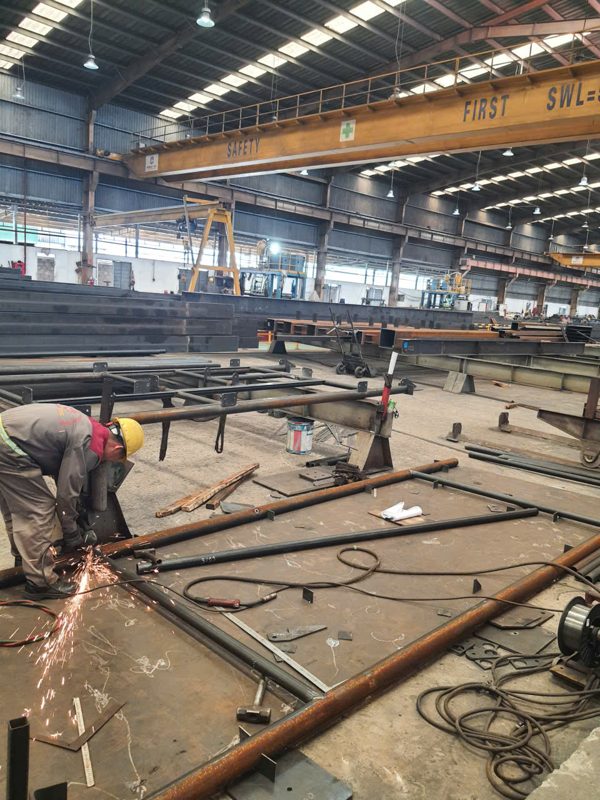
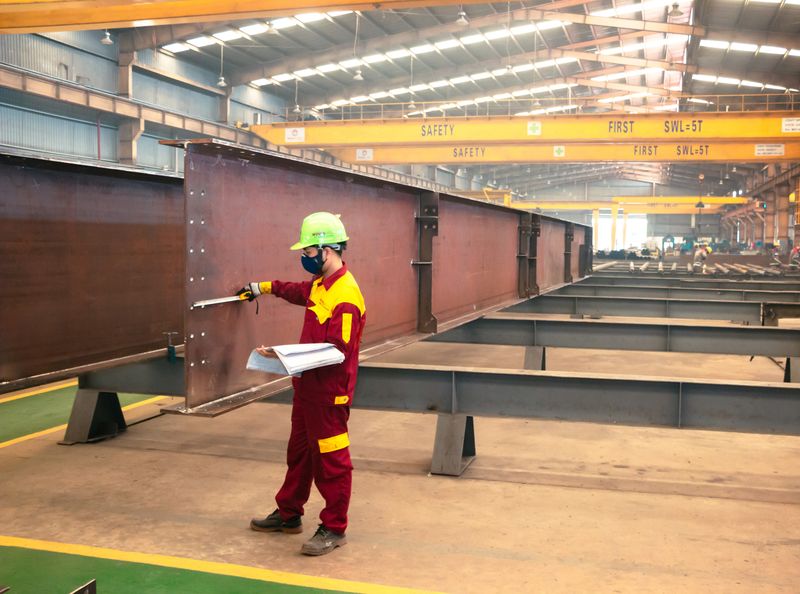
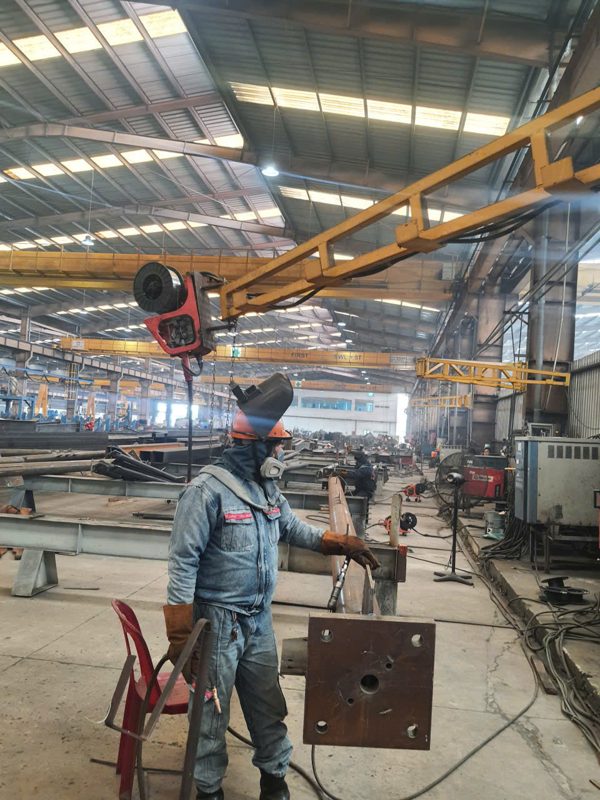
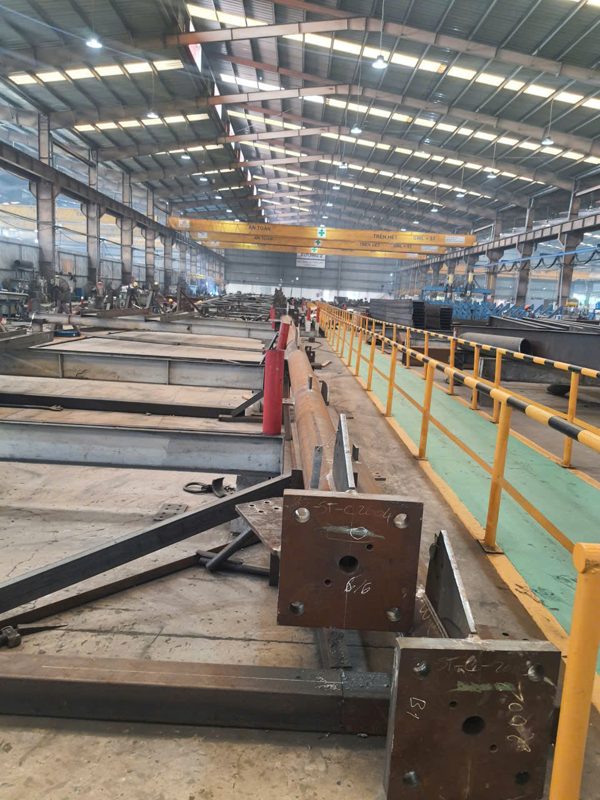
Real World Steel photos from our plant in Vietnam. None is shown as a Caribbean site.
Caribbean hurricane and marine guides
The code, port and parishes of each island are on its own page:
Questions
Coatings fail first where water collects, where two plates leave a crevice and where the film is thin on an edge. Good detailing removes those weak spots so the coating can reach its design life.
For C5 and CX systems, cut edges are ground to a radius of about 2 mm and welds and imperfections are prepared to ISO 8501-3 grade P3, as ISO 12944 recommends.
They are either sealed shut by welding or, when galvanized, fully vented and drained. A half-open tube breathes salt air and rusts from the inside.
They can be used if isolated with washers and sleeves; otherwise the carbon steel next to the stainless corrodes faster. Often a hot-dip galvanized bolt on galvanized or painted steel is the simpler choice.
Not always. Sheltered steel is not washed by rain, so salt builds up there. We treat it as exposed in the coating choice and point it out for the maintenance plan.
Send the drawings. We review the details for water traps, crevices, edges and mixed metals, propose fixes with your engineer and build them into the shop drawings at no extra cost.