ISO 12944 C5 is the very high corrosivity category: the air of the shoreline and of humid heavy industry. Here salt or acidic fumes are present nearly all the time, surfaces stay wet for long periods and bare steel can lose a fifth of a millimeter in a single year. A C5 coating specification has little margin for error. Thickness, preparation of edges and welds, cleanliness of the blasted surface and the plan for repairing transit damage all decide whether the system reaches its planned life.
This is the fifth article in our six-step ISO 12944 series. The main corrosion protection guide shows where C5 sits on the full ladder.
The C5 environment in numbers
ISO 12944-2 uses the ISO 9223 first-year loss limits to define C5:
| Metal | First-year mass loss | First-year thickness loss |
|---|---|---|
| Low-carbon steel | more than 650 and up to 1,500 g/m² | more than 80 and up to 200 µm (3–8 mils) |
| Zinc | more than 30 and up to 60 g/m² | more than 4.2 and up to 8.4 µm |
The 2017 revision of ISO 12944-2 merged the earlier C5-I (industrial) and C5-M (marine) into a single C5 and moved the most extreme conditions into the new CX category.
Where C5 is found
The standard's examples for C5 are industrial areas with high humidity and aggressive atmosphere, and coastal areas with high salinity, plus interiors with almost permanent condensation and high pollution. In US terms:
- Beachfront and harbor-front sites with onshore wind and breaking surf: much of the Florida coast, the barrier islands of the Gulf and Carolinas, windward Hawaii.
- Port terminals, shipyards, marinas and waterfront warehouses.
- Humid chemical, fertilizer, pulp and paper or wastewater plants.
- Interiors with near-permanent condensation, such as some process halls and poorly ventilated pools.
The same building can still carry several categories. Shoreline canopies may be C5 while a conditioned interior is C2; name each zone in the specification.
Getting the rating right
At C5 the cost of under-specifying is a repaint within a few years and the cost of over-specifying is film that could have gone elsewhere. ISO 9223 allows a category to be set from one-year coupon exposure or from measured chloride and sulfur dioxide deposition with time of wetness. For large shoreline projects, local data or a coupon program is worth the effort. Our Site Conditions Advisor gives the first estimate.
Durability and maintenance access
ISO 12944-1 durability ranges are low (up to 7 years), medium (7 to 15), high (15 to 25) and very high (more than 25). In C5, maintenance painting means containment, scaffolding and often a working facility, so owners of ports, plants and resorts usually ask for high or very high. The ranges plan maintenance; they are never a warranty.
Example paint systems for C5
ISO 12944-5 builds most C5 example systems on zinc-rich primers, with thicker epoxy-only alternatives. Our rounded, paraphrased summary; the current edition's table and the coating maker's data sheet govern:
| Durability | Typical system | Coats | Typical total NDFT |
|---|---|---|---|
| Low | Zinc-rich or epoxy primer + epoxy finish | 2 | about 160–200 µm (6–8 mils) |
| Medium | Zinc-rich primer + epoxy + polyurethane | 3 | about 200–240 µm (8–10 mils) |
| High | Zinc-rich epoxy primer + high-build epoxy + polyurethane | 3 | about 260–280 µm (10–11 mils) |
| Very high | Zinc-rich primer + two epoxy build coats + polyurethane | 4 | about 300–320 µm (12–13 mils) |
A typical very high build might read: zinc-rich epoxy 60 µm, epoxy intermediate 100 µm, epoxy intermediate 100 µm, polyurethane finish 60 µm. Glass-flake epoxies and polysiloxane finishes are common upgrades where abrasion or UV is severe.
Duplex systems of paint over hot-dip galvanizing (ASTM A123 or ISO 1461) are a frequent C5 choice for exposed members. The galvanizing is arranged with a galvanizer named for the project, then sweep-blasted or otherwise prepared so the paint bonds.
Surface preparation, the C5 way
- Sa 2½ minimum to ISO 8501-1 (close to SSPC-SP 10), with Sa 3 (close to SSPC-SP 5 white metal) where the specification asks.
- ISO 8501-3 grade P3 on welds, edges and defects: welds ground smooth, undercut repaired, edges rounded to at least 2 mm radius as ISO 12944-3 recommends.
- Soluble salt limits checked by ISO 8502-6 sampling and ISO 8502-9 conductivity before priming. C5 specifications usually set a tighter limit than C3 or C4.
- Stripe coats on every edge, weld, bolt and corner before each full coat.
- Design for coating: no pockets that hold water, sealed crevices and enough access for spray guns, as ISO 12944-3 describes.
Laboratory performance
ISO 12944-6 requires water condensation and neutral salt spray tests for C5 systems. For high durability the 2018 edition sets 720 hours of condensation and 1,440 hours of salt spray. Very high durability at C5 and anything at CX moves to the cyclic ageing test of ISO 12944-9. Ask for the report that matches your exact system.
Inspection, reference areas and records
On C5 work we log ambient conditions and dew point margin, blast grade and profile, salt test results, every stripe coat, wet film checks and dry film thickness assessed with ISO 19840 or SSPC-PA 2. Adhesion tests (ISO 4624 pull-off) are run at the frequency the specification sets. Reference areas, as ISO 12944-8 describes, are agreed on the first members so both sides judge the rest of the job against them. Records go into the Manufacturing Data Record and PEB Studio, and the hold points can be witnessed live by video.
Large coastal work at World Steel
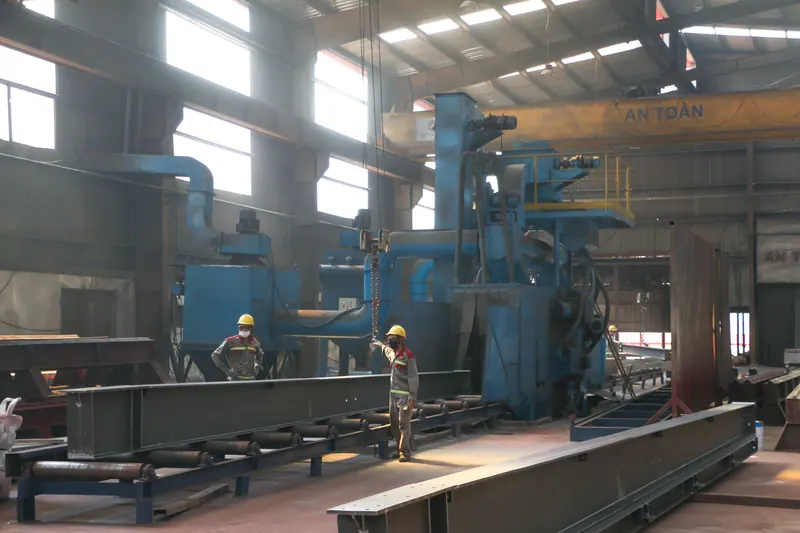
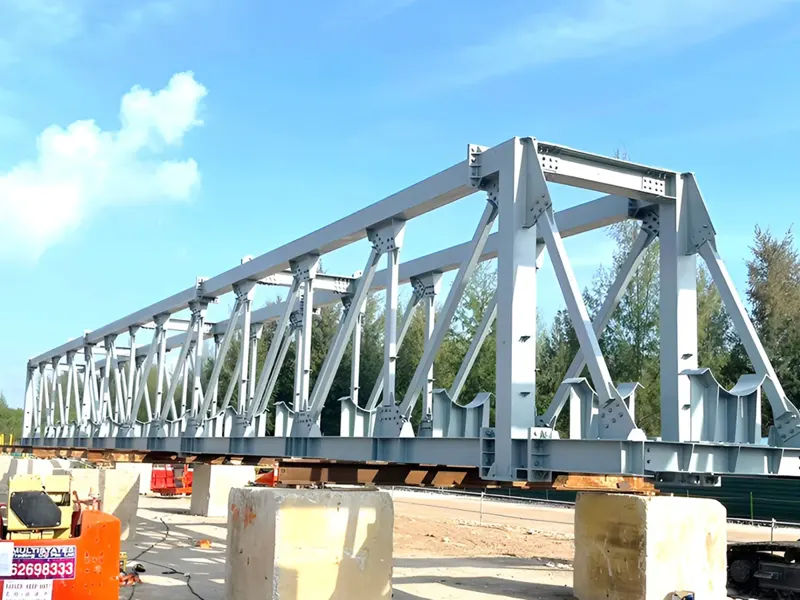
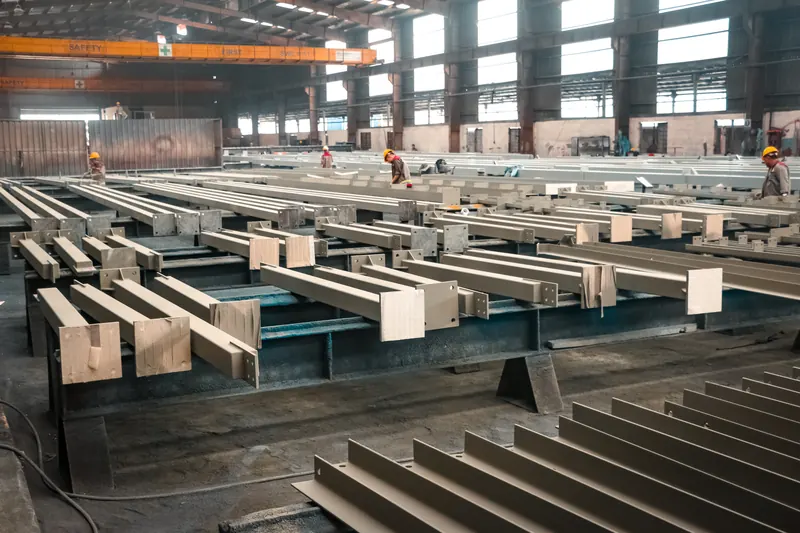
Our plant fabricates 2,500 metric tons of structural steel a month, and large coastal packages are routine. The Long Son petrochemical complex on the Ba Ria–Vung Tau coast, about 2,000 t of steel structures, is one of our flagship coastal projects. We apply coating systems from Jotun, PPG, Carboline, Hempel, Nippon Paint and International Paint, including their zinc-rich, glass-flake epoxy and polyurethane lines; the products carry UL certification and our painters are trained and certified by the paint manufacturer. Our coating inspectors hold FROSIO Level III and BGAS qualifications. Where an SSPC- or AMPP-certified inspector is required, the customer appoints that third-party inspector and has full access.
Building on an island coast? Our Caribbean salt-air guide applies the same C5 and CX thinking to trade-wind shorelines.
The top of the ladder
One rung down, ISO 12944 C4 covers industry and moderate coastal salt. The last rung, ISO 12944 CX, is offshore and splash-zone steel, where ISO 12944-9 takes over. For detailing and duplex choices, return to the coastal corrosion protection guide.
Quick answers
Which US sites are typically C5?
Beachfront and harbor-front sites exposed to breaking surf or onshore wind, such as parts of the Florida, Gulf and Hawaii coasts, port terminals, and humid chemical or fertilizer plants. Site data confirms the rating.
How thick is a C5 paint system?
In the ISO 12944-5 example tables, high and very high durability C5 systems on zinc-rich primers typically run about 260–320 µm in three or four coats. Barrier systems without zinc need more film.
Is duplex worth it in C5?
Often. Zinc loses up to about 8 µm a year in C5 air, so galvanizing alone is consumed faster here. Paint over galvanizing protects the zinc and the zinc protects the steel at damage, so together they outlast either one alone.
Who repairs coating damaged on site?
The US contractor's crew, using the products and the step-by-step method in our touch-up procedure, which ships with the drawings. In C5, prompt and correct touch-up matters a great deal.
Keep building your steel plan
Go further on USPEB.com
On this topic
Across the US market
- Steel fire protectionIntumescent and fire-rated steel packages
- Quality hubCoating inspection by FROSIO Level III inspectors
- Products catalogGalvanized, painted and built-up members
- Download centerSample ITP, design report and approval drawings
- Large projects, 2,500 t a monthCapacity for large US general contractors
- Contractor partnershipLong-term supply for US contractors