ISO 12944 CX is the extreme corrosivity category and the top rung of the ladder. It was added in the 2017 revision of ISO 12944-2 for conditions beyond the old C5-M marine class: offshore atmospheres, the spray zone of breaking surf, and industrial plants where humidity and aggressive chemicals combine. Bare steel in CX can lose more than half a millimeter in its first year. A CX coating system is not simply a thicker C5 system; it is qualified differently, applied under tighter control and inspected more closely.
This is the sixth and final article in our ISO 12944 series. The main corrosion protection guide shows the whole ladder in one place.
The CX environment in numbers
ISO 12944-2 and ISO 9223 set the CX limits from first-year losses of standard samples:
| Metal | First-year mass loss | First-year thickness loss |
|---|---|---|
| Low-carbon steel | more than 1,500 and up to 5,500 g/m² | more than 200 and up to 700 µm (8–28 mils) |
| Zinc | more than 60 and up to 180 g/m² | more than 8.4 and up to 25 µm |
At those rates a standard 85 µm hot-dip galvanized coating can be consumed in under a decade on its own, which is why CX steel is almost always painted, either directly or as a duplex system.
Where CX applies
The standard's examples for CX are offshore areas with high salinity, industrial areas with extreme humidity and aggressive atmospheres, and subtropical and tropical atmospheres; inside, industrial areas with extreme humidity and aggressive atmospheres. On projects US contractors build:
- Offshore platforms and the atmospheric zone of oil and gas, wind and LNG structures.
- Jetties, piers, sea walls, marine terminals and seafront structures within the spray of breaking surf.
- Beachfront steel on trade-wind coasts in the tropics, including much of the Caribbean shoreline.
- Smelters, chlor-alkali plants, fertilizer and acid plants with extreme humidity and chemicals.
CX is an atmospheric category. Steel below the splash line, in seawater or in soil falls into the immersion categories Im1 to Im4, which have their own systems and tests.
Durability planning at CX
ISO 12944-1 ranges are low (up to 7 years), medium (7 to 15), high (15 to 25) and very high (more than 25) to first major maintenance. At CX, maintenance can mean rope access, marine plant or a shutdown, so owners plan the system and the inspection program together. As always, these ranges are a maintenance planning tool, never a warranty.
How ISO 12944-9 sets up CX systems
ISO 12944-5 tables stop at C5. For CX, and for offshore structures, ISO 12944-9 (which replaced ISO 20340) sets both the minimum system and the laboratory proof. Paraphrasing its approach:
- At least three coats, typically zinc-rich primer, one or more build coats and a finish.
- Minimum total film: about 280 µm (11 mils) for systems with a zinc-rich primer, and considerably more, in the range of 350–450 µm, for systems without one. The current edition and the coating maker's data sheet govern.
- Cyclic ageing test of 4,200 hours, 25 weeks of alternating UV and condensation, salt spray and low-temperature exposure, followed by checks of rust creep from a scribe, blistering, cracking, flaking and adhesion.
- Duplex options over thermal-sprayed zinc or hot-dip galvanizing, qualified on the same test basis.
A typical CX build might read: zinc-rich epoxy 60–80 µm, glass-flake or high-build epoxy 200–250 µm in one or two coats, polyurethane or polysiloxane finish 60 µm, for a total around 320–390 µm (13–15 mils).
Surface preparation at CX
- Sa 2½ minimum, Sa 3 where specified, to ISO 8501-1 (close to SSPC-SP 10 and SP 5).
- Angular profile in the range the coating maker requires, usually medium to coarse on the ISO 8503 comparator, measured and recorded.
- ISO 8501-3 grade P3 on all welds, edges and defects; edges rounded to at least 2 mm radius following ISO 12944-3.
- Soluble salts sampled per ISO 8502-6 and measured by ISO 8502-9 with the strictest limit in the specification, retested after any rain or delay.
- Dust to ISO 8502-3 and dew point margin of at least 3 °C before every coat.
- Stripe coats before every full coat, often in a contrasting color so coverage can be checked.
Inspection and records at CX
CX work is planned around an inspection and test plan agreed by both parties before production. Typical items: blast cleanliness, profile and salts on every lot, stripe coat checks, wet and dry film thickness per ISO 19840, pull-off adhesion per ISO 4624 on test panels or witness areas, holiday detection where the specification calls for it, and reference areas per ISO 12944-8. Coating repair procedures for damaged areas are approved before the first member is blasted. All readings go into the Manufacturing Data Record and PEB Studio.
How World Steel supports CX packages
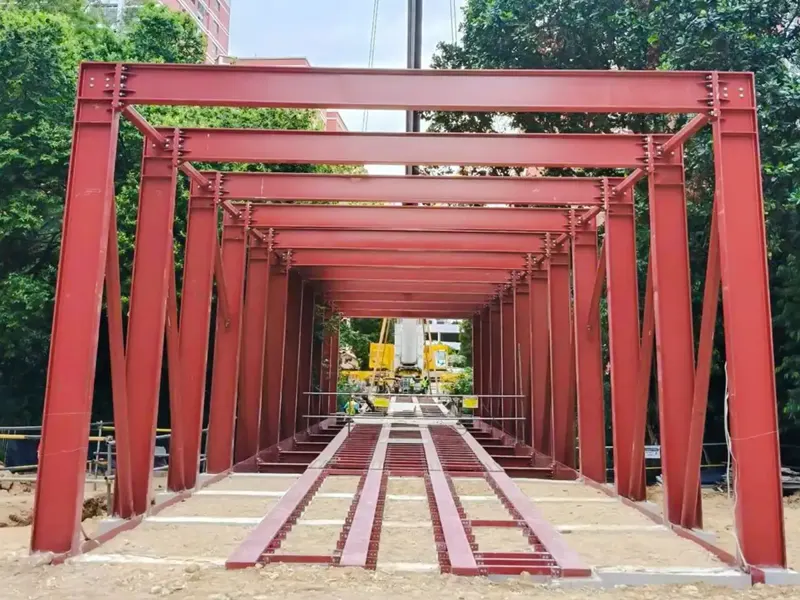
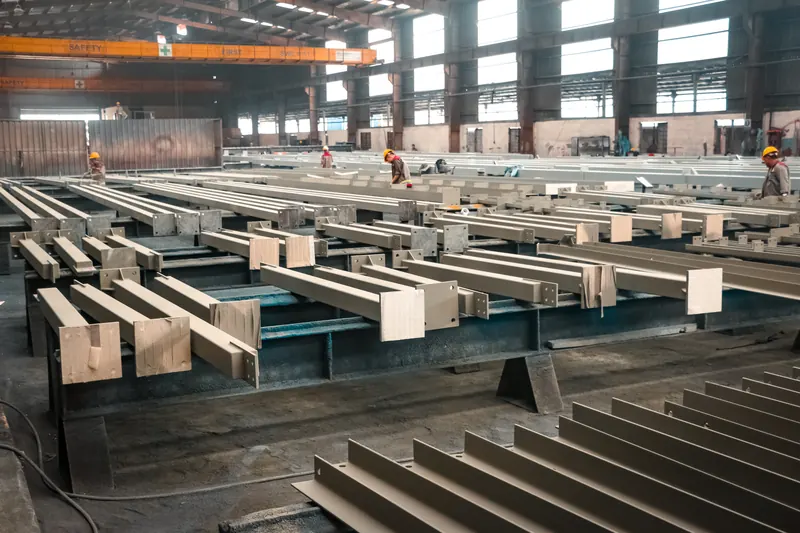
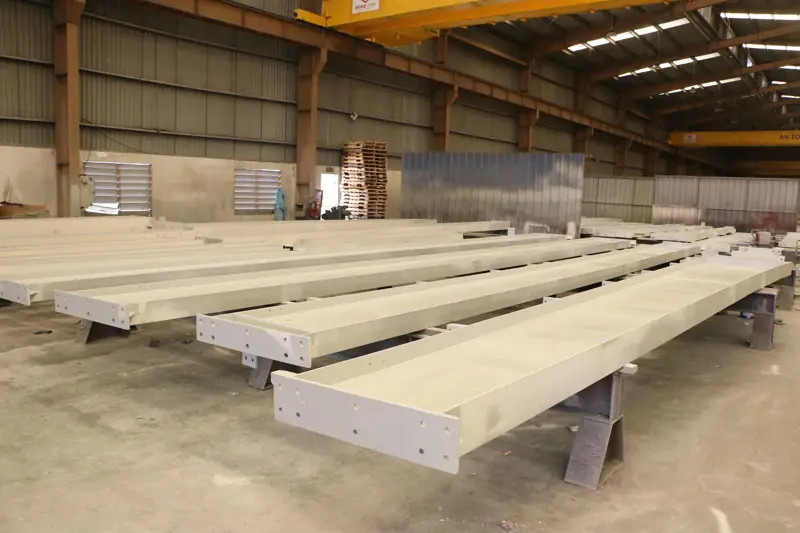
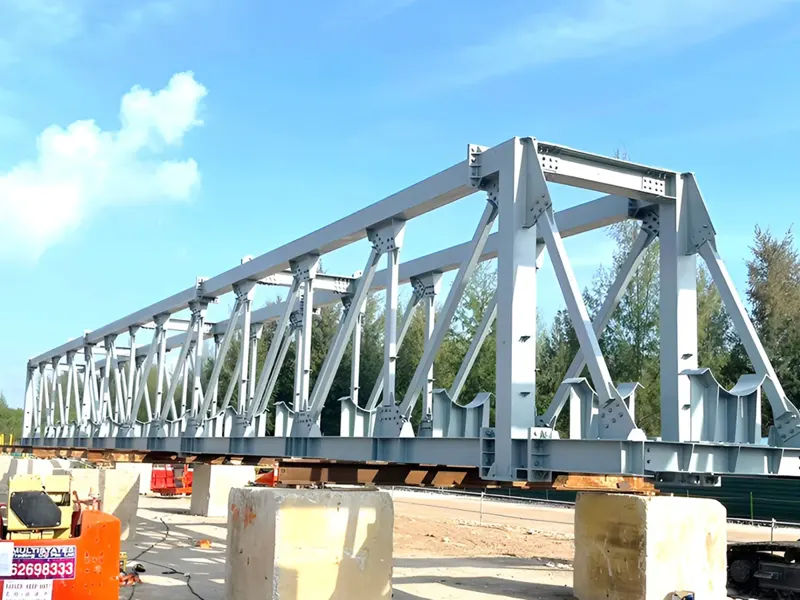
Our plant fabricates 2,500 metric tons of structural steel a month, and coastal steel such as pedestrian bridges for waterfront sites has gone through our blasting line and paint hall. We apply coating systems from Jotun, PPG, Carboline, Hempel, Nippon Paint and International Paint, including their ISO 12944-9 offshore lines. The products carry UL certification and our painters are trained and certified by the paint manufacturer. Our coating inspectors hold FROSIO Level III and BGAS qualifications, the qualifications offshore coating work commonly asks for. If your specification requires an SSPC- or AMPP-certified inspector, the customer appoints that third-party inspector and has full access, in person or by video.
For island work, see the Caribbean salt-air guide and our galvanizing and duplex guide for marine steel.
The whole ladder
CX is the last rung. Step back down to ISO 12944 C5 for shoreline and heavy industrial systems, or start again at ISO 12944 C1 to see how the requirements build from the dry interior up. The coastal corrosion protection guide and the ISO 12944 categories overview help you assign the right rung to each part of your building.
Quick answers
What is the difference between C5 and CX?
CX begins where C5 ends: first-year steel loss above 200 µm and up to 700 µm. It covers offshore and splash conditions and extreme industrial air that the earlier C5-M and C5-I categories could not separate.
Which paint systems are used for CX?
Systems prequalified under ISO 12944-9, typically a zinc-rich primer with epoxy or glass-flake epoxy build coats and a polyurethane or polysiloxane finish, about 280 µm and up in at least three coats. Systems without zinc-rich primer need considerably more film.
Is steel that sits in seawater CX?
No. Steel in water or soil uses the immersion categories Im1 to Im4. CX is atmospheric: the air above the splash, spray from the surf and offshore atmosphere.
Can World Steel supply CX steel for an island project?
Yes. We fabricate and coat the steel in our plant in Vietnam to the CX system your specification names, with full coating records. Site work and touch-up are the US contractor's scope, using our written touch-up procedure.
Keep building your steel plan
Go further on USPEB.com
On this topic
Across the US market
- Steel fire protectionIntumescent and fire-rated steel packages
- Quality hubCoating inspection by FROSIO Level III inspectors
- Products catalogGalvanized, painted and built-up members
- Download centerSample ITP, design report and approval drawings
- Large projects, 2,500 t a monthCapacity for large US general contractors
- Contractor partnershipLong-term supply for US contractors