
Warehouse with a metal roof
Light roof, tall walls, big area: wind governs frames, purlins, bracing and anchor bolts.
Plate boundaries
A broad public picture of seismic hazard around the Caribbean plate. Your engineer of record sets the design values for the site from the island's code.
Jamaica, Haiti, Dominican Republic
Strike-slip faults along the north of the plate; the 1907 Kingston and 2010 Haiti earthquakes.
Puerto Rico, USVI, BVI
Trench and faults north and south of the islands; the 2020 sequence in southern Puerto Rico.
Leeward and Windward islands
Subduction under the island arc, with volcanoes from Montserrat to St Vincent.
Trinidad and Tobago
Faults where the plate slides past South America.
Cayman Islands, west of Jamaica
Spreading and strike-slip zone; the 2020 M7.7 earthquake between Jamaica and Cuba.
The Bahamas, Turks and Caicos, Guyana, Suriname
Low seismic hazard; wind and salt lead the design.
Which load governs
Wind load depends on the area the building shows to the wind. Earthquake load depends on the mass the building carries. The lighter and larger the building, the more wind wins.
Light roof, tall walls, big area: wind governs frames, purlins, bracing and anchor bolts.
Heavy floors on a steel frame: earthquake often governs the bracing and columns.
Crane and equipment mass with large walls: both checked, and the crane case added.
Highest risk category for both hazards; the frame must stay usable after either event.
Frame systems
Rods or tubes in X, V or chevron patterns; efficient for wind, detailed as special or ordinary braced frames for seismic duty.
Open bays without bracing; prequalified connections where the seismic system demands them.
Designed to AISC 341 where required, with demand-critical welds to AWS D1.8 by qualified welders and procedures.
Both hazards reverse the load. Bolted connections are sized for the worst direction of each.
Seismic frames are only as good as their welds and their steel. These are in place in our plant for jobs that need them.
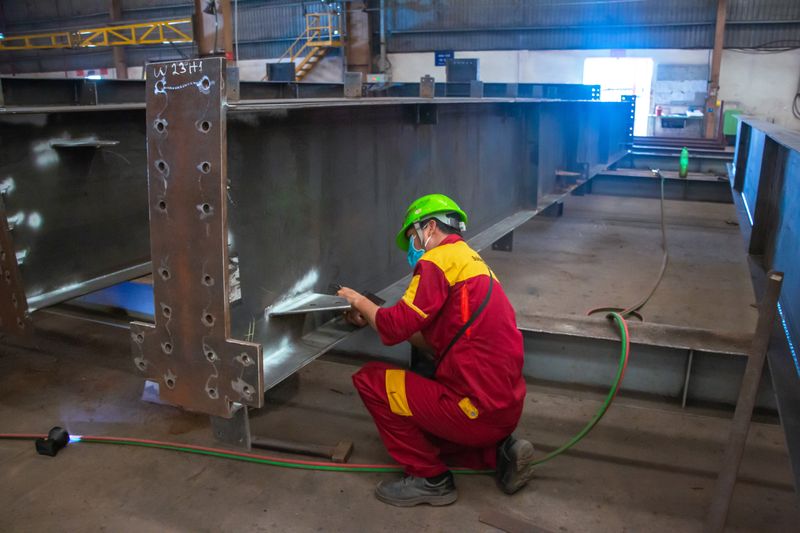
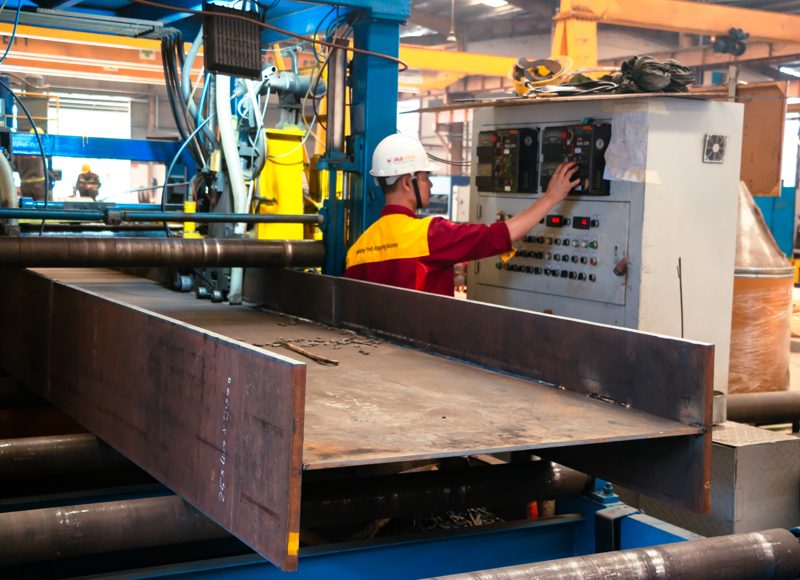
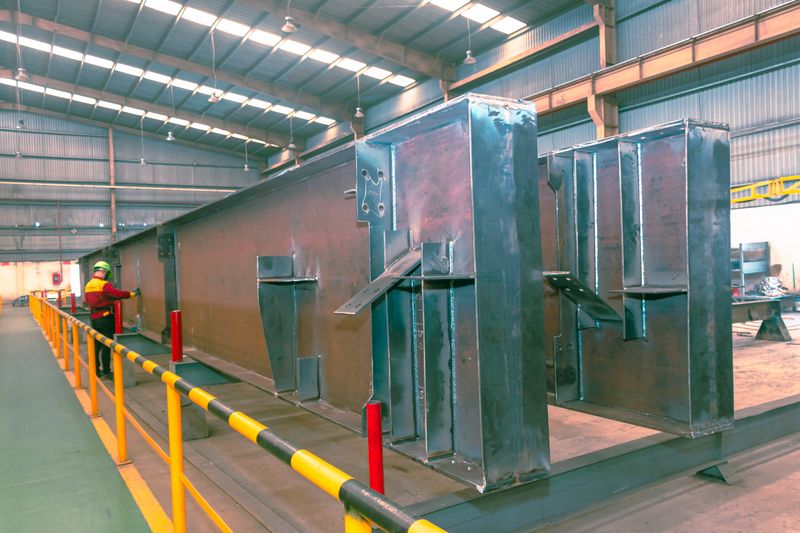
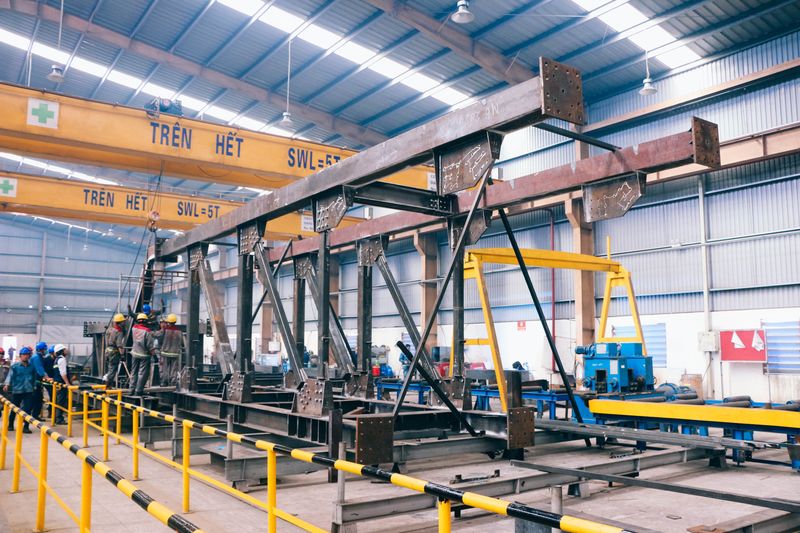
Welding in our plant
Real World Steel photos from our plant in Vietnam. None is shown as a Caribbean site.
Caribbean hurricane and marine guides
The code, port and parishes of each island are on its own page:
Questions
Most islands on the plate boundaries: Jamaica, Haiti, the Dominican Republic, Puerto Rico, the Virgin Islands, the Leeward and Windward arc and Trinidad and Tobago. The Bahamas, Turks and Caicos, Guyana and Suriname have low seismic hazard. Your engineer of record sets the values for the site.
Not always. Where the code places the building in a higher seismic design category, the frame must still follow the seismic detailing rules even if wind sets the member sizes.
Yes, where the seismic system requires it. Our plant has AWS D1.8-qualified welding procedures and welders for demand-critical welds, and we mark protected zones when the design calls for them.
Steel is light, so earthquake forces are lower than for a heavy structure, and ductile, so it bends instead of breaking. Designed for the wind as well, it handles both hazards well.
Your engineer of record, from the code the island uses. We state the values in the calculations and design the steel to them.
Send the drawings and the site. We check wind and earthquake cases with your engineer of record, detail the frame to the governing case and fabricate it in our plant with the welding records your inspector needs.