ISO 12944 C4 is the high corrosivity category. It is the rung where salt in the air or fumes from industry, not just moisture, drive the rate of attack, and where the difference between a carefully applied paint system and a rushed one becomes visible in a few years instead of a few decades. On US projects, C4 covers a large share of the Gulf and Atlantic coastal plain, refinery and chemical corridors, and aggressive interiors such as pool halls.
This is the fourth article in our six-part ISO 12944 series; the main corrosion protection guide ties the series together.
The C4 environment
ISO 12944-2 sets the limits for C4 from ISO 9223, measured on standard samples in their first year outdoors:
| Metal | First-year mass loss | First-year thickness loss |
|---|---|---|
| Low-carbon steel | more than 400 and up to 650 g/m² | more than 50 and up to 80 µm (2–3 mils) |
| Zinc | more than 15 and up to 30 g/m² | more than 2.1 and up to 4.2 µm |
At 80 µm a year, an unprotected 6 mm flange would lose a meaningful share of its section within a building's design life, and corrosion concentrates at edges, crevices and connections, so the real damage comes faster.
Typical C4 settings in the US
The standard's informative examples for C4 are industrial areas and coastal areas with moderate salinity outside, and chemical plants, swimming pools and coastal ship and boat yards inside. Translated to US projects:
- Coastal plain sites along the Gulf of Mexico and the South Atlantic, set back from the beach.
- Ports and harbor-side industrial parks on sheltered water.
- Petrochemical, refinery and fertilizer corridors with sulfur and nitrogen compounds in the air.
- Snow Belt loading docks, wash bays and parking structures splashed with de-icing salt.
- Interiors: natatoriums, chemical process rooms, wastewater plants and livestock housing with ammonia.
Many large buildings carry two or three categories at once. A distribution center near the coast may need C4 on canopies and dock columns but only C2 on the interior frame, so the specification should name each zone.
Confirming the category
For C4 and above, guessing is expensive in both directions. Use local data where it exists, chloride deposition measurements or a one-year coupon exposure for very large or long-life projects, as ISO 9223 describes. Our Site Conditions Advisor gives a first indication from distance to the shoreline, de-icing salt and process fumes, which an engineer then confirms.
Durability choices at C4
ISO 12944-1 durability ranges are low (up to 7 years), medium (7 to 15), high (15 to 25) and very high (more than 25) to first major maintenance. At C4 the film needed for each step grows noticeably, and so does the cost of maintenance painting on a working building, which often involves scaffolding, lifts and shutdowns. Owners of plants and logistics hubs frequently choose high or very high for that reason. These ranges help plan maintenance; they are not a warranty.
Example paint systems for C4
ISO 12944-5 lists C4 example systems mostly built on zinc-rich primers, with epoxy-only alternatives at greater total thickness. Our rounded, paraphrased summary, with the current edition's table and the coating maker's data sheet governing:
| Durability | Typical system | Coats | Typical total NDFT |
|---|---|---|---|
| Low | Epoxy primer and finish | 2 | about 120–160 µm (5–6 mils) |
| Medium | Zinc-rich or epoxy primer + epoxy + finish | 2–3 | about 160–200 µm (6–8 mils) |
| High | Zinc-rich epoxy primer + high-build epoxy + polyurethane | 3 | about 200–240 µm (8–10 mils) |
| Very high | Zinc-rich primer + epoxy build coats + polyurethane | 3–4 | about 260–300 µm (10–12 mils) |
Points that matter in C4:
- Zinc-rich primer, about 60 µm (2.4 mils), gives galvanic protection at damage, which buys time when steel is scuffed in shipping or erection.
- High-build epoxy supplies the barrier; it is the coat that carries most of the thickness.
- Polyurethane finish keeps color and gloss in sunlight; epoxy alone chalks outdoors.
- Galvanizing or duplex is the alternative for exposed members. See paint, galvanizing or duplex?.
Surface preparation for C4
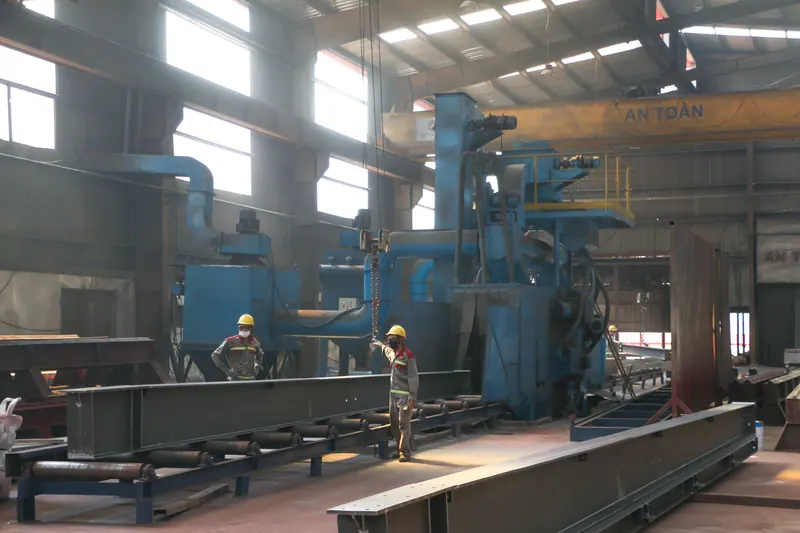
- Sa 2½ to ISO 8501-1 as a minimum, close to SSPC-SP 10. Some owners ask for Sa 3 for very high durability.
- ISO 8501-3 grade P2, often P3 at critical details: weld spatter removed, welds smoothed, edges rounded. ISO 12944-3 recommends rounding edges to a radius of at least 2 mm so the paint does not pull thin over them.
- Stripe coats brushed on edges, welds, bolts and corners before each full coat.
- Soluble salt checks on the blasted surface (ISO 8502-6 sampling with ISO 8502-9 conductivity) where the specification sets a limit. Salt left under paint causes blistering.
Laboratory performance
ISO 12944-6 requires both water condensation and neutral salt spray testing for C4 systems. For high durability the 2018 edition sets 480 hours of condensation and 720 hours of salt spray. The coating maker's test report should match the exact products and build on your specification.
Inspection and records
Inspection gets tighter at C4. On each member and coat we log ambient conditions and dew point margin, blast grade and profile, salt test results where specified, stripe coats, wet film checks and dry film thickness assessed with ISO 19840 or SSPC-PA 2. Adhesion is tested to ISO 4624 or ISO 2409 where the specification asks. Reference areas as described in ISO 12944-8 can be set up on the first members so that both parties agree what "good" looks like for the rest of the job. Every reading goes into the Manufacturing Data Record and PEB Studio.
How World Steel handles C4 work
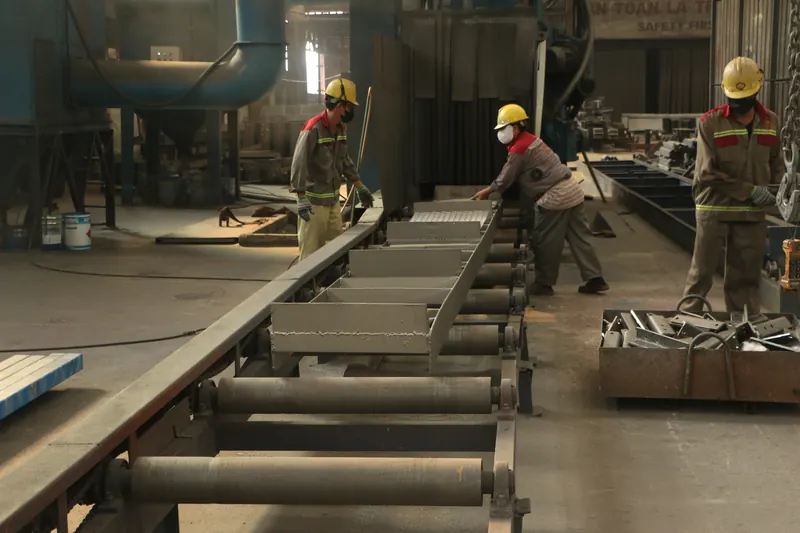
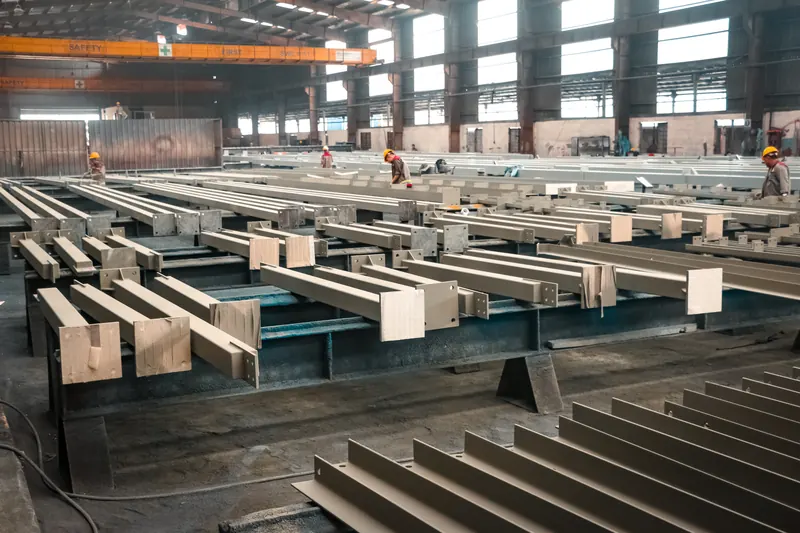
Coastal and industrial packages of thousands of tons are normal for us; our plant fabricates 2,500 metric tons of structural steel a month. We apply coating systems from Jotun, PPG, Carboline, Hempel, Nippon Paint and International Paint, including their zinc-rich and epoxy lines, so the US contractor can buy the same product for touch-up anywhere. The products carry UL certification, our painters are trained and certified by the paint manufacturer, and our coating inspectors hold FROSIO Level III and BGAS qualifications. If your specification requires an SSPC- or AMPP-certified inspector, the customer appoints a third-party inspector and gets full access to the paint hall.
The ladder from here
One rung down, ISO 12944 C3 covers cities and light industry. One rung up, ISO 12944 C5 is the shoreline and heavy industry, where systems pass 260 µm and duplex becomes common. Read the coastal corrosion protection guide for detailing that helps any C4 system last.
Quick answers
How close to the ocean is C4?
There is no fixed distance. Exposed Gulf and Atlantic sites a little inland from the shoreline often rate C4, while beachfront sites with breaking surf are usually C5. Wind direction, shelter and rain washing change the answer.
Are swimming pool halls really C4?
ISO 12944-2 lists swimming pools among its C4 interior examples because warm, humid, chlorinated air attacks steel hard. Poor ventilation can push them higher.
What does a high-durability C4 system look like?
Typically a zinc-rich epoxy primer, an epoxy build coat and a polyurethane finish, about 200–240 µm in three coats. The coating maker's system and data sheet set the exact build.
Should C4 steel be galvanized instead of painted?
Galvanizing performs well in C4, losing up to about 4 µm of zinc a year. For long design lives, color or hard-to-reach steel, a duplex system of paint over galvanizing is a common C4 choice.
Keep building your steel plan
Go further on USPEB.com
On this topic
Across the US market
- Steel fire protectionIntumescent and fire-rated steel packages
- Quality hubCoating inspection by FROSIO Level III inspectors
- Products catalogGalvanized, painted and built-up members
- Download centerSample ITP, design report and approval drawings
- Large projects, 2,500 t a monthCapacity for large US general contractors
- Contractor partnershipLong-term supply for US contractors