
The maintenance year
Five moments to look at your steel
Yearly walk
Look over exposed and sheltered steel, sealants, flashings and fixings; record rust spots and damage.
Get ready
Tighten loose cladding fixings, clear gutters and drains, check doors and shutters close and latch.
Walk-down
Check the roof, edges, connections and bracing; look for bent members, missing screws and torn sheets.
Rinse
Wash salt off steel under eaves, canopies and soffits that rain never reaches.
Touch up or recoat
Repair with the same coating system before rust spreads under the film.
After the storm
An eight-point walk-down after every named storm
Done by the owner's team or its contractor as soon as the site is safe. Anything bent, torn or loose goes to the engineer before repair.
- Roof corners and edges: sheets, screws, flashings
- Purlin cleats, flange braces and sag rods
- Bracing rods: tight, not bent or slack
- Column bases: grout, anchor nuts, standing water
- Doors, shutters and their framing
- Gutters and downpipes clear of debris
- Coating damage from flying debris
- Cracks or movement after an earthquake
ISO 4628-3
Rust grades: when to touch up
ISO 4628-3 grades rust by the share of the surface affected. Owners often set a maintenance trigger at Ri 2 or Ri 3, well before the steel itself is at risk.
Swatches are illustrations of increasing rust, not reference images.
Shipped with the steel
The touch-up kit and the coating record
Same system, same maker
Touch-up paint from the coating system used in our plant, from Jotun, PPG, Carboline, Hempel, Nippon Paint or International Paint.
Coating record
System, coats, film thickness and batch per member, kept in PEB Studio and handed over with the steel.
Repair method
How to prepare, prime and recoat a damaged area, from the maker's data sheet.
Spare fixings
Extra screws, washers and bolts so the crew does not reach for whatever is in the shop.
More on planning coating life: maintenance planning.
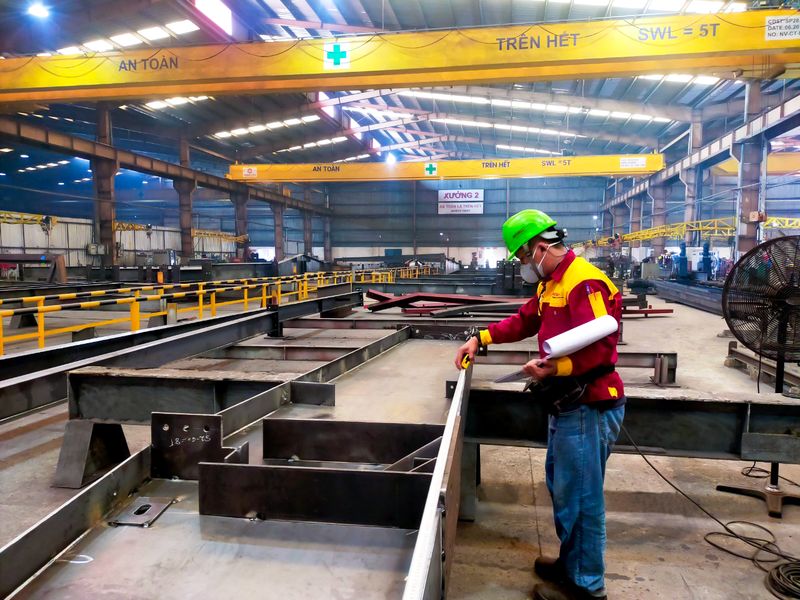
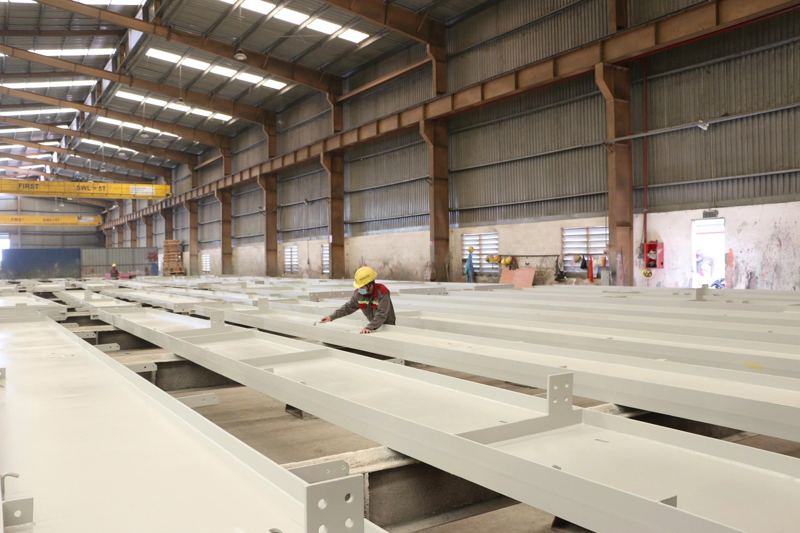
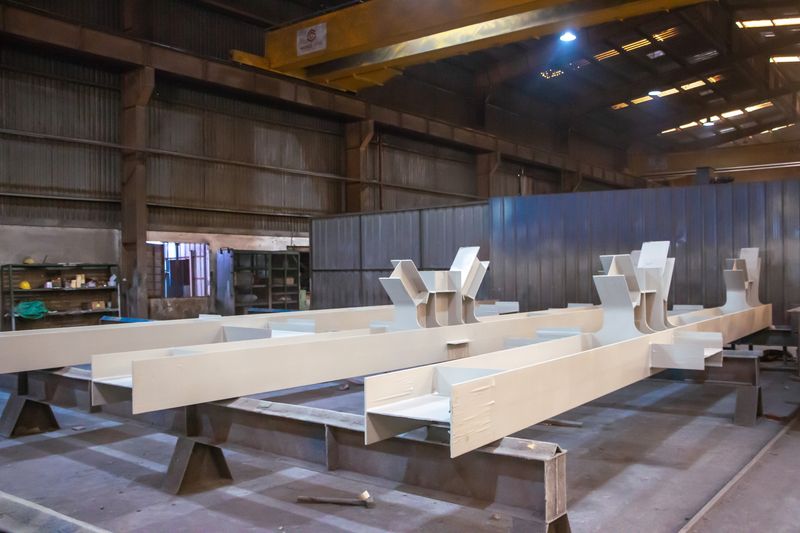
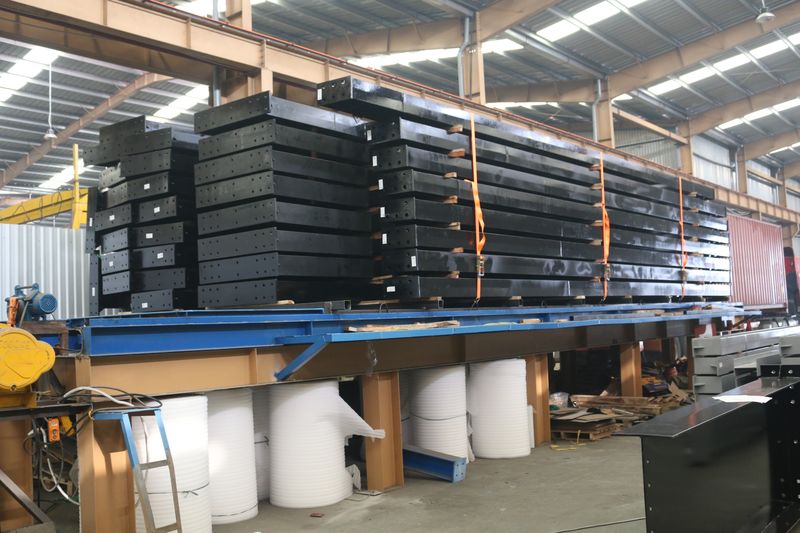
Checked before it ships
Inspection and coating in our plant
Real World Steel photos from our plant in Vietnam. None is shown as a Caribbean site.
Caribbean hurricane and marine guides
The rest of the storm and salt-air story
The code, port and parishes of each island are on its own page:
Questions
Questions on maintenance and storm checks
How often should Caribbean steel be inspected?
A full walk-around once a year, a check before the hurricane season and a walk-down after every named storm or strong earthquake. Steel near the surf benefits from more frequent rinsing of sheltered parts.
Why rinse steel that is already painted?
Salt left on sheltered surfaces stays wet in humid air and attacks the coating. A fresh-water rinse every few months under eaves and canopies extends the life of the system.
Do you supply touch-up paint?
Yes. Touch-up paint from the same coating system ships with the steel, together with the repair method from the coating maker's data sheet.
Can the paint be bought locally later?
The coating makers we apply, Jotun, PPG, Carboline, Hempel, Nippon Paint and International Paint, sell worldwide, so the same products can usually be ordered through their regional distributors.
What should be checked after a hurricane?
Roof sheets, screws and flashings at the edges and corners, purlin cleats, bracing, column bases, doors and their framing, and coating damage from debris. Anything bent or torn should be reported to your engineer before repair.
Do you inspect buildings on site?
No. Inspection and maintenance are done by the owner and its contractors. We provide the coating records, drawings and repair guidance to support them.
Planning for the long run?
Ask for a maintenance plan with your steel package. We set the coating system for each exposure, ship the touch-up kit and hand over the records your owner needs for the life of the building.