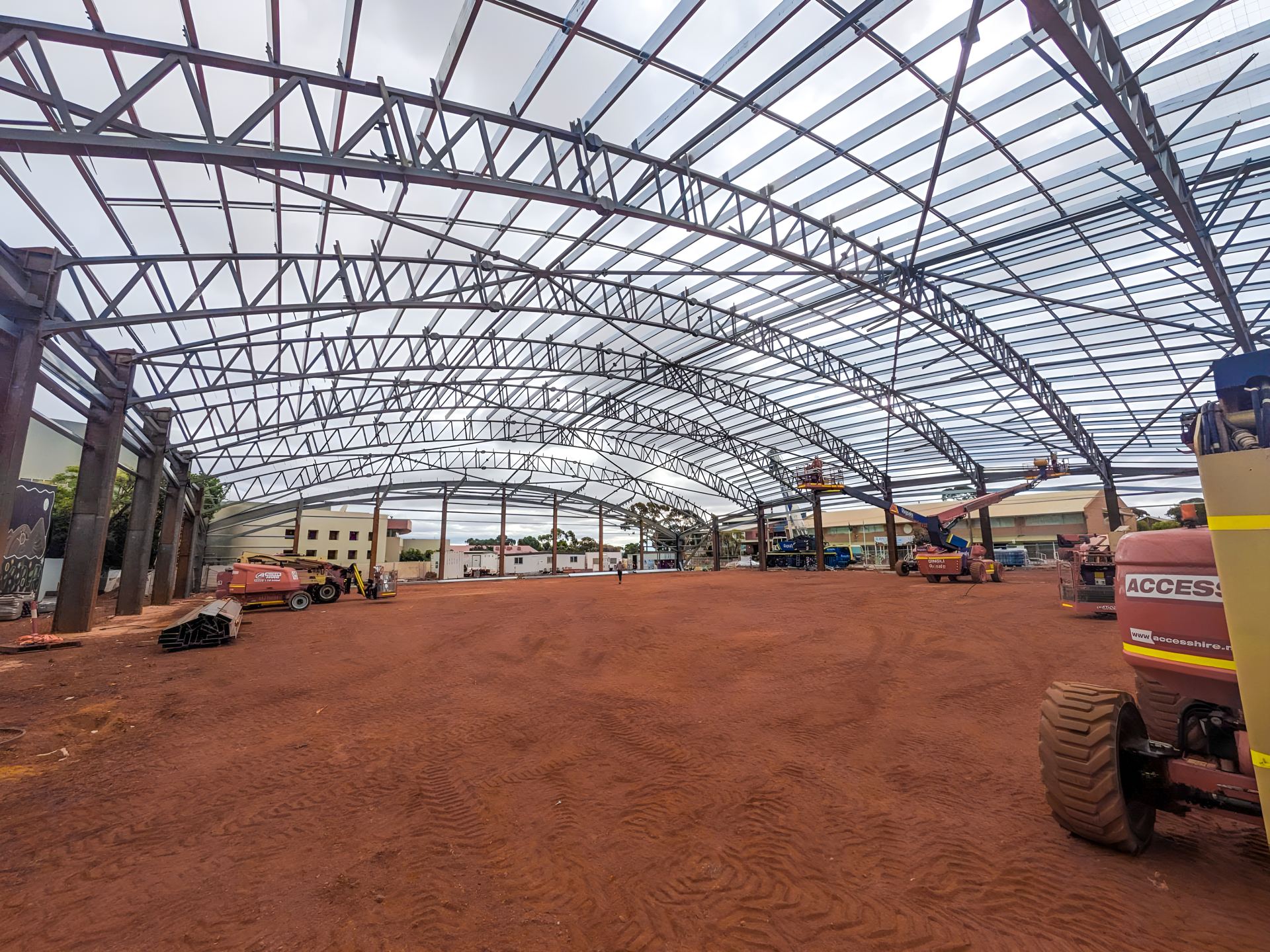
North Charleston is home to widebody aircraft final assembly, and a network of aerospace suppliers and maintenance operations stretches to Greenville and the regional airports. These buildings need long, column-free spans, big door openings and crane bays, often on Lowcountry sites where wind and seismic loads both apply.
Why it matters
Spans set by the aircraft
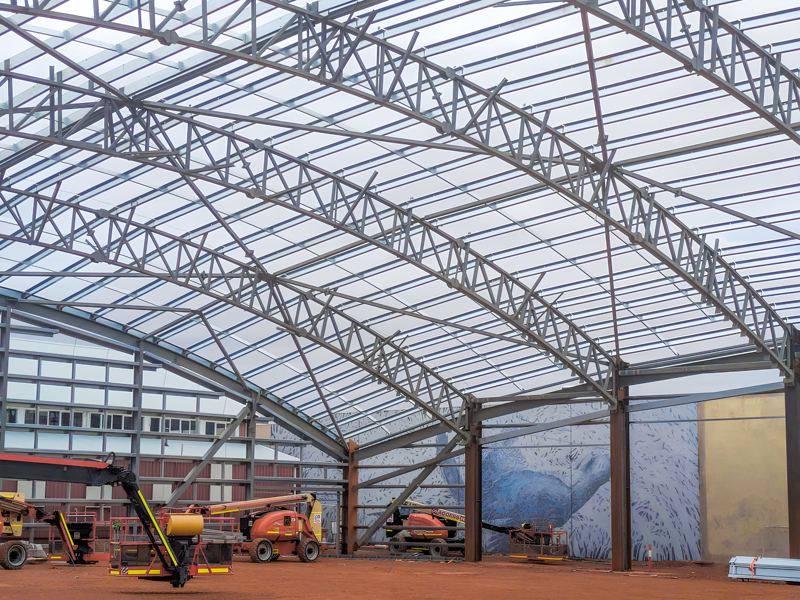
Aircraft halls and hangars are sized around wingspans and tail heights. The roof has to span the whole width without columns, carry cranes and services, and stay stiff enough for hangar doors that run along its edge.
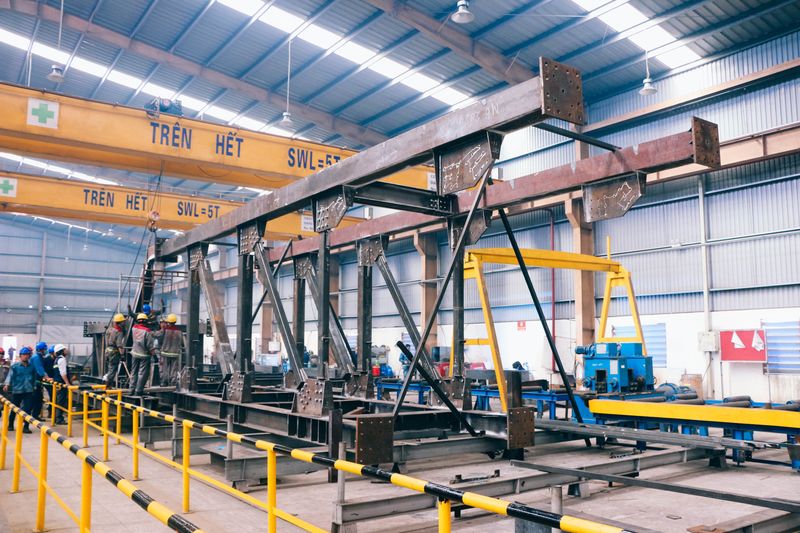
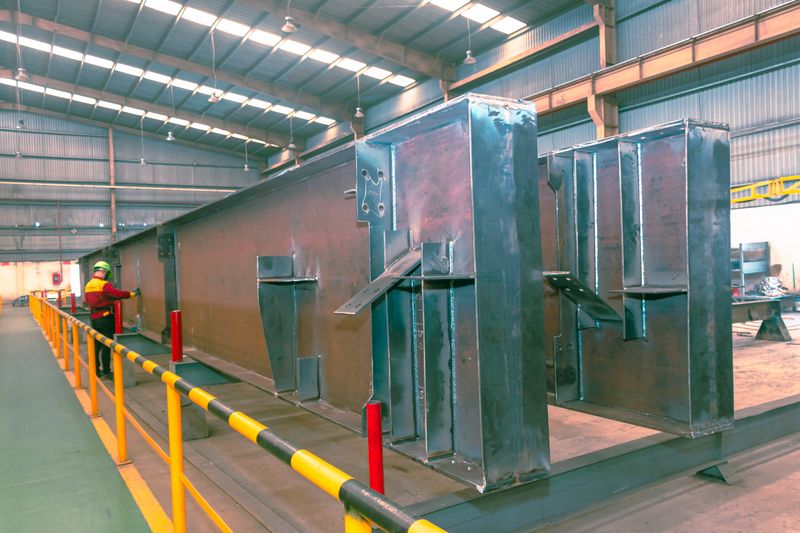
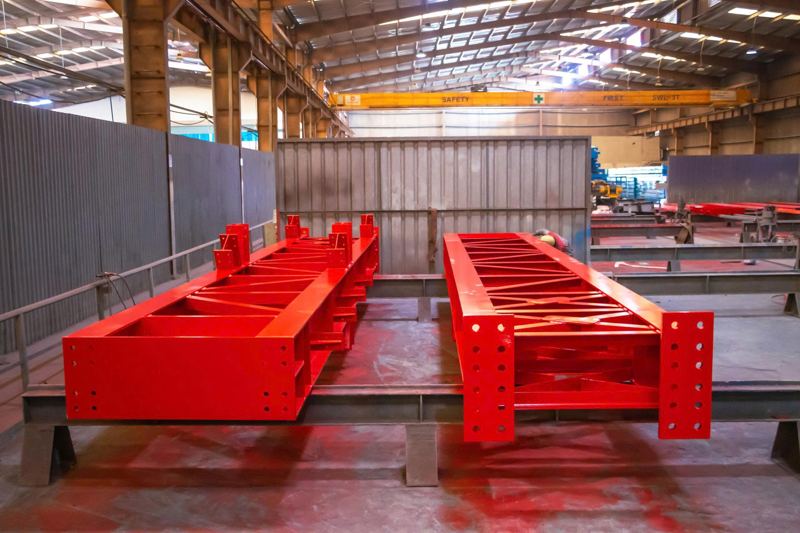
We fabricate long-span trusses, built-up rafters and door headers in our plant, and design the deflection limits with your Engineer of Record and the door supplier. On coastal sites the frame is checked for hurricane wind and Charleston seismic together.
What we design and fabricate
Steel for aerospace buildings
Column-free spans
Trusses and built-up rafters across the hall.
Hangar door headers
Stiff headers sized with the door supplier.
Crane bays
Runways for overhead and bridge cranes.
Work platforms
Platforms and stairs around the aircraft.
Typical choices
Frame options by building
Final choices follow your specification and the door and crane data.
| Building | Typical frame | Notes |
|---|---|---|
| Final assembly hall | Long-span trusses | Cranes, tight deflection limits |
| Hangar | Truss or built-up rafter frame | Door header and wind on open doors |
| Supplier plant | Clear-span frame | Crane bays, mezzanines |
What we do not claim
World Steel names no aircraft maker or supplier as a customer. We fabricate the structural steel to the drawings your Engineer of Record approves.
South Carolina ecosystem
Products and solutions behind this guide
The World Steel products, systems and services this guide relies on, made in our plant in Vietnam.