Every structural steel specification asks for mill test certificates, also called mill test reports. Many submittal reviewers file them without reading them. They are worth reading, because they are the only document that ties the steel in your building to the chemistry and strength the design assumed.
What is on a certificate
A typical certificate shows:
- Mill name and certificate number.
- Product and size, for example a W-shape, plate thickness or HSS size.
- Standard and grade, for example ASTM A992, A572 Grade 50 or A36, sometimes dual-certified with an EN or JIS grade.
- Heat number: the batch of steel the piece came from.
- Chemical analysis: carbon, manganese, phosphorus, sulfur, silicon and other elements, often with a carbon equivalent.
- Mechanical test results: yield strength, tensile strength and elongation.
- Impact test results, when ordered: Charpy V-notch energy at a stated temperature.
Heat numbers and traceability
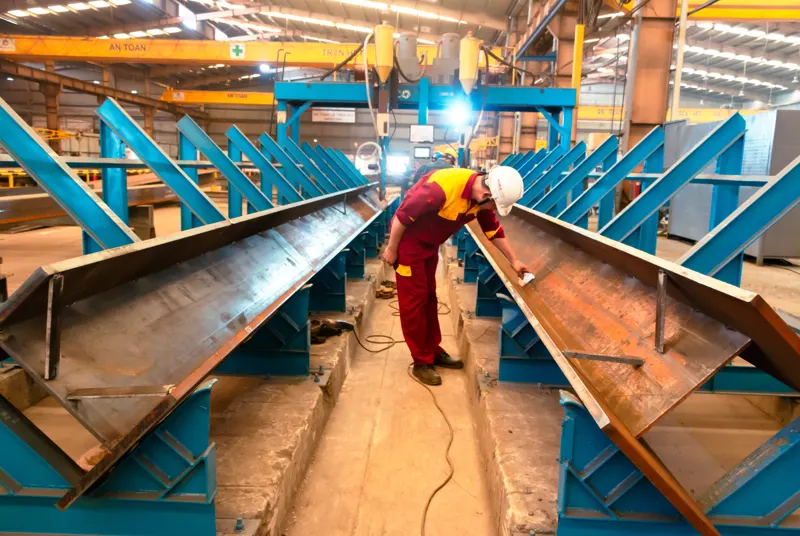
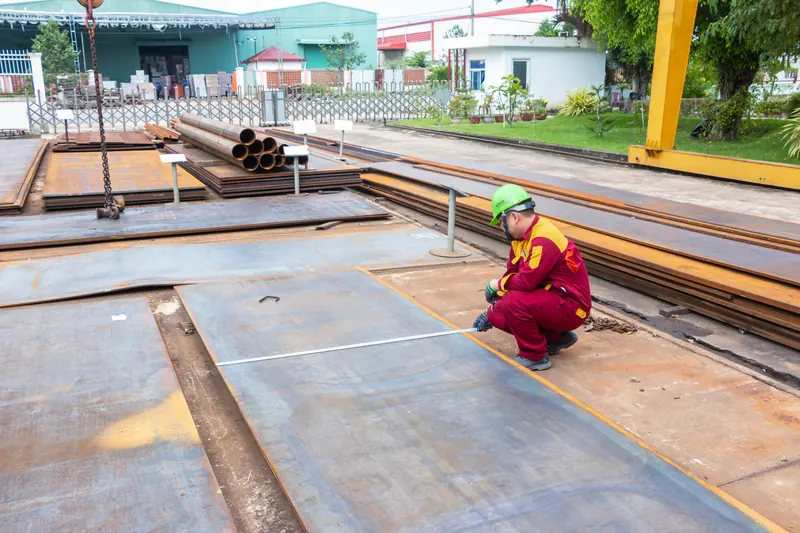
The heat number is what links a certificate to a piece. A well-run fabricator records the heat number when material arrives, transfers it to cut pieces, and keeps a record of which heat went into which member. On a US job you should be able to pick a member mark on the erection drawing and find its certificate.
EN 10204: 2.2, 3.1 and 3.2
Steel from many mills outside the US is certified under EN 10204, which defines the type of document:
| Type | What it means |
|---|---|
| 2.2 | Test report based on non-specific inspection: typical values, not from your heat |
| 3.1 | Inspection certificate with results from the actual heat, confirmed by the mill's own authorized inspector |
| 3.2 | As 3.1, also confirmed by an independent inspector or the purchaser's representative |
For structural steel on a US project, ask for 3.1 certificates as a minimum. They carry results specific to the heat supplied, which is what an engineer needs to check against the ASTM grade.
Charpy impact values
Notch toughness matters for thick plates, heavy shapes, some seismic members and steel that will be cold in service. AISC 360 and AISC 341 set when Charpy testing is needed, and the project specification states the energy and temperature. When it applies, the order to the mill has to say so: impact testing cannot be added to a certificate after the steel is made. Vietnam plate mills used by World Steel can supply 3.1 certificates with Charpy values on request.
How to review a certificate in two minutes
- Check the grade and standard match the specification.
- Check yield and tensile values meet the grade's minimums.
- Check chemistry limits, and the carbon equivalent if the welding procedure depends on it.
- Check Charpy values and test temperature where required.
- Check the heat number appears in the fabricator's traceability record.
Grades and specifications
A certificate states the specification the steel was produced to, such as ASTM A992 for wide-flange shapes, ASTM A572 for plates and shapes, or ASTM A36. When the mill produces to a European or other national standard, check that the chemistry and mechanical properties also meet the ASTM grade in the project specification. Some mills certify a product to both standards on one certificate, which makes review simpler. The Engineer of Record decides whether an equivalent grade is acceptable, so raise any substitution during submittals, not on site.
Chemistry and weldability
The chemical analysis matters for welding. Carbon equivalent, calculated from carbon, manganese and other elements, gives a quick view of how easily the steel can be welded and whether preheat is needed. Welding procedures should be qualified for the material grades and thicknesses on the certificates.
Common problems
Typical issues are certificates that do not show the heat number stamped on the material, certificates for a different size than the one delivered, missing impact values when the specification requires them, and scanned copies that cannot be read. Each of these can stop acceptance of the steel. Ask the fabricator to check certificates on receipt at its own plant, before cutting, so problems are found when they are still easy to fix.
Keep them with the members
Certificates are most useful when they are linked to the finished members. A digital record that ties each heat number to the piece marks that used it lets an inspector check any member in minutes.
Ask for it digitally
Paper certificates in a binder are hard to search. Ask the fabricator to link certificates to member marks in a digital record, so a question from the inspector or the owner can be answered in minutes, years after erection.
Quick answers
Are EN 10204 3.1 certificates accepted in the US?
Yes, when they report the properties the specified ASTM grade requires. Engineers check the chemistry and mechanical results against the specified standard, not the certificate format.
When are Charpy values required?
When the project specification or AISC 341 calls for notch toughness, typically for heavy sections, certain seismic members and members in cold service.
What if a heat number cannot be traced?
Untraceable material should not go into the structure without testing and the engineer's approval. A good fabricator keeps heat numbers on cut pieces and in its records.
Keep building your steel plan
Go further on USPEB.com
On this topic
Across the US market
- Quality hubInspection, testing and sign-off at the plant
- Accredited testing labsILAC ISO/IEC 17025 testing on every project
- Online factory auditWalk the shop live with our QA team
- Large projects, 2,500 t a monthCapacity for large US general contractors
- Contractor partnershipLong-term supply for US contractors
- Solutions by stateState-by-state steel solutions