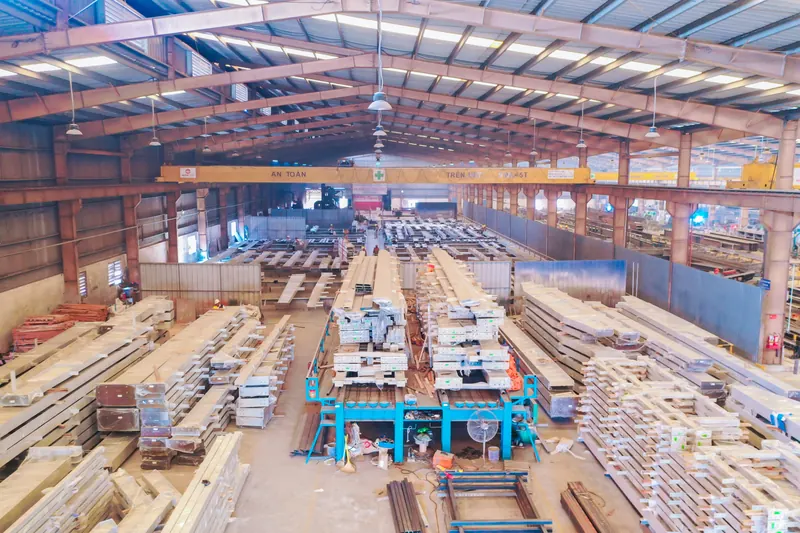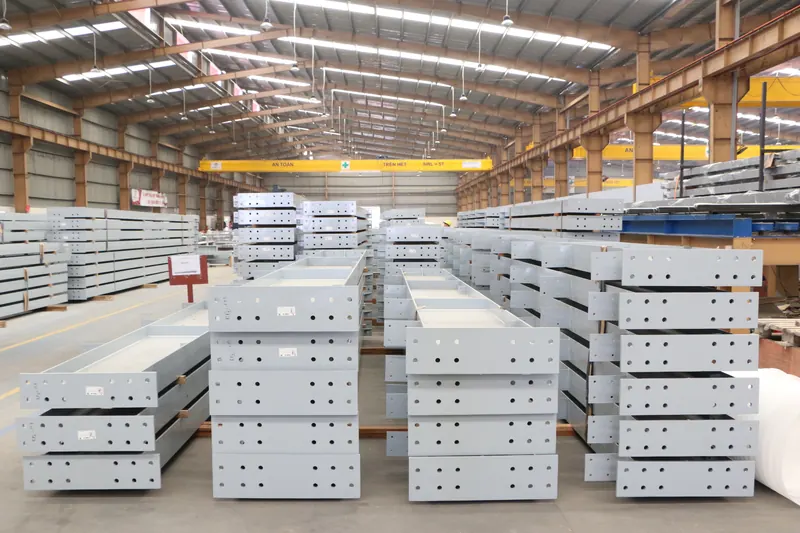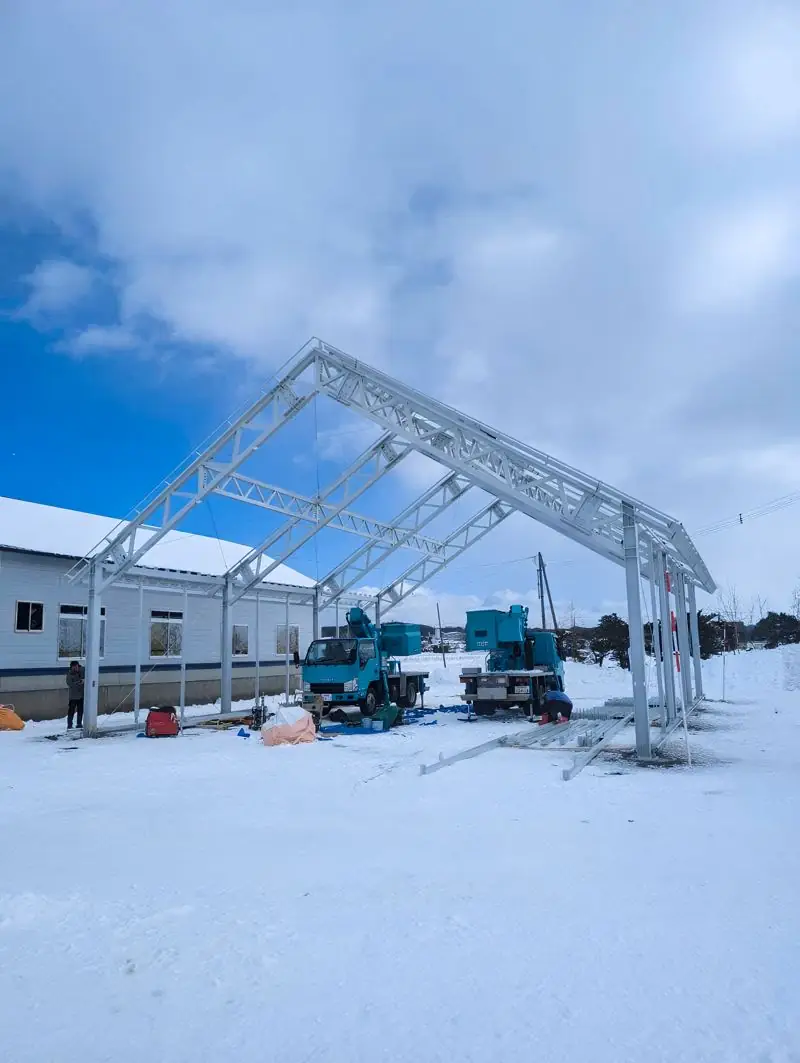
Imported steel arrives in containers or on flat racks, often weeks after it left the shop. The receiving crew has a short window to unload, check and store it before erection starts. A simple routine makes that window count.
Before the first truck
- Plan the laydown area: firm, level, drained ground near the crane's reach, with space by erection sequence.
- Have the packing lists for the arriving containers, ideally on a tablet.
- Arrange unloading equipment: forklift or crane rated for the heaviest bundle, slings and spreader bars.
- Agree who records and reports shortages and damage.
On arrival
- Check seals and container condition before opening; photograph any damage.
- Count bundles against the packing list.
- Check bundle labels: sequence, piece marks and weights.
- Inspect for damage: bent members, crushed edges, coating scrapes, wet or loose packing.
- Photograph anything unusual with the label visible.
Shake-out by sequence
Lay members out by erection sequence and grid line, with piece marks visible. Small parts and bolt crates go to a secure, dry store. Checking piece marks against the erection drawings now avoids hunting for a member with the crane waiting.
Store coated steel properly
- Keep members off the ground on timber.
- Slope long members slightly so water drains.
- Separate layers so coated faces do not trap water.
- Cover bolts, small parts and galvanized members that could stain.
Report quickly and clearly
Send shortages and damage to the fabricator the same day, with:
- container or bundle number;
- piece marks;
- photos;
- what is needed to keep erection moving.
World Steel tracks each component in PEB Studio, so a missing piece can be traced to the bundle it was packed in and a replacement arranged quickly.
Touch-up
Minor coating damage is repaired with the system's touch-up products after erection. Agree the procedure in advance and keep the products on site.
Equipment and people on the day
Plan the unloading crew and equipment before the ship arrives, not when the first truck calls from the gate. A flat-rack or breakbulk delivery often carries members up to 12 m (40 ft) long and bundles of several tons, so the crane or forklift has to suit the heaviest lift on the packing list, not the average one. Keep spreader bars, nylon slings and edge protectors at the laydown area. Chains and wire rope damage coated surfaces and should only touch steel through protection.
Name one person who signs for each delivery. That person checks the bundle count against the packing list, notes visible damage on the delivery receipt and takes photos before anything is moved. A receipt signed "clean" without a check makes a later claim far harder to support.
Matching pieces to the drawings
Each member should carry a piece mark that matches the erection drawings and the packing list. When a piece mark is missing or unreadable, set the member aside and identify it from its length, section and connection pattern before it goes into a stack. Mixed-up members are the main cause of lost time during erection, more often than actual shortages.
For large packages, keep a simple log that ties each bundle to its sequence and its laydown location. Many contractors use the fabricator's digital packing list for this. When the fabricator tracks members online, as World Steel does in PEB Studio, the site team can search a piece mark and see which container or bundle it travelled in.
Bolts, small parts and consumables
Bolts, nuts, washers, anchor rods and small plates usually arrive in crates or bags. Open them under cover, check them against the bolt list and store them dry and off the ground. High-strength bolts lose their lubrication when wet, which affects installation and tension, so keep them in their original packaging until they are needed.
Keep the records together
File the delivery receipts, damage photos, mill certificates and inspection reports for each shipment in one place. The special inspector, the Engineer of Record and the owner may all ask for them, and the fabricator needs the same records to resolve any claim quickly.
The benefit
A receiving routine like this typically takes a few hours per delivery. It finds problems while there is still time to fix them, keeps the erection crew productive and gives the US contractor clear records if a claim is needed.
Quick answers
How fast should damage or shortages be reported?
As soon as they are found, with photos and the bundle and piece marks. Many contracts set a short window after delivery for claims.
How should coated steel be stored on site?
Off the ground on timber, sloped to drain, with members separated so water does not sit on coated surfaces.
Who erects the steel?
The US contractor, World Steel's customer, erects the steel. World Steel designs, fabricates and supplies it.
Keep building your steel plan
Go further on USPEB.com
On this topic
Across the US market
- US seaportsPort of entry guides for every US coast
- US import regulationsCustoms, ISF and the importer of record
- Jobsite deliveryFrom the port to your laydown yard
- Large projects, 2,500 t a monthCapacity for large US general contractors
- Solutions by stateState-by-state steel solutions
- Send your drawingsGet a steel package quote from your drawings