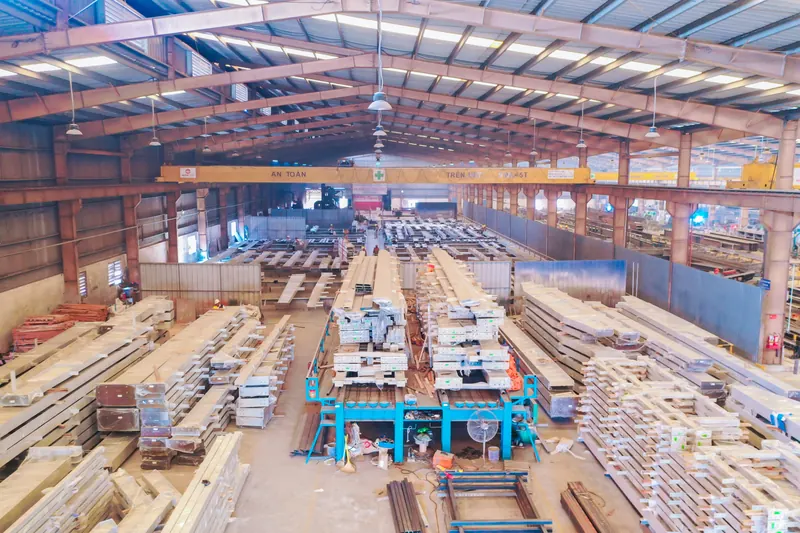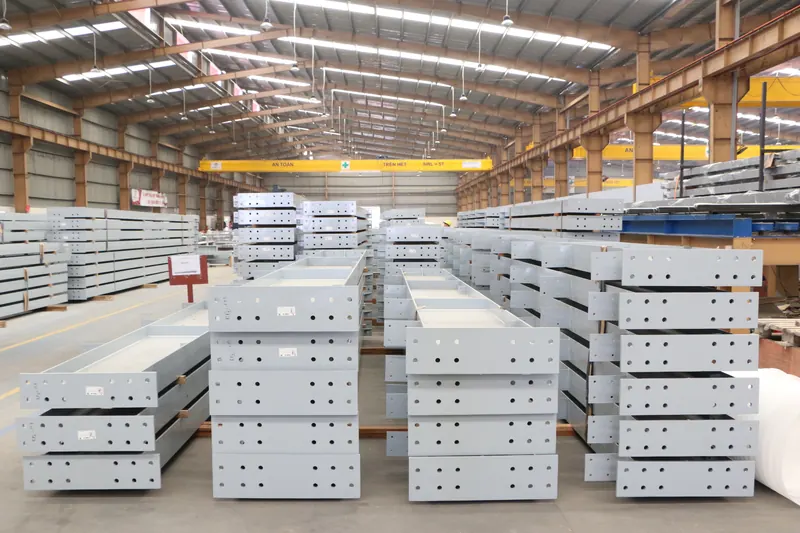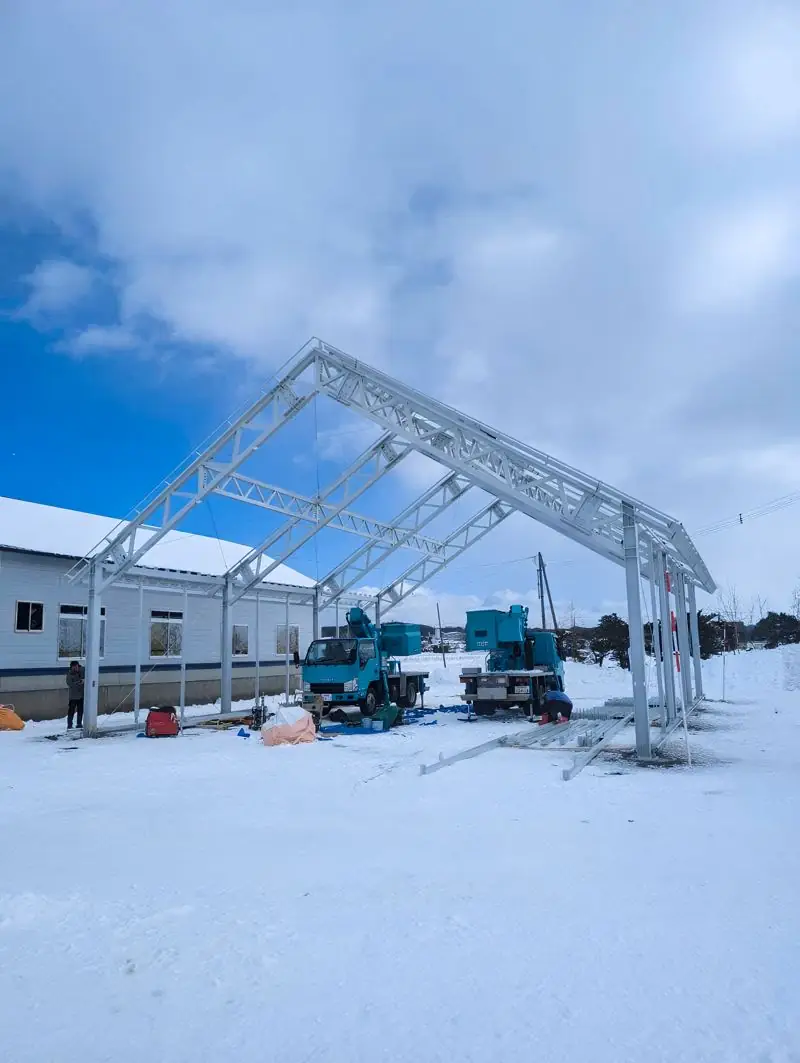
Ocean freight for structural steel comes in two main forms: containers, including special types such as flat racks, and breakbulk, where pieces are loaded individually into a ship's hold or on deck. The right mix depends on member sizes, the destination port and the schedule.
Standard containers
Standard 12 m (40 ft) containers are the backbone of steel shipping to the US.
Advantages
- Frequent sailings to many US ports.
- Door-to-door handling on standard trucks.
- Good protection from weather and handling.
Limits
- Internal length of about 11.9 m (39 ft) and door opening limits.
- Weight limits per container and per road.
Most columns, beams and bracing for typical buildings can be detailed and spliced to fit.
Flat racks and open-top containers
For members a little too long, wide or tall for a standard box:
- Flat racks have no sides or roof, so loads can overhang within limits.
- Open-top containers load from above, useful for tall or heavy pieces.
They travel on container ships but cost more, have limited availability and need careful lashing.
Breakbulk
Very long or heavy pieces, such as long-span trusses, large plate girders and heavy columns, may ship as breakbulk.
Advantages
- No container size limit.
- Efficient for large volumes of long members.
Limits
- Fewer sailings and ports.
- More handling at both ends, with more risk of coating damage.
- Need for port cranes and laydown space.
Planning the mix
- Decide splice locations early. If the design allows splices, detailing members to fit containers usually saves money and time.
- List oversize pieces during shop drawings and price their freight separately.
- Match the port to the site: a nearer port with good container service often beats a breakbulk port farther away.
- Check road limits from port to site: oversize loads need permits and escorts.
Typical choices
| Member | Usual mode |
|---|---|
| Columns and beams up to about 11.9 m | Standard container |
| Members 12 to 16 m, moderate weight | Flat rack or open top |
| Long-span trusses, heavy girders | Breakbulk or flat rack |
| Bolts, plates, small parts | Crates inside containers |
Cost drivers to compare
Freight cost is not only the rate per container or per freight ton. When comparing modes, include:
- Origin handling: trucking to the port, crane lifts for breakbulk, lashing materials.
- Ocean freight: per container, per flat rack or per freight ton for breakbulk.
- Destination handling: port charges, crane hire, laydown time.
- Road transport: standard trucks for containers; permits, escorts and special trailers for oversize pieces.
- Risk: coating damage repairs, delays from fewer sailings.
A breakbulk rate can look attractive until handling and oversize trucking are added. A container plan with a few more splices can be cheaper overall.
Splices: the engineering side
If the design allows splicing long members to fit containers:
- Agree splice locations with the Engineer of Record, away from points of maximum moment where possible.
- Choose bolted splices where the erector prefers no field welding.
- Check that splices do not clash with other trades or architectural finishes.
- Account for the extra bolts and erection time in the schedule.
Schedule effects
Container services from Vietnam to the main US ports run several times a week, so a shipment that misses one vessel catches the next within days. Breakbulk and project cargo sailings are less frequent, and a missed sailing can cost weeks. When the erection date is fixed, that difference alone may decide the mode.
Ask for a loading plan
Ask the fabricator for a loading plan before booking, showing which members go in containers and which go breakbulk, with weights and lengths. It lets the forwarder quote both modes on the same basis.
Protecting steel in either mode
Use timber dunnage, soft slings and edge protection; lash and block every unit; and ask for photos of each loaded container or breakbulk unit. When the shipping plan is decided at the shop drawing stage, freight becomes a known line in the budget instead of a surprise.
Quick answers
What is the longest member that fits in a container?
A 12 m (40 ft) container takes members up to about 11.9 m (39 ft) inside. Longer members need flat racks, open-top containers or breakbulk.
Is breakbulk slower?
Breakbulk sailings are less frequent than container services and may call at fewer ports, so schedules need more planning.
Can members be spliced to fit containers?
Sometimes. The Engineer of Record must approve splice locations, and field splices add erection work.
Keep building your steel plan
Go further on USPEB.com
On this topic
Across the US market
- US import regulationsCustoms, ISF and the importer of record
- Jobsite deliveryFrom the port to your laydown yard
- Large projects, 2,500 t a monthCapacity for large US general contractors
- Contractor partnershipLong-term supply for US contractors
- Solutions by stateState-by-state steel solutions
- Send your drawingsGet a steel package quote from your drawings