Fabricated structural steel crosses the Pacific every week for US projects. For a team that prepares, customs is a predictable step; for a team that does not, it can hold steel at the port while the crane waits on site. This guide explains the moving parts. It is general information, not legal or customs advice: use a licensed customs broker for the specifics of your shipment.
Who is the importer of record
Every shipment entering the US has an importer of record: the party responsible for the customs entry, duties and compliance. On steel projects it is usually the general contractor, the owner or a company appointed for the purpose. Decide this before award, because it follows from the Incoterms rule in the contract.
| Incoterms rule | Who usually imports |
|---|---|
| FOB, CFR, CIF | The buyer (contractor or owner) |
| DAP | The buyer clears customs; the seller delivers to the named place |
| DDP | The seller acts as importer, which requires a US presence or agent |
The customs broker
A licensed customs broker prepares and files the entry, classifies the goods, calculates duties and fees, and handles questions from US Customs and Border Protection (CBP). Engage one early, share the commercial documents and ask for an estimate of duties before you finalise your bid.
Documents that travel with the steel
- Commercial invoice with a clear description, value and origin.
- Packing list by bundle, with weights and member marks.
- Bill of lading from the ocean carrier.
- Mill certificates and, where needed, certificates of origin.
- Importer Security Filing (ISF), filed before loading at the origin port.
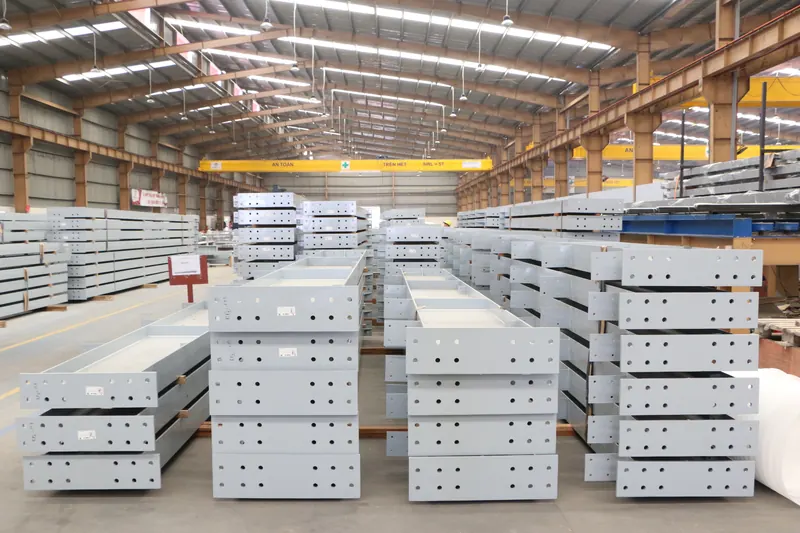
A fabricator that produces these accurately and on time removes most customs risk. World Steel issues packing lists with photos for each bundle, which also helps the receiving crew on site.
Classification and duties
The broker classifies each product under the Harmonized Tariff Schedule (HTS). Fabricated structural steel often has a different classification from raw shapes or plate, and the classification decides the duty rate. Additional measures may apply:
- Section 232 tariffs on steel, whose scope and rates have changed several times;
- antidumping and countervailing duties on some products from some countries;
- merchandise processing and harbor maintenance fees.
Get a current answer for your products and country of origin. Do not reuse an old project's rate.
Where delays come from
- Late or wrong ISF filings.
- Vague invoice descriptions that trigger questions.
- Missing certificates requested by CBP or the broker.
- Exams selected at random or for cause.
- Port congestion and chassis shortages for the truck leg.
Valuation and description
The value declared to customs is normally the price paid for the goods, adjusted under customs valuation rules. For fabricated steel, describe the goods clearly: "fabricated structural steel members for building construction, painted", with weights and quantities. Vague descriptions such as "steel parts" invite questions and delays.
Country of origin
The country of origin for customs purposes depends on where the goods were substantially transformed. For steel fabricated from imported plate and shapes, origin rules can be complex. Your broker will advise; keep mill certificates and fabrication records available in case they are needed.
Who pays and when
Duties and fees are paid by the importer of record when the entry is filed, not when the steel arrives on site. Make sure the contract says whose bond and whose account the entry uses, and how duties are passed through, if at all. Uncertainty here is a common reason a shipment sits at the port while two parties discuss who should pay. Agree it in writing before the first vessel sails, and give the customs broker the same answer.
A simple timeline
- At award: agree Incoterms, importer of record and broker.
- Before loading: file the ISF; share invoice and packing list drafts.
- On departure: send final documents and the bill of lading.
- On arrival: broker files entry; duties paid; release obtained; truck booked.
Handled this way, customs adds days, not weeks, to the schedule.
Quick answers
Do Section 232 tariffs apply to fabricated structural steel?
Section 232 measures have covered many steel products, and their scope, rates and exclusions have changed over time. Ask a licensed customs broker for the current treatment of your specific products before you price the job.
Who files the Importer Security Filing?
The importer, usually through its customs broker, files the ISF before the cargo is loaded at the foreign port. Late or missing filings can lead to penalties and holds.
Can World Steel deliver duty paid?
Delivery terms are agreed per project. World Steel quotes the Incoterms rule that suits the customer and states clearly which costs and risks are included.
Keep building your steel plan
Go further on USPEB.com
On this topic
Across the US market
- US import regulationsCustoms, ISF and the importer of record
- Jobsite deliveryFrom the port to your laydown yard
- Large projects, 2,500 t a monthCapacity for large US general contractors
- Contractor partnershipLong-term supply for US contractors
- Solutions by stateState-by-state steel solutions
- Send your drawingsGet a steel package quote from your drawings