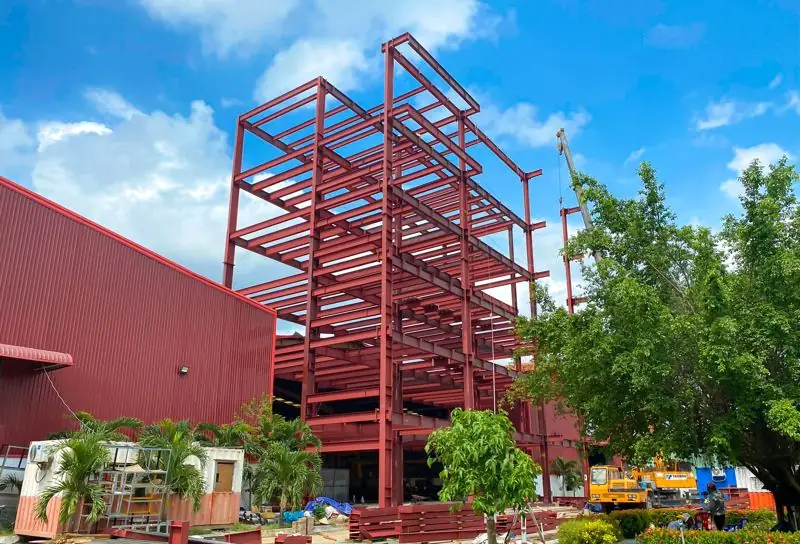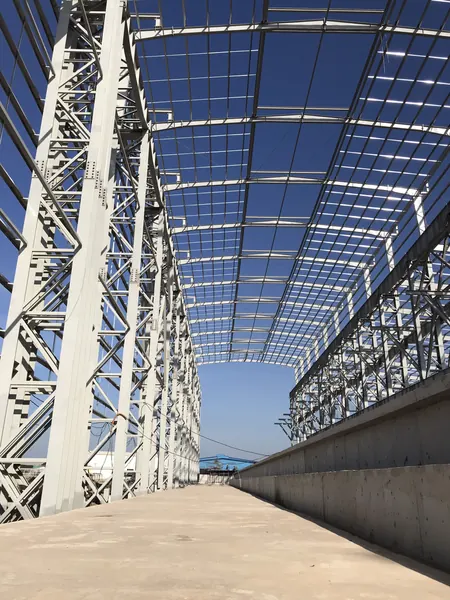
For many US general contractors the default is to buy steel from a domestic fabricator they know. That default is often right. But in a busy market, on very large packages, or where a single fabricator must carry a long and complex scope, a fabricator abroad can be the better answer. This article sets out how to decide.
Start with the project rules
Before anything else, read the contract and the funding source. Federally funded transportation and infrastructure work, and many public projects, carry Buy American or Build America, Buy America requirements for iron and steel. Some owners also have their own domestic-content policies. If those apply, the decision is made for you.
Private industrial, commercial, logistics and data center projects usually have no such restriction, and that is where imported steel is common.
When a fabricator abroad helps
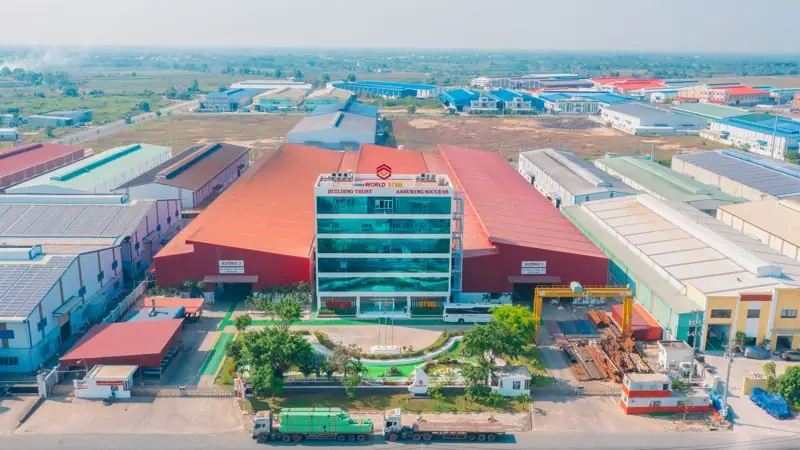
Capacity in a tight market. When domestic shops are booked for months, a large plant abroad can start a package immediately. World Steel's own plant produces 2,500 t of structural steel a month, which lets it take on a 2,000 t package without displacing other work.
One fabricator for a complete scope. Some projects need heavy structural steel, a pre-engineered building, cold-formed framing and envelope from one source. A vertically organised plant can supply them as one package with one set of shop drawings.
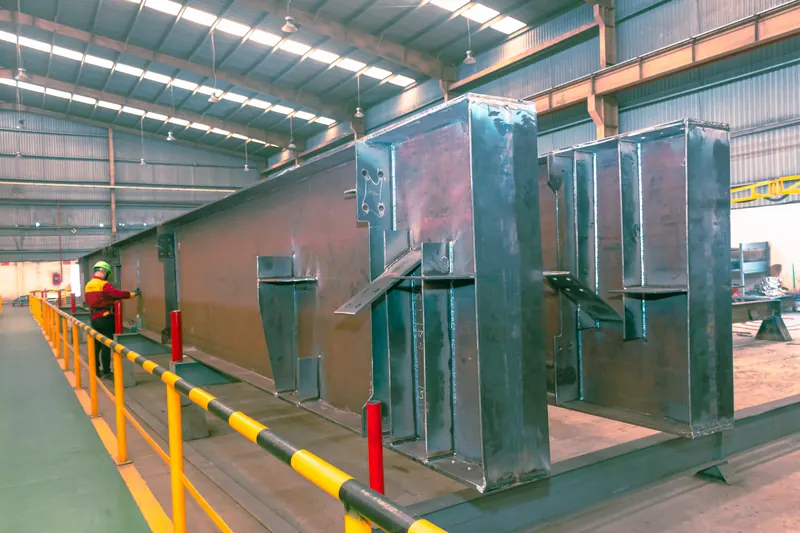
Large, repetitive members. Big plate girders, built-up columns and long-span frames fabricated in volume suit a plant with automated cutting and welding lines.
When a domestic shop is the better call
- Small or highly fragmented packages, where freight and coordination outweigh any benefit.
- Projects that need steel on site within a few weeks of award; ocean freight adds roughly four to six weeks door to door.
- Work with frequent late design changes after fabrication starts.
- Projects with domestic-content rules, as above.
Managing the risks
Most of the risk in imported steel is not technical; it is distance. Manage it with:
- Qualification before award: accreditation, capacity, welding and coating records.
- Early shop drawings so approvals finish before the shop slot arrives.
- Inspection access: hold points your inspector can attend in person or by live video, and online records.
- Clear logistics terms: the Incoterms rule, who books freight, who clears customs and when risk passes.
- Erection-order packing so the steel that arrives first is the steel your crew needs first.
Tariffs and duties
Imported steel may be subject to duties and to Section 232 tariffs, whose rates and exclusions have changed several times. Treat them as a line in your cost comparison and get a current answer from a licensed customs broker before you bid; do not rely on last year's number.
Questions to ask before deciding
- Does the funding or contract restrict steel origin?
- What is the required-on-site date, and does it allow for ocean freight?
- How large is the package, and how repetitive are the members?
- Can the design be frozen early enough for overseas fabrication?
- Who will be importer of record, and do we have a customs broker?
- How will special inspection be handled at the plant?
If most answers point the same way, the decision is usually clear. If they are mixed, a split package, with domestic steel for late or small items and imported steel for the main structure, can give the best of both.
Plan the decision early
The choice between a shop abroad and a domestic shop is easiest during design development, when sizes, splices and coating can still suit either route.
A fair comparison
Compare total delivered cost and schedule, not the fabricator's price alone. Include freight, duties, inspection travel or video inspection, and the value of an earlier or more certain delivery date. When the numbers and the risks are laid side by side, the right choice for that project is usually obvious.
Quick answers
Can imported steel be used on federally funded projects?
Often not. Buy American and Build America, Buy America rules can require US-made iron and steel on federally funded work. Check the funding source and contract clauses before considering any imported steel.
Is imported steel lower quality?
Quality depends on the plant, not the country. Ask for accreditation, welding records, mill certificates and inspection access, exactly as you would for a domestic shop.
Who handles customs when steel is imported?
It depends on the Incoterms rule agreed. Under most terms the US importer of record, often the contractor or owner, uses a licensed customs broker.
Keep building your steel plan
Go further on USPEB.com
On this topic
Across the US market
- US general contractorsHow we support GCs, steel erectors and developers
- Lower cost, lower riskWhere overseas fabrication saves on large jobs
- Section 232 steel importsDuties and paperwork on imported steel
- Landed cost calculatorFreight, duty and fees to your US jobsite
- Large projects, 2,500 t a monthCapacity for large US general contractors
- Contractor partnershipLong-term supply for US contractors