Data center projects are driven by one date: when the first hall must be powered and handed to the operator. Everything else, including the structural steel, works backwards from it. That makes data center steel less about tonnage and more about phasing, repetition and certainty.
What the steel carries
- Roof equipment: chillers, air handlers and generators on dunnage frames.
- Platforms and pipe racks for mechanical and electrical systems.
- Hung loads from cable trays, busways and containment.
- Mezzanines and multi-storey framing in larger campuses.
These loads, and their deflection and vibration limits, must be agreed early, because they size the main members.
Phasing the package
- Early material order. Order mill material for main columns and girders against the design development model.
- Anchor bolts first. Release anchor bolt plans so foundations can start.
- Sequence releases. Approve and fabricate by erection sequence, hall by hall.
- Hold late items. Keep equipment-dependent frames for a later release, when vendor data is final.
Repeat the hall
Most campuses repeat a standard hall design. Reusing the same steel geometry, connections and detailing across halls cuts drawing time, simplifies fabrication and reduces errors. A fabricator that keeps the model and connection library from the first phase can start the next phase almost immediately.
Coordinate penetrations
Data centers have many penetrations for ducts, pipes and cables. Coordinate them in the model before shop drawings, and agree which openings are shop-cut and which are field-cut. Late penetrations through main members are expensive and slow.
Logistics for a tight schedule
When steel is fabricated abroad:
- book shop capacity at award, not at approval;
- pack each sequence separately in erection order;
- plan freight so each sequence arrives just before it is needed, not all at once;
- track every container so the site knows what is coming.
Capacity matters
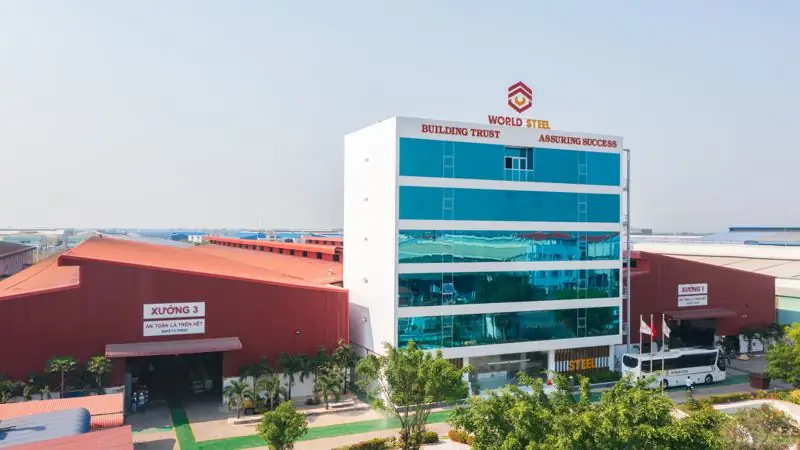
Data center campuses can need several thousand tons over a short period. A fabricator's real monthly capacity in the delivery window is the first thing to check. World Steel's plant produces 2,500 t a month, and its large-project references include packages of 2,000 t to 5,000 t delivered as one schedule.
Equipment loads and late vendor data
Data center equipment is often bought late, and vendor weights and footprints change. To keep steel moving:
- design dunnage frames and platforms for an envelope of likely equipment, agreed with the mechanical engineer;
- keep equipment supports as separate, later releases where possible;
- use standard connection details that accept small changes in position.
When vendor data finally arrives, only the affected frames change, not the main structure.
Deflection and vibration
Some equipment, such as chillers and generators on roof frames, needs stiff supports. Raised floors and containment systems hung from the structure also need limits on deflection. Agree these limits with the design team and put them on the drawings so the fabricator's designers and detailers can check them.
Quality records for the operator
Hyperscale and colocation operators often ask for complete records at handover. Plan for:
- mill certificates linked to member marks;
- weld inspection and NDT reports;
- coating records;
- as-built drawings and model.
World Steel keeps these records against each component in PEB Studio, which makes the handover package a download rather than a search.
Early material purchase
On a fast-track job, the biggest risk is waiting for material. Once the main member sizes are fixed, the fabricator can order plate and sections for the whole package, even while connections are still in review. Release material in step with the design, sequence by sequence.
One point of contact
Name one coordinator on each side for drawings, RFIs and shipping. Fast-track jobs lose days when questions go to the wrong person.
The bottom line
On a data center, the cheapest steel is the steel that arrives in time for energization. Phasing, repetition and visible logistics are what make that possible.
Quick answers
Can steel be ordered before the design is final?
Yes. Mill material for typical members can be ordered against early design, with final cutting after shop drawing approval.
What makes data center steel different?
Heavy equipment loads on roofs and platforms, strict deflection and vibration limits, many penetrations and a very tight schedule tied to energization.
Does a repeatable design help?
Very much. Repeating the same hall design lets drawings, connections and fabrication be reused across phases.
Keep building your steel plan
Go further on USPEB.com
On this topic
Across the US market
- Projects by typeWarehouses, plants, data centers and more
- Industries we serveSteel packages by US industry
- Sunpro steel mill, 5,000 tOur largest single steel package
- Contractor partnershipLong-term supply for US contractors
- Solutions by stateState-by-state steel solutions
- Send your drawingsGet a steel package quote from your drawings