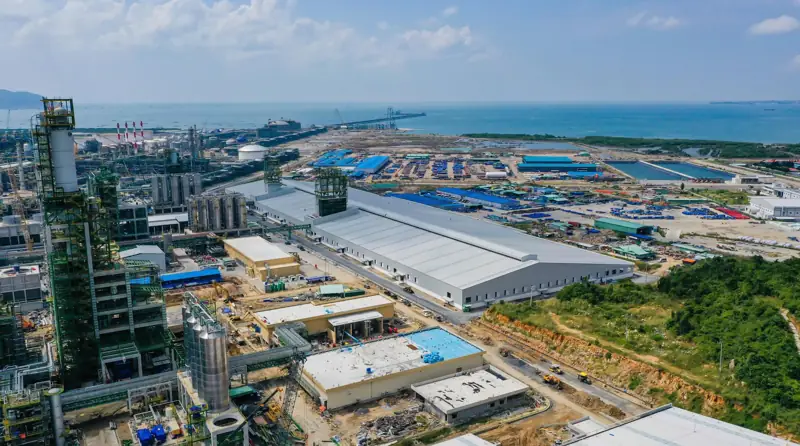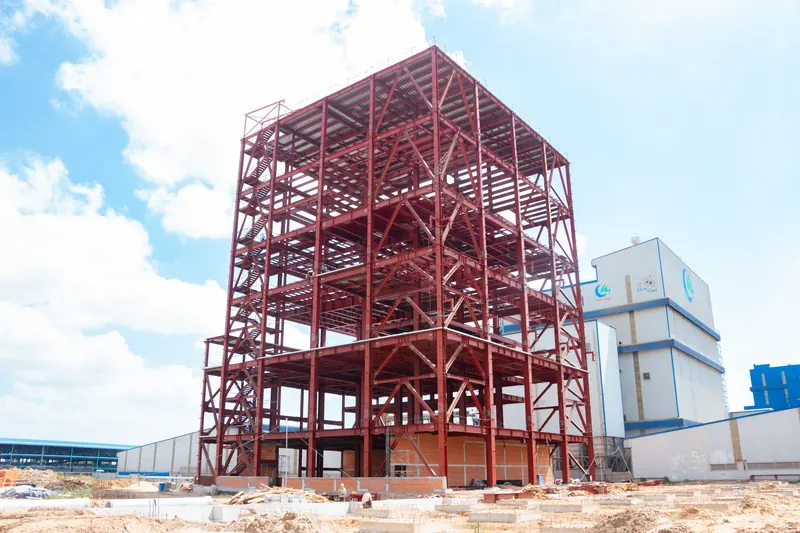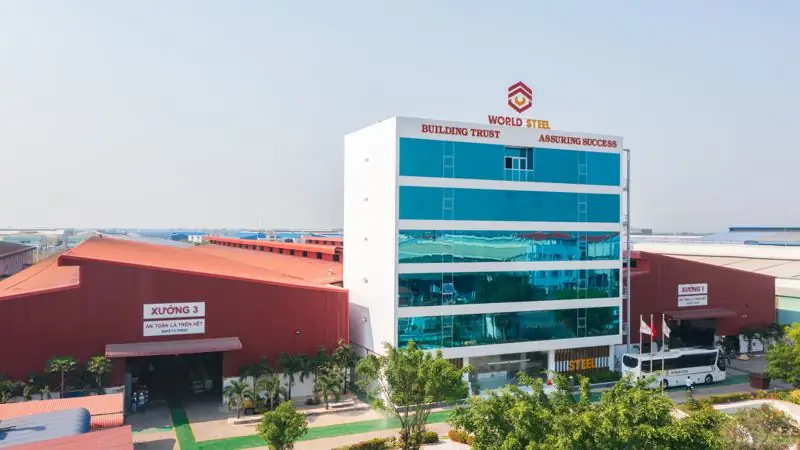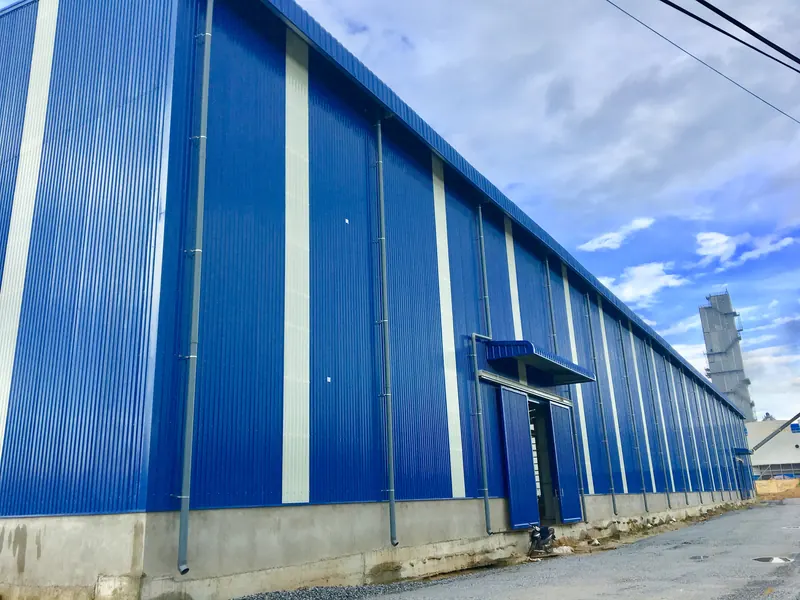
Freezer and cooler buildings share a footprint with ordinary warehouses, but their insides run well below freezing while the outside follows the weather. That temperature difference drives most of the special details in the steel structure.
Where the frame sits
There are two main approaches:
- Frame outside the insulated box. The insulated panels form the cold room inside the steel frame. Thermal bridges are fewer, but panel supports and roof hangers need care.
- Frame inside the cold zone. Simpler envelope, but the steel runs cold and every connection to the outside is a potential thermal bridge.
Choose early, because it changes member sizes, coatings and connection details.
Thermal bridges and condensation
Wherever steel passes through the insulation, heat flows and moisture can condense or freeze. Typical problem spots are roof hangers, wall girts, door frames and column bases at the slab.
- Use thermal breaks at penetrations.
- Keep a continuous vapor barrier on the warm side.
- Detail sealed penetrations for every hanger and support.
Floors and frost heave
Freezer floors need underfloor heating or ventilation to stop the ground freezing and heaving. Column bases and slab details must suit that system, and anchor bolts must avoid heating pipes.
Rack and equipment loads
Cold storage often uses high-bay racking, sometimes rack-supported structures, and roof-mounted refrigeration plant. Agree:
- rack base loads and seismic connections;
- refrigeration equipment weights and supports;
- hung loads for evaporators and piping.
Corrosion protection
Cold, humid interiors with frequent defrost cycles can be more corrosive than they look. Consider the ISO 12944 category carefully, and use galvanizing or a robust paint system for steel that may see condensation.
Doors and docks
Freezer doors, dock seals and air curtains add loads and openings. Frame the openings for the actual door weights and keep dock levelers clear of bracing.
Insulated panels and their supports
Most cold stores use insulated metal panels for walls, ceilings and sometimes roofs. The steel structure supports them, so coordinate:
- panel spans and the girt or ceiling hanger spacing they need;
- hanger types that limit thermal bridging, such as hangers with thermal breaks;
- panel joints at columns and roof framing, so the vapor seal stays continuous;
- loads from panel self-weight and from snow or equipment on the roof.
Temperature zones and expansion
Large cold stores often have freezer, cooler and ambient zones side by side. Steel in different zones expands and contracts by different amounts. Provide movement joints where the zones meet, and avoid rigidly tying cold structure to warm structure without allowing for movement.
Fire protection
Cold store fire safety relies on detection, sprinklers suited to low temperatures and the fire performance of the panels. Steel fire protection, if required by the code analysis, must suit cold and humid conditions. Agree the approach with the fire engineer early.
Checklist for the design team
| Topic | Decision |
|---|---|
| Frame location | Inside or outside the insulated envelope |
| Thermal bridges | Thermal breaks at all penetrations |
| Vapor control | Continuous barrier, sealed penetrations |
| Floor | Frost heave protection, base details |
| Loads | Racks, refrigeration plant, hung evaporators |
| Coating | Category for condensation and defrost cycles |
Erection in cold conditions
Freezer buildings are often built in phases while nearby rooms are already cold. Plan the sequence so that the steel, insulation and vapour barrier go up before the room is cooled, and keep connections accessible for later inspection.
Inspection access
Plan access to key connections for later inspection, especially where insulated panels cover the frame.
A reference
World Steel's New Era cold storage project used about 1,000 t of structural steel, with insulated panel envelope and refrigeration supports detailed with the operator. The lesson from projects like it is consistent: agree the envelope approach and equipment loads first, and the steel details follow.
Quick answers
Should the steel frame be inside or outside the insulated envelope?
Both approaches are used. Keeping the frame outside the cold box avoids thermal bridges into the freezer but needs careful detailing at supports and penetrations.
Why does condensation matter for steel?
Warm, moist air meeting cold steel condenses, which can corrode members and drip on stored goods. Vapor barriers and thermal breaks prevent it.
Has World Steel built cold storage?
Yes. New Era cold storage, about 1,000 t of structural steel, is one of World Steel's reference projects.
Keep building your steel plan
Go further on USPEB.com
On this topic
Across the US market
- Projects by typeWarehouses, plants, data centers and more
- Industries we serveSteel packages by US industry
- Data center steelHyperscale and colocation framing
- Sunpro steel mill, 5,000 tOur largest single steel package
- Large projects, 2,500 t a monthCapacity for large US general contractors
- Contractor partnershipLong-term supply for US contractors