
California · Seismic design
Seismic design for California steel buildings, from warehouse to plant
Most of California’s population and industry sits in the higher Seismic Design Categories. For a single-story warehouse, shop or plant that decides the frame system, the bracing, the connections and the anchor rods. We settle those choices with your Engineer of Record before any steel is sized.
Made in World Steel’s own plant in Vietnam, the first and only fabricator in Vietnam accredited under IAS AC472, and shipped to a California port.
- Code basis
- California Building Code with ASCE 7-22 seismic loads
- Categories
- Many urban sites fall in Seismic Design Category D or higher
- Site data
- Site class from your geotechnical report; no values published per city
- Steel
- AISC 360, with AISC 341 where the seismic system requires it
Why it matters
In California, the ground decides as much as the wind
California sits on the boundary between the Pacific and North American plates. The San Andreas, Hayward, San Jacinto, Newport-Inglewood and hundreds of other mapped faults put most of the coast and the inland valleys in the higher categories of ASCE 7. A steel building there has to be designed for the ground motion of its own site, not a regional average.
Metal buildings are light, which helps: seismic force follows mass. But roofs carrying solar panels, mezzanines, cranes and heavy equipment add mass, and long, tall walls need bracing and anchorage that can deliver the force to the foundations. The design has to follow the load from roof to anchor rod.
Inputs we confirm
The seismic criteria we settle before design
Each value goes on the first sheet of the calculation package, so your Engineer of Record and plan checker can review it quickly.
| Input | What it is | California notes |
|---|---|---|
| Risk category | I to IV, from the building’s use and occupancy | Most warehouses and plants are II; schools and large assembly III; essential facilities IV |
| Site class | Soil stiffness at the site, from the geotechnical report | Soft bay mud and deep alluvium are common; some sites need a site-specific study |
| Design spectral accelerations | Ground motion parameters for the site coordinates | Taken from the ASCE 7-22 hazard data for your address; we publish none per city |
| Seismic Design Category | A to F, from the accelerations and the risk category | Often D in urban California, and E or F close to major faults |
| Seismic system | The frame or brace type and its R, Ω₀ and Cd | Category and height limits narrow the choice; the Engineer of Record confirms it |
Steel systems that fit
Which steel systems suit a single-story California building
-
Ordinary moment frames
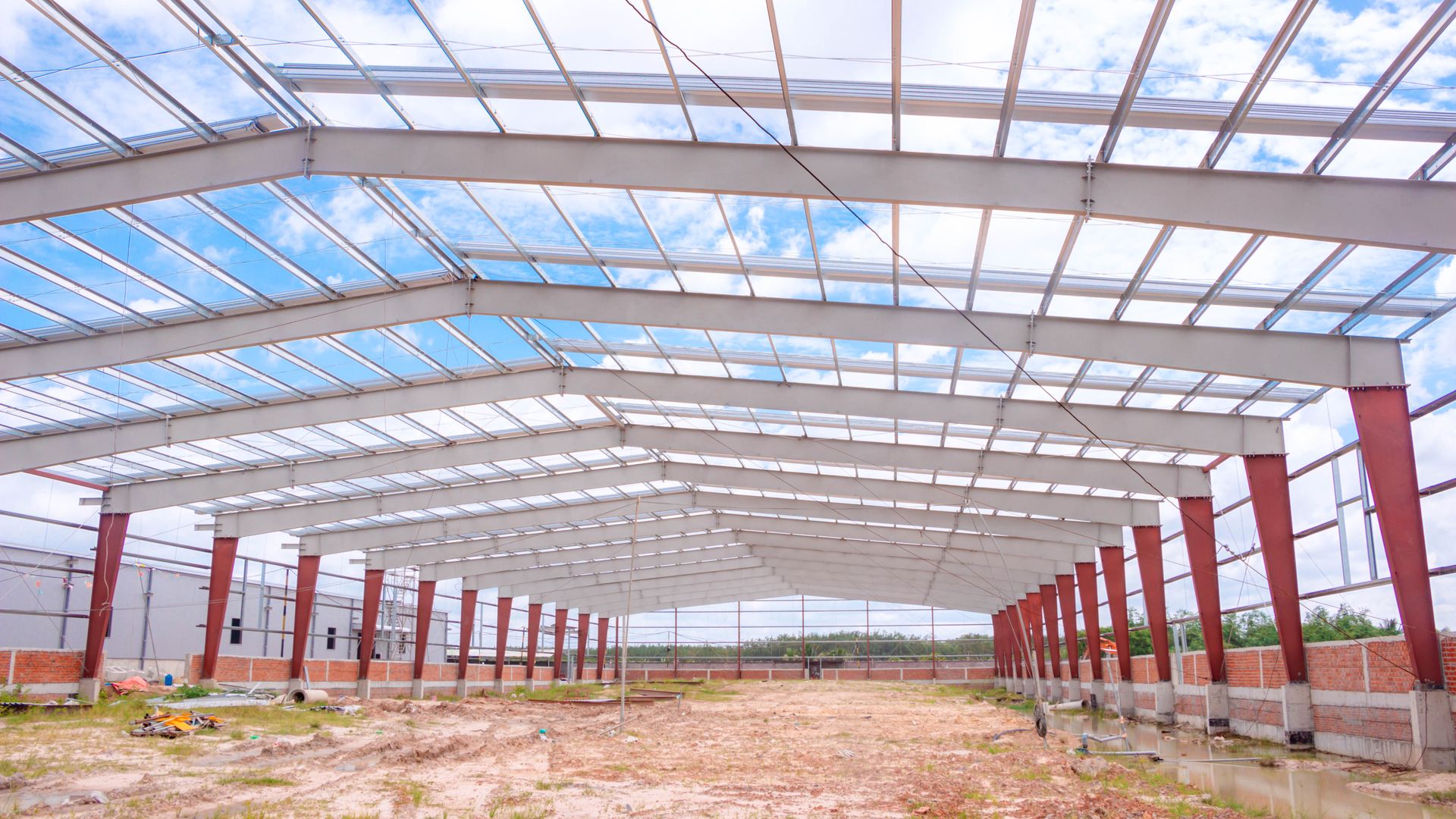
Tapered built-up rigid frames across the building, used within the limits ASCE 7 and AISC 341 set for the category.
-
Braced bays along the length
Rod, angle or tube bracing in the side walls and roof, with connections designed for the brace forces.
-
Intermediate and special systems
Where the category or height rules out ordinary systems, we fabricate the more ductile frames your engineer selects.
-
Mezzanines and equipment
Added floors and heavy equipment modeled as mass, with their own load path to the frames.
-
Anchorage
Column reactions with overstrength where the code calls for it, handed to your foundation engineer in one table.
-
Wall and roof attachment
Girts, purlins and panels checked for seismic out-of-plane forces as well as wind.
What we do not claim
No building is earthquake-proof and we give no performance rating. We design and fabricate the steel structure to the criteria agreed for your site, your Engineer of Record approves the drawings, and the building department decides on the permit.
California ecosystem
Products and solutions for this condition
The World Steel products, systems and services this guide relies on, made in our plant in Vietnam.
Q&A
What California buyers ask
Is a metal building allowed in Seismic Design Category D in California?
Yes. Metal buildings with steel rigid frames and braced bays are widely used in Category D. The frame type and detailing must meet ASCE 7-22 and AISC 341 for that category, which we design and fabricate to.
Do you need a soils report before designing?
Yes, for the final design. The site class and, for some sites, a site-specific ground motion study come from your geotechnical engineer. We can prepare proposal drawings with assumed values that are replaced once the report is in.
Will solar panels on the roof change the seismic design?
They add weight and wind effects, so the roof framing and the seismic mass include them. Tell us the planned system early and we size the purlins and frames for it.
Real World Steel photos
World Steel at work
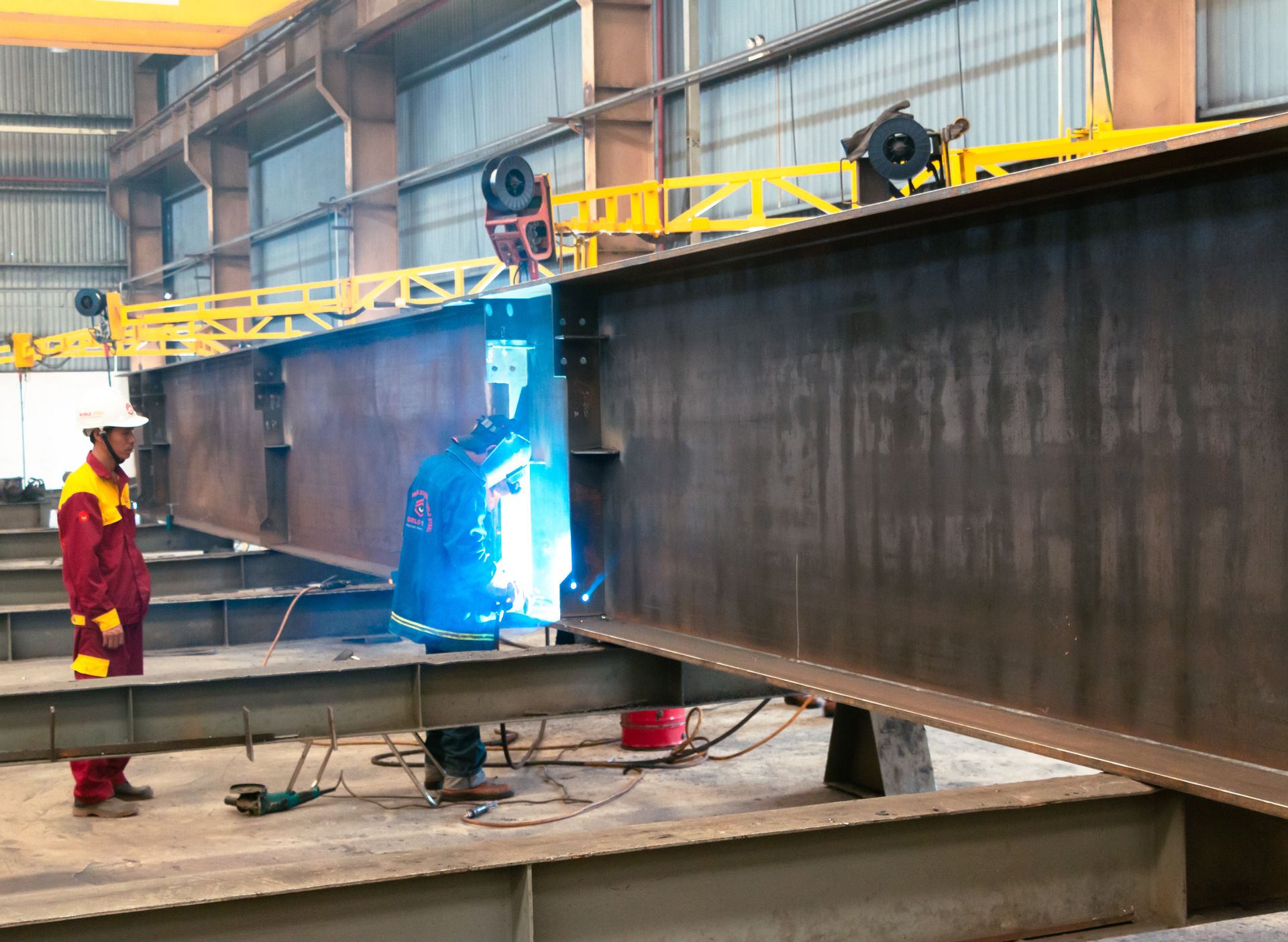
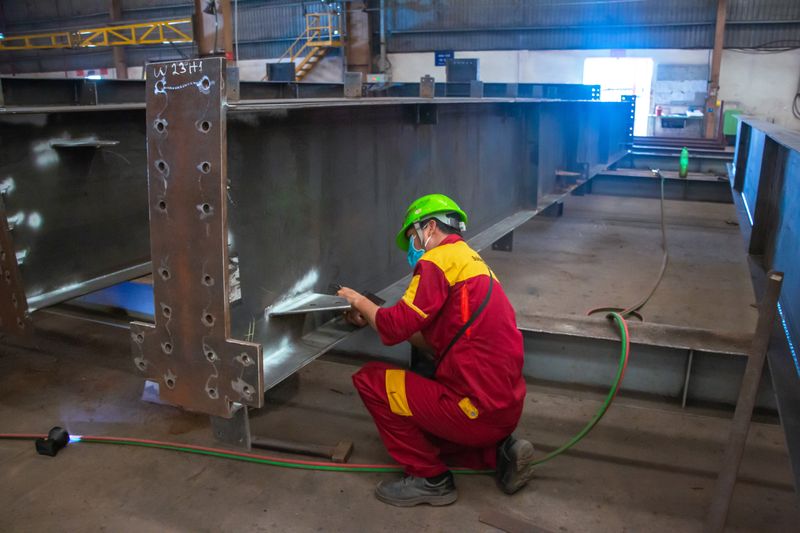
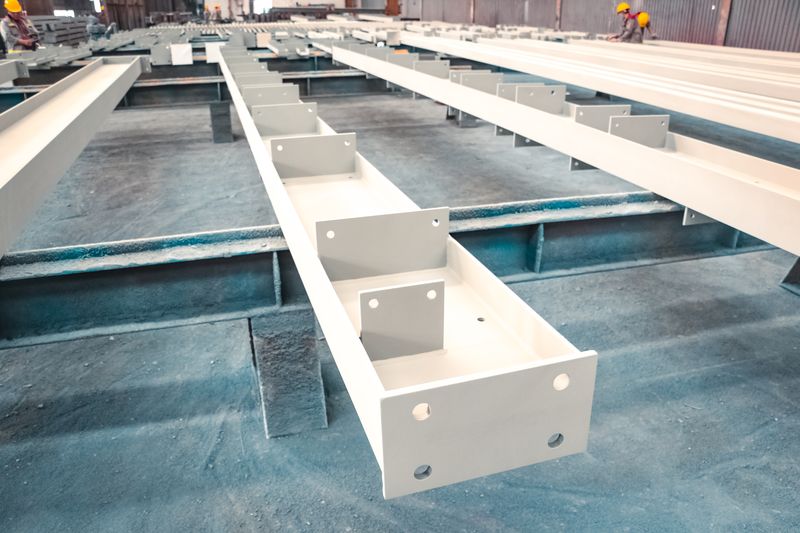
Real photos from our plant in Vietnam, where the steel for your California project is cut, welded, inspected and packed.
California solutions
Every California guide
Keep reading
Related pages
Code facts on this page summarize the California Building Code, ASCE 7-22 and related standards for US buyers. They are not legal or engineering advice; your Engineer of Record and building official confirm the edition and local amendments in force for your permit.
Building in California?
Send the site address, size and use. We set the California criteria with your Engineer of Record, design the steel to the California Building Code and quote it made in our plant in Vietnam, with the inspection path agreed in writing.