When structural steel must carry a fire-resistance rating and stay visible, intumescent coatings are the usual answer. They look like paint, and in a fire they swell into an insulating char that slows the steel's temperature rise. Getting them right takes coordination between architect, engineer, fabricator and applicator.
How a rating becomes a thickness
- The rating comes from the building code: the architect's code analysis gives the hours required for columns, beams and floors, for example 1 or 2 hours.
- The listed design comes from the coating manufacturer's tested assemblies, such as UL designs, which state what thickness is needed for a given steel section and rating.
- The section factor, often expressed as W/D for US shapes or Hp/A internationally, measures how fast a section heats. Heavier sections need less coating for the same rating.
- The schedule: the result is a thickness schedule, member by member, which goes on the shop drawings.
Shop or field application
| Shop application | Field application | |
|---|---|---|
| Quality control | Controlled conditions, measured DFT on every piece | Weather and access dependent |
| Schedule | Coating time moves off the critical path on site | Adds trades and time after erection |
| Damage | Needs repair after transport and erection | Less handling damage |
| Connections | Bolted areas finished on site | Applied after connections are made |
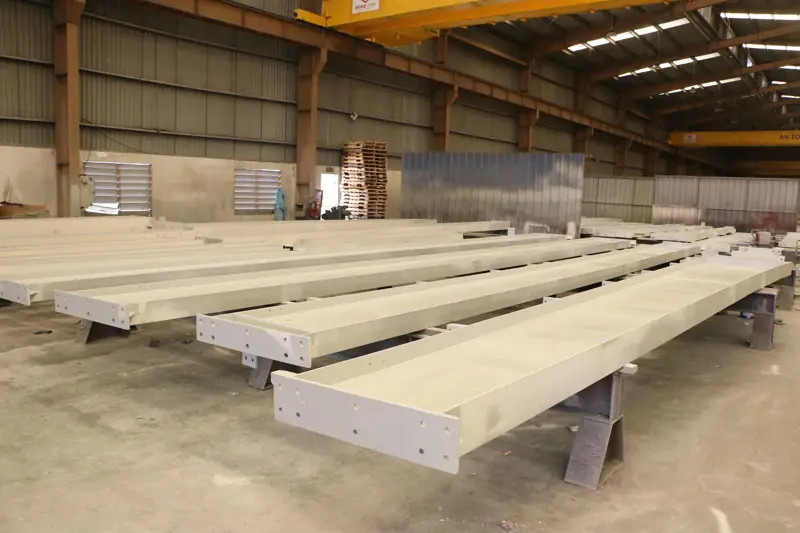
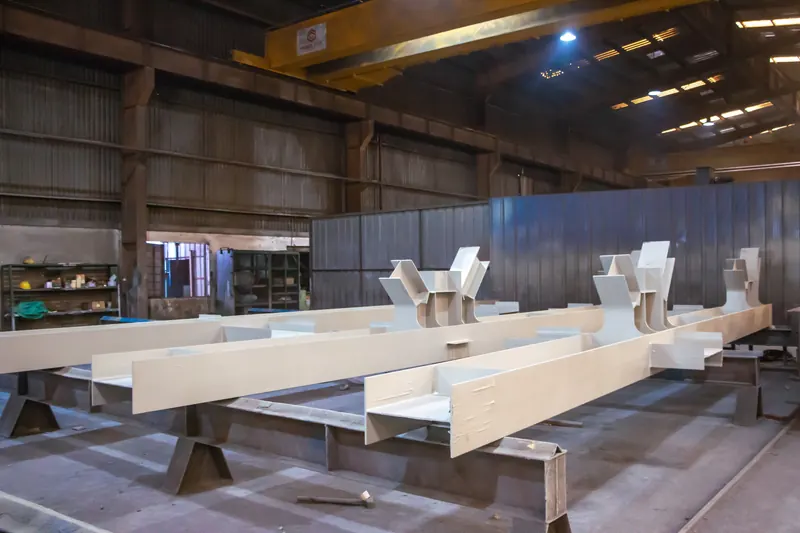
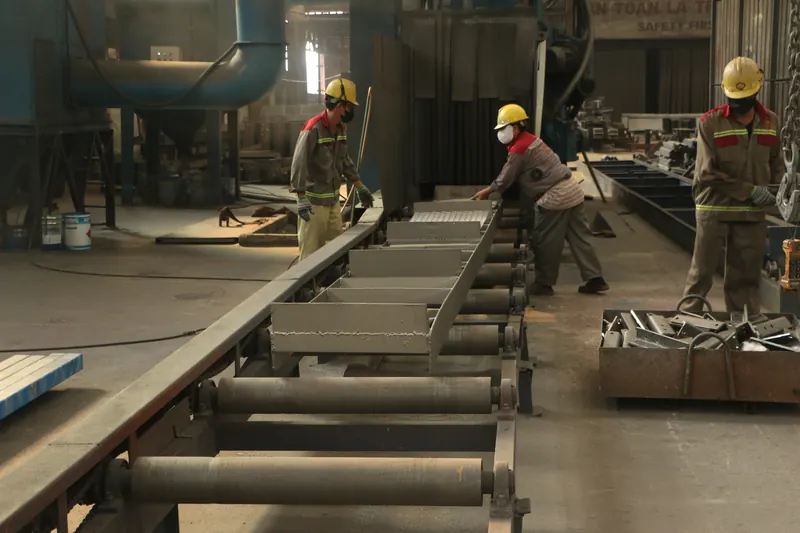
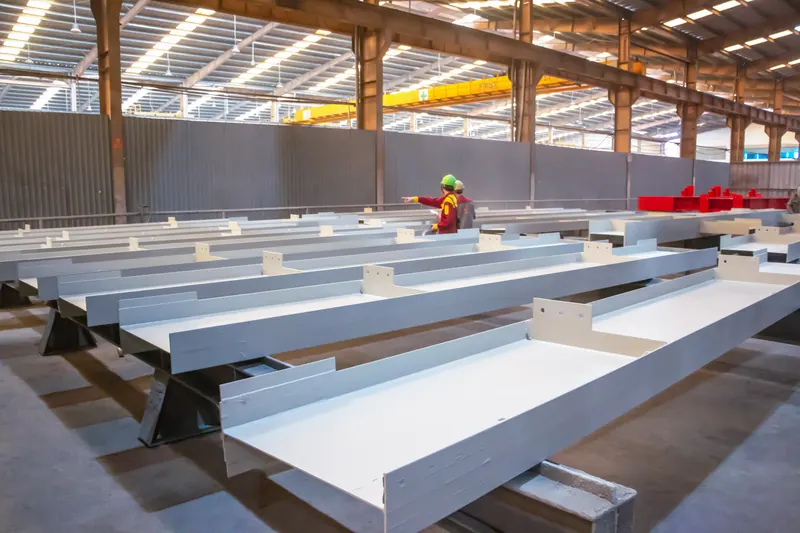
Shop application has become common for large projects because it takes a slow, weather-sensitive trade off the jobsite. It works best with products tolerant of handling and with a clear repair procedure.
The system has layers
A typical intumescent system has:
- a primer approved by the intumescent manufacturer;
- the intumescent basecoat, at the scheduled thickness;
- a topcoat for colour and protection from humidity or weather.
Each layer must be compatible. Mixing brands without approval risks the listing.
What to put in the specification
- The rating per element and the listed designs accepted.
- Whether application is shop, field or split.
- Required records: DFT per member, batch numbers, environmental conditions.
- Inspection: who checks thickness, how often, and to what tolerance.
Members that need special attention
- Hollow sections heat differently from open sections; thickness tables are separate.
- Beams with web openings may need extra thickness around openings.
- Connections and bolts often need coating after erection.
- Members partly protected by other elements, such as beams supporting a floor slab, use specific listed designs.
Environment and durability
Intumescent coatings are tested for specific environments. Some are for interior dry use only; others are suitable for exterior or humid exposure with the right topcoat. Check that the product suits the exposure, and that the topcoat is approved by the manufacturer.
Repairs
Repairs after transport or erection must use the same product and restore the scheduled thickness. Agree the repair procedure with the applicator and the manufacturer before work starts, and record repaired areas.
Compatibility with the primer
Intumescent coatings must go over a primer that the coating manufacturer approves for that product. A primer chosen for corrosion protection alone may not be compatible. Confirm the full stack, primer, intumescent and top coat, with the manufacturer before the shop starts, and keep that confirmation with the coating records. The coating products World Steel uses carry UL certification.
Thickness checks
Dry film thickness for intumescent coatings is much higher than for a normal paint system, and it varies by member size and rating. The applicator should measure thickness on every member against the schedule, not on a sample only. Record the readings by piece mark so the inspector can check them.
Records and inspection
Fire protection is a life-safety system, and building officials or special inspectors often check it. Keep dry film thickness readings by member mark, and make sure they match the schedule. At World Steel, coating records are stored against each member, together with the products used. Where the fire protection group on this site covers the design side in more depth, see the structural steel fire protection guides.
Quick answers
Can intumescent coating be applied in the shop?
Yes, many products are suitable for shop application, which gives better control. Handling damage must then be repaired on site with the same product.
Who decides the required fire rating?
The building code and the architect's code analysis set the rating for each element. The coating thickness is then taken from the product's listed design.
Is a primer needed?
Usually, and it must be one the intumescent manufacturer has approved for that product.
Keep building your steel plan
Go further on USPEB.com
On this topic
Across the US market
- Quality hubCoating inspection by FROSIO Level III inspectors
- Products catalogGalvanized, painted and built-up members
- Download centerSample ITP, design report and approval drawings
- Large projects, 2,500 t a monthCapacity for large US general contractors
- Contractor partnershipLong-term supply for US contractors
- Solutions by stateState-by-state steel solutions