Under ASCE 7, every building is assigned a seismic design category (SDC) from A to F. For structural steel, the SDC is the switch between ordinary design and the special detailing of AISC 341, and it affects cost, fabrication and inspection.
How the SDC is set
Two inputs decide it:
- Risk category (I to IV), from the building's use and occupancy.
- Design spectral accelerations at the site, which depend on location and soil site class from the geotechnical report.
The combination gives the SDC. Most of the central and eastern US falls in A to C; large parts of the West Coast, Alaska and some other regions fall in D to F.
What each category means in practice
| SDC | Typical regions | Steel implications |
|---|---|---|
| A | Low seismicity | Minimal seismic requirements |
| B, C | Moderate | Often R = 3 systems without AISC 341 detailing |
| D | High | AISC 341 seismic systems generally required |
| E, F | Near major faults | Stricter system limits, height limits, more detailing |
Choosing the system
From SDC D, the lateral system must be one of the AISC 341 systems, for example:
- special concentrically braced frames (SCBF);
- buckling-restrained braced frames (BRBF);
- special moment frames (SMF) with prequalified connections;
- eccentrically braced frames (EBF).
Each has its own detailing rules, height limits and response modification factor.
What changes in fabrication
- Protected zones: areas expected to yield, where welds, holes and attachments are restricted. They must be marked on drawings and often on the steel.
- Demand-critical welds: welds that require filler metals with notch toughness and procedures to AWS D1.8.
- Material: limits on yield strength ranges and requirements for notch toughness in heavy sections.
- Quality: added QC and QA inspection under AISC 341 Chapter J.
Inspection
Seismic systems carry more special inspection: more ultrasonic testing of complete-joint-penetration welds, checks of protected zones and documentation of welding. Plan hold points early when the steel is fabricated abroad.
The role of site class
The site class comes from the geotechnical report and describes how the soil amplifies ground shaking. The same mapped acceleration can lead to a much higher design value on soft soil than on rock. When the soil report is not ready at bidding, the designer may have to assume a default site class, which can push the project into a higher SDC than the final report supports. Ask for the soil report early: it can change the lateral system and the inspection scope.
Risk category matters too
Hospitals, emergency facilities and buildings that hold many people sit in higher risk categories. A higher risk category raises the importance factor and can move the building into a higher SDC on the same site. Confirm the risk category with the owner and the Engineer of Record before any frame is sized.
Systems that suit each category
In SDC A and B, ordinary systems designed to AISC 360 are often enough, and the seismic provisions of AISC 341 may not apply at all. In SDC C, many steel buildings still use systems where the response modification coefficient is low enough to avoid AISC 341, though this is a design choice with trade-offs. In SDC D, E and F, most lateral systems must meet AISC 341: special or intermediate moment frames, special concentrically braced frames, eccentrically braced frames or buckling-restrained braced frames.
The fabricator's part
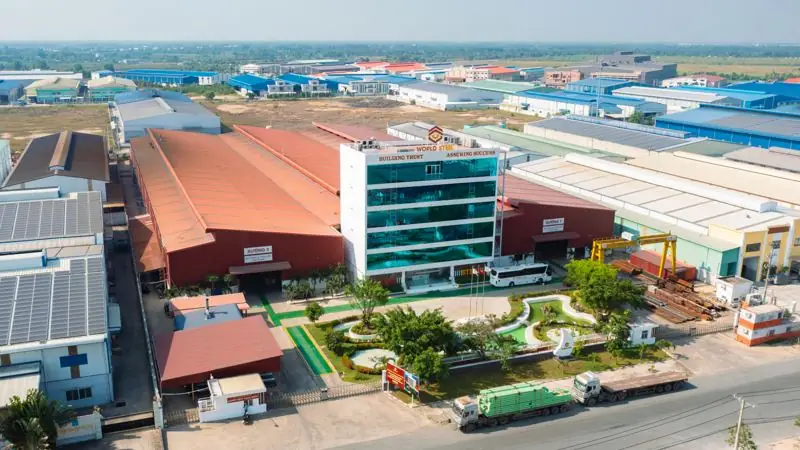
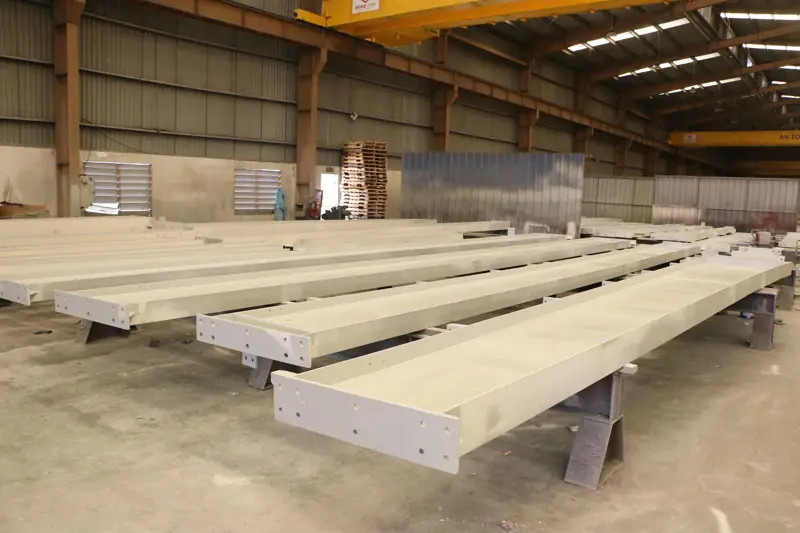
A seismic package needs more from the shop. Demand-critical welds need procedures and welders qualified to AWS D1.8, protected zones must be marked and kept free of attachments, and material for some members needs Charpy impact values. World Steel's shop has AWS D1.8-qualified procedures and welders, and can mark protected zones and give remote access to inspectors on request.
Plan the inspection early
Seismic systems carry extra quality assurance requirements under AISC 341 and the building code. Agree the inspection plan, hold points and record format with the special inspector before fabrication starts. Inspection planned late tends to stop the shop, not the other way round.
Design decisions with cost impact
- Choosing braced frames instead of moment frames usually saves steel.
- Locating braces where they suit the architecture avoids heavy transfer framing.
- Using prequalified moment connections avoids testing.
World Steel fabricates AISC 341 systems with AWS D1.8-qualified procedures and welders, marks protected zones on request and provides remote inspector access. Our seismic steel structures guides cover each system in more detail.
Quick answers
What sets the seismic design category?
The risk category and the design spectral accelerations at the site, which depend on location and site class.
Is AISC 341 required in SDC B?
Generally not. Many steel buildings in SDC B and C use R = 3 systems without AISC 341 detailing; from SDC D, AISC 341 seismic systems are normally required.
Does World Steel fabricate AISC 341 systems?
Yes. World Steel fabricates braced and moment frames to AISC 341 with AWS D1.8-qualified procedures and welders for demand-critical welds.
Keep building your steel plan
Go further on USPEB.com
On this topic
Across the US market
- Solutions by stateFlorida, Texas, California and every US state
- Steel buildings by stateWind, snow and seismic loads per state
- US seaportsThe nearest port of entry for your jobsite
- Large projects, 2,500 t a monthCapacity for large US general contractors
- Contractor partnershipLong-term supply for US contractors
- Send your drawingsGet a steel package quote from your drawings